
Vandaag of morgen in huis

Kwaliteit gegarandeerd

Welkomstaanbiedingen ontgrendelen: GRATIS bezorging | Tot 80% korting | Gratis 30 dagen JoyPlus-proefperiode
Download de app
A stand mixer with a bowl can make preparing bread dough, cake batter, whipped cream and pizza dough much easier. However, it’s not wise to focus only on the highest wattage or the largest bowl. Marketing copy often highlights peak power, maximum capacity and a wide range of accessories to make a product seem more versatile than it is in practice.
For home bakers and keen cooks, there are three main pitfalls to watch out for:
Read on to find out which specifications are worth comparing and which models suit different needs.
Power is measured in watts, but wattage alone doesn’t determine how well a stand mixer handles heavy dough. Also check:
A dough mixer should ideally be able to knead at low to medium speed. A machine that only lists a high peak power may be less suitable for making bread or pizza dough regularly. Always check the manual and specifications for the exact model.
A 5-litre stand mixer or 6-litre stand mixer offers plenty of room for many household recipes, but usable capacity varies depending on what you’re making. Whipped cream and batter, for example, need a different amount of space from heavy yeast dough.
Look out for the difference between:
A bowl holding 5.5 to 6 litres is well suited to families and larger baking sessions. For a small kitchen, a more compact model with a 3.8 to 4-litre bowl may be more practical. Before ordering, also measure the machine’s height and the space beneath your kitchen cupboards.
A good stand mixer with a dough hook usually comes with three essential accessories:
So, a stand mixer with a whisk isn’t automatically suitable for every task. Check whether the accessories are included or need to be bought separately. A stand mixer with a blender or stand mixer with a meat mincer can save space, but only if you’ll actually use those functions.
Also check which parts are dishwasher-safe. The motor housing must not be immersed in water. Unplugging the machine before changing accessories or cleaning it is a basic safety rule.
The selection below is based on verifiable product details such as bowl capacity, power, speed settings and included parts. Claims about quiet operation, special mixing technology or fast preparation come from the product information supplied by the relevant brands or sellers. They are not guaranteed to apply in every kitchen or to every recipe.

Why it suits this type of user: According to the product specifications, this compact model has a 700 W motor, a 3.8-litre bowl and a baking set with a whisk, beater and dough hook. It’s a good fit for beginners who mainly make cakes, batters and smaller quantities of dough.
The product information lists both 1000 W in the title and 700 W in the technical description. Check the current specifications before buying, and don’t base your decision on the title alone.
3D planetary mixing action, a 3.8-litre bowl and dishwasher-safe accessories, according to the product description.
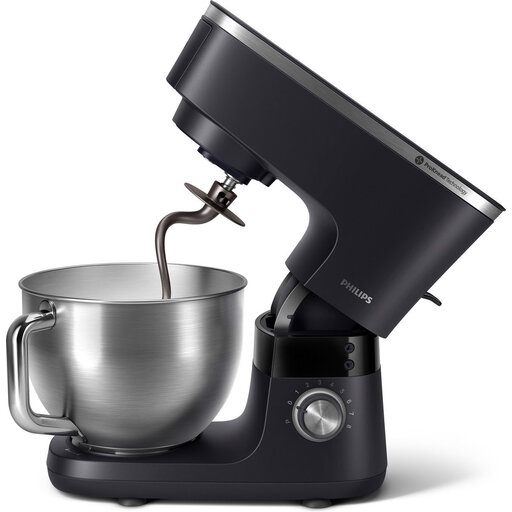
Why it suits this type of user: If you want to make smoothies, sauces and minced meat as well as bake, this model combines a 5.5-litre bowl with a blender attachment, meat mincer, timer and eight speed settings.
The accessories are clearly specified: a 1.5-litre glass blender and a meat mincer. Still, check beforehand that these functions suit the recipes you make.
1000 W, eight speed settings, a 5.5-litre bowl and several kitchen functions, according to the product specifications.

Why it suits this type of user: This model is designed for larger batches and regular baking. The product details list a 7-litre bowl, 1200 W, automatic speed control and a built-in scale.
The large bowl is ideal for bigger batches, but it also takes up more space. Measure your worktop and check the maximum dough quantity in the manual.
7-litre capacity, 1200 W and a built-in scale, according to the product specifications.
We’ve put together a complete, up-to-date list of products that meet these strict selection criteria and comply with current European safety regulations.
For one or two people, around 3.8 to 5 litres is often enough. Families and anyone who regularly makes bread or pizza may want to look at models with a capacity of 5.5 to 7 litres. Always check the maximum dough capacity, as you usually shouldn’t fill the bowl to its full capacity with heavy dough.
Energy use depends on the wattage and how long the machine runs. A 1000 W machine running for ten minutes uses around 0.17 kWh in theory. In practice, power consumption varies depending on the speed and load. Mixing for shorter periods and using the right quantity of ingredients can help avoid unnecessary energy use.
A mixer’s lifespan depends on motor load, maintenance, cleaning and whether you use it according to the manual. Let the motor cool down after kneading heavy dough, don’t exceed the maximum quantities and only use suitable accessories. In the European Union, many new consumer products come with a statutory minimum guarantee of two years; additional rights may depend on the circumstances and national rules.
