
Vandaag of morgen in huis

Kwaliteit gegarandeerd

Welkomstaanbiedingen ontgrendelen: GRATIS bezorging | Tot 80% korting | Gratis 30 dagen JoyPlus-proefperiode
Download de app
A stand mixer with a bowl can knead bread dough, mix cake batter and whip cream while you get on with other preparations. But it’s not a good idea to look only at the wattage or the number of speed settings. A high power rating, for example, doesn’t automatically tell you how much dough the appliance can handle over an extended period.
For households in the Netherlands, three pitfalls are particularly worth keeping in mind:
A stainless steel mixing bowl is practical for regular use and is generally easy to clean. As well as the capacity, check the recommended working load. The Kenwood Go KZM35, for example, has a 4-litre bowl and a stated maximum dough quantity of 1.4 kg, with a maximum of 800 grams of flour. That gives you more useful information than a large bowl capacity alone.
For a household that occasionally makes cakes or biscuits, 4 to 5 litres may be enough. If you regularly make bread, pizza or several cakes at once, consider a bowl of around 5.5 to 6.5 litres. Check that you have enough storage space too: a stand mixer often stays on the worktop because of its weight.
A stand mixer for bread dough has to work harder than one used only to mix liquid batter. So check:
According to the product information, the Honinst 6.5QT mixer has a copper motor, 10 speed settings and overheating protection. The manufacturer also states that heavy yeast dough should not be processed for more than 10 minutes at a time, followed by a cooling period. These operating limits matter more than a marketing claim about “power” alone.
The AUCMA ASM1559 is listed as having 450 watts, 6 speed settings plus pulse, and a maximum noise level of 68 to 72 dB at a distance of 1 metre. According to the product specifications, this model also has overload and overheating protection.
A mixer with a dough hook is designed for yeast dough and pizza dough. Use the mixer with a whisk for whipped cream, egg whites and light mixtures. A flat beater is useful for cake batter, biscuit dough and sauces.
Also look out for practical details:
A food processor with a mixer, blender and meat grinder can save space, but only if you’ll actually use those functions. Extra accessories make the appliance more versatile, but also add more parts to store and clean.

Why it suits this profile: This model covers the basics for cakes, biscuits, bread and pizza, without going straight for a large multifunctional system.
The product specifications list a 5-litre bowl, 10 speed settings, a pulse function and three standard accessories. This makes the key features clear.
Stainless steel bowl, dough hook, whisk, beater, splash guard and overheating protection, according to the product information.
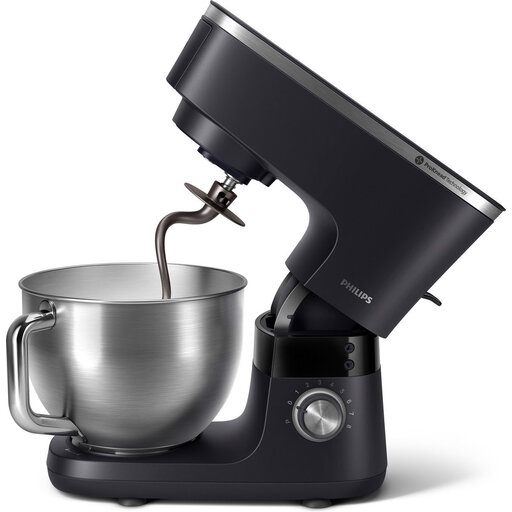
Why it suits this profile: A handy choice for families who make smoothies, sauces, soups and minced meat dishes as well as baked goods.
The 5.5-litre bowl is complemented by a 1.5-litre glass blender and a meat grinder. These accessories are listed separately in the product specifications.
1000 watts, 8 speed settings, automatic shut-off with timer, and accessories for mixing, blending and grinding.

Why it suits this profile: A good option if you want one stand mixer for kneading, whisking, blending and grinding.
The product description lists the blender and meat grinder as included functions. Always check the manual and maximum quantities before use.
6 QT stainless steel bowl, up to 1300 watts according to the product information, 8 speed settings and a safety switch that activates when the head is lifted.
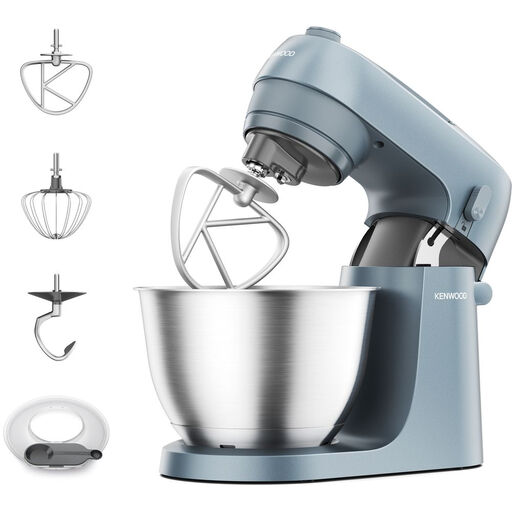
Why it suits this profile: A sensible choice if you’re looking for a relatively compact stand mixer for everyday baking.
The manufacturer specifies a maximum dough quantity of 1.4 kg. This helps you distinguish the bowl capacity from the practical working load.
4-litre stainless steel bowl, 6 speed settings plus pulse, 800 watts and a connection for optional accessories.
We’ve put together a complete, up-to-date list of products that meet these strict selection criteria and the applicable European safety regulations.
For cakes, biscuits and small quantities of batter, around 4 litres is often practical. A 5 to 6.5-litre bowl gives families more room if they regularly make bread or pizza. Always check the maximum dough quantity in the manual; the stated bowl capacity isn’t the same as the recommended fill level.
Its lifespan depends on how you use it, how well you maintain it and how hard you work it. For heavy dough, use the recommended low or medium speed, don’t exceed the maximum quantity, and let the motor cool down when instructed in the manual. Clean accessories according to the instructions and unplug the appliance before changing attachments.
Energy consumption depends on the stated power and how long you use the appliance. A 1000-watt mixer running for ten minutes theoretically uses around 0,17 kWh; actual consumption may vary. So a higher wattage doesn’t automatically mean higher costs per recipe. The total running time and the type of preparation both matter.
