
Baking biscuits for a picnic
You want to mix butter, sugar and flour with an attachment suited to biscuit dough, while handling raw dough carefully.


When choosing a stand mixer for cinnamon biscuit dough, first look for a suitable mixing beater or flat beater, and check how much dough the exact model can handle; bowl capacity alone won’t tell you this. A compact model may be more practical for a modest batch, while a larger bowl is useful if you regularly make several batches and have enough space. A higher wattage on its own doesn’t prove that a mixer will mix your dough better.
You want to mix butter, sugar and flour with an attachment suited to biscuit dough, while handling raw dough carefully.
You may be making several batches, so you want to compare the quantities in your recipe with the bowl size and stated capacity.
You’re looking for a mixer that fits the space available and is practical to clean and put away after baking. The Consumers’ Association highlights size and weight as factors to consider if you need to move or store a machine.
For cinnamon biscuit dough, the right attachment and the amount the exact model can handle matter more than bowl capacity or wattage alone.
A good fit if: you regularly make a modest batch and have limited worktop or storage space. Kenwood lists a 4-litre bowl and dimensions of 33,5 × 18 × 30 cm for the Go KZM35.000GY.
Trade-off: a compact bowl leaves less room for larger quantities; the stated capacity for other types of dough isn’t automatically a limit for cinnamon biscuit dough.
A good fit if: you bake things other than biscuits too, and want a medium-sized bowl. Bosch lists a 3,9-litre bowl for the MUM58359; KitchenAid lists a mixing beater and a 4,7-litre bowl for the Artisan 5KSM125EMH.
Trade-off: attachments and stated dough capacities vary by model; the manufacturer’s specifications aren’t a test of cinnamon biscuit dough.
A good fit if: you usually make several batches for a group and have space to leave the machine out. Tristar lists a 5-litre bowl for the MX-4817; Bourgini lists 6,2 litres for the Kitchen Chef Plus 6.2L, item number 22.5042.00.00.
Trade-off: a higher stated bowl capacity doesn’t prove that smaller quantities will mix better, and the machine may take up more space.
| What to consider | What should you check? | Who is this important for? |
|---|---|---|
| Attachment for biscuit dough | Check whether a mixing beater or flat beater is included, and follow the speed instructions in the manual. KitchenAid says its flat beater is suitable for biscuit dough; Bourgini says the mixing beater for the Kitchen Chef Plus is suitable for biscuit dough. | I want to mix butter, sugar and flour with a suitable attachment, not just whisk them until light and fluffy. Around 40% of consumers prioritise mixing biscuit dough. |
| Quantity per batch | Weigh your recipe and compare it with the capacity the manufacturer states for the exact model and relevant preparation. Bosch gives separate capacities for cake batter and yeast dough for the MUM58359; these aren’t automatically the maximum for biscuit dough. | If I’m baking for a group, I want to know whether my recipe will fit in one go. Around 30% of consumers prioritise making several batches in one preparation. |
| Size and storage | Measure the space available and compare it with the dimensions of the exact model. Kenwood lists dimensions of 33,5 × 18 × 30 cm for the Go KZM35.000GY. | I need to be able to put the mixer away or move it after use, without it permanently taking up space on my worktop. Around 20% of consumers prioritise space. |
| Cleaning and accessories | Read the cleaning instructions and check which attachments are included and compatible. Kenwood says that existing Chef accessories won’t fit the KZM35. | I want to be able to clean the parts I’ve used easily after baking, without buying an attachment that won’t fit. Around 10% of consumers prioritise maintenance and additional purchases. |
Manufacturers sometimes state capacities for cake batter or bread dough. These figures don’t automatically tell you how much cinnamon biscuit dough you can mix in one go.
Weigh your recipe and check the attachments and capacity for the exact model. Don’t use bowl capacity in litres or wattage as a substitute for checking these details.
The Netherlands Nutrition Centre warns that raw eggs and flour may contain harmful bacteria.
Don’t taste the dough. Wash your hands and utensils after handling it, and bake the biscuits before eating them. Take baked biscuits with you in a well-sealed container.
According to Kenwood, the Go KZM35.000GY is a compact option with a 4-litre bowl and a K-beater.
According to Bosch, the MUM58359 has a 3,9-litre bowl and several attachments.
KitchenAid Netherlands lists a flat beater and a 4,7-litre bowl for the Artisan 5KSM125EMH.
Tristar lists a 5-litre bowl and an included flat beater for the MX-4817.
Bourgini lists a 6,2-litre bowl for the Kitchen Chef Plus 6.2L, item number 22.5042.00.00.
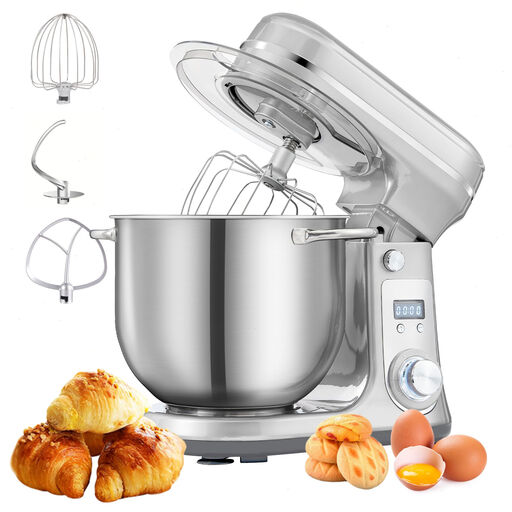
These Joybuy products are stand mixers with different bowl sizes; compare the listed attachments and the size of your recipe before choosing a version.
 No image available
The stated bowl capacity gives you a size to compare with the quantity in your recipe.
6 L bowl; 1200 W; six speeds and a pulse function; LCD screen and timer; stated noise level ≤ 60 dB.
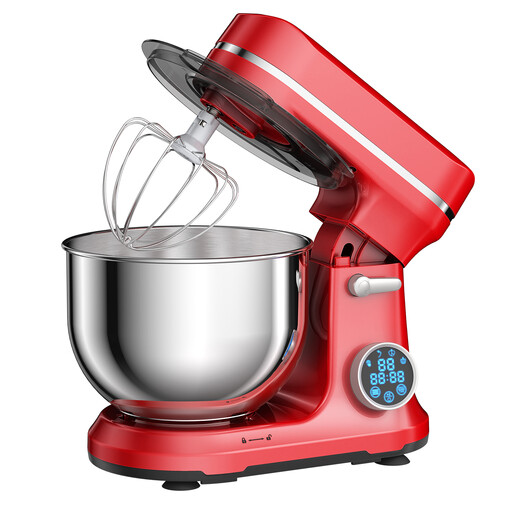 No image available
The 5 L bowl is a size to weigh up against the amount of biscuit dough you want to make.
5 L bowl; planetary mixing system; 1200 W; 11 speeds; OLED touchscreen; dishwasher-safe according to the product title.
 No image available
The listed flat beater and dough hook are worth considering if you’re looking for an attachment for mixing and kneading.
5 L bowl; 10 speeds; tilting head; includes a flat beater, dough hook and whisk; 400 W motor.
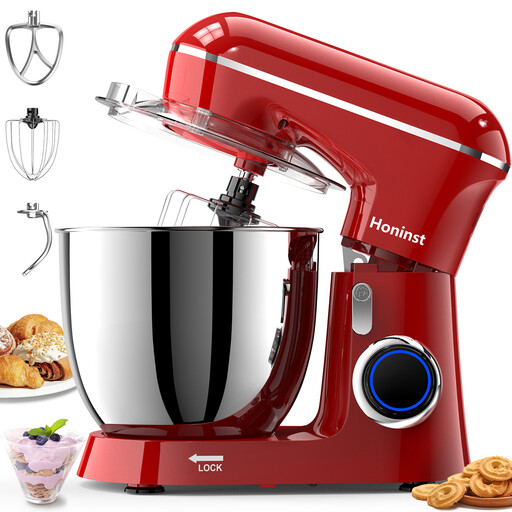 No image available
The included flat beater may be useful for mixing; compare the bowl size with the quantity in your recipe.
6.5QT bowl; 10 speeds; planetary mixing; includes a flat beater, dough hook and whisk.
 No image available
Its compact dimensions make this model worth considering if you’re weighing up the worktop or storage space available.
4 L bowl; K-beater, whisk and dough hook; six speeds and a pulse function; dimensions 33,5 × 18 × 30 cm.
Choose a mixing beater or flat beater when mixing biscuit dough, and follow the manual for the exact model. KitchenAid describes its flat beater as suitable for biscuit dough and recommends starting at a low speed; Bourgini says the mixing beater for the Kitchen Chef Plus 6.2L is suitable for biscuit dough. A whisk is designed for whisking ingredients until light and fluffy.
Follow the instructions for the exact model and unplug it before cleaning. Kenwood says the bowl for the Go is dishwasher-safe, but recommends washing the K-beater, whisk and dough hook by hand. Also wash your hands and utensils after handling raw dough.
Don’t taste raw biscuit dough: the Netherlands Nutrition Centre warns that raw eggs and flour may contain harmful bacteria. Bake the biscuits before eating them, then store them in a cool, dry, dark place in a well-sealed container.
No. According to ACM ConsuWijzer, your statutory guarantee is separate from the manufacturer’s guarantee and depends on what you could reasonably expect from the product. If a product is faulty despite being used normally, the seller is responsible for providing an appropriate solution.
Check the electrical specifications and markings for the specific version. The NVWA states that CE marking is mandatory for products covered by the Electrical Equipment Decree; the low-voltage rules mentioned apply to a nominal AC voltage of 50 to 1000 V. CE is a declaration by the manufacturer and doesn’t indicate how well a mixer mixes dough.