
Biscuit dough workshop leader
You want to mix the ingredients with the right attachment while participants make the dough. A beater is the right choice for biscuit dough, unlike a dough hook for yeasted dough; KitchenAid explains the difference.


Choose a stand mixer with a beater suitable for biscuit dough, and compare the weight of your batch with the limit for the exact model; bowl capacity alone won’t tell you how much dough it can handle. A larger bowl may mean fewer batches, but it also takes up more space for use and storage. Check the cleaning instructions too, and make sure your planned workshop use is covered by the terms and conditions.
You want to mix the ingredients with the right attachment while participants make the dough. A beater is the right choice for biscuit dough, unlike a dough hook for yeasted dough; KitchenAid explains the difference.
You plan how much dough you need per batch and compare the recipe weight with the capacity for the specific model, rather than looking only at the bowl’s litre capacity. Kenwood, Bosch and KitchenAid state capacities using different measurements and preparation methods.
You need to be able to position, use and clean the mixer between groups. That means the dimensions and cleaning instructions for the attachments matter too; Consumentenbond points out that food-processor accessories are not always dishwasher-safe.
Start with the attachment for mixing biscuit dough, then work out the batch size you need and check the cleaning instructions and available worktop space.
| What to consider | What should you check? | Who should pay particular attention? |
|---|---|---|
| Attachment for biscuit dough | Check whether the version includes a beater or K-beater, and whether it’s suitable for your recipe. | I want participants to mix biscuit dough with a suitable beater, not an attachment for yeasted dough. Around 36% of consumers give the right attachment for biscuit dough top priority. |
| Batch size | Weigh your recipe batch and compare it with the limit for the exact model and the most similar type of dough you can find. | If I want to mix one batch for the group in as few goes as possible, I look at the capacity for the recipe, not just the bowl. Around 29% of consumers give a suitable batch size top priority. |
| Cleaning between groups | Check whether each part can be hand-washed or put in the dishwasher, and follow the food safety instructions that apply to the workshop. | When I switch between preparations for different groups, I want to know how to clean the bowl and attachments thoroughly. Around 21% of consumers give cleaning and switching between preparations top priority. |
| Worktop space | Measure the available height and space, then compare them with the dimensions of the model you’re considering. | If my workspace is limited or changes from time to time, the mixer needs to fit comfortably or be easy to move. Around 14% of consumers give available worktop space top priority. |
Manufacturers state capacities for different ingredients and preparations. So a large bowl alone doesn’t confirm that your recipe batch is within the model’s limit.
Weigh one planned batch and check the capacity stated for the exact model and a similar type of dough.
If your recipe batch is above the applicable limit, you may need to mix the dough in several batches.
KitchenAid recommends the flat beater for biscuits and the dough hook for yeasted dough. The right attachment depends on what you’re making.
Check your recipe and see which attachments come with the exact version.
Consumer rights and an additional manufacturer’s warranty are not the same thing. Whether the terms apply to a business purchase or your planned workshop use depends on the specific circumstances.
Before buying, ask the seller whether your planned workshop use is covered by the applicable terms.
Kenwood lists a 6.7 l bowl and a K-beater for the Chef XL KVL4110S. The Go KZM35.000GY has a 4 l bowl and is a more compact option.
The product information for the Artisan 5KSM175PSEFL lists a flat beater, a flex-edge beater and two bowls.
Bosch lists a 3.8 l bowl and a patisserie set with a beater for the MUMS2VM00.
Philips lists a 5.5 l bowl with a beater, whisk and dough hook for the 7000 Series HR7962/21.
These models are designed for mixing dough and ingredients in a stand mixer; check the capacity and included beater for the batch size in your recipe. According to the NVWA, CE marking is mandatory for electrical products placed on the market in the Netherlands; check the marking on the specific appliance before buying.
 No image available
The beater is useful for biscuit dough; check whether the capacity suits the batch you’re making for the workshop.
The product title lists a 5 l stainless steel bowl, a 600 W motor and 10 speeds.
Includes a beater, dough hook, whisk and splash guard.
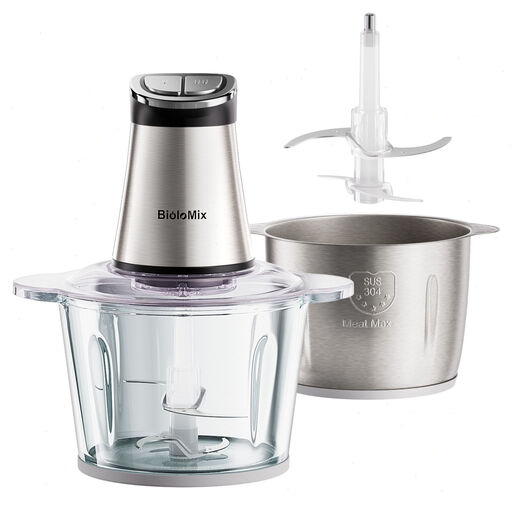 No image available
The bowl capacity is worth considering for smaller workshop batches; check whether your recipe fits within the applicable limit.
The product title lists a 3 l bowl and 2 speeds.
The product title lists a removable bowl and dishwasher-safe parts; check which parts this description applies to.
 No image available
The beater is designed for batters and mixing tasks; check that your recipe batch is within the capacity of this version.
The product title lists a 5 l bowl and a 400 W motor.
Includes a dough hook, whisk and beater. The product description mentions a tilt-head design and splash guard.
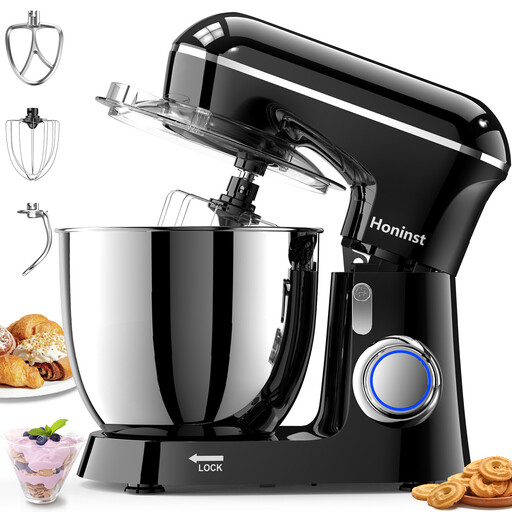 No image available
The included beater may be useful for biscuit dough; check the batch-size limit and instructions for the exact model.
The product title lists a 6.5QT bowl and 10 speeds.
Includes a dough hook, whisk and beater. The product description mentions a tilt-head design and splash guard.
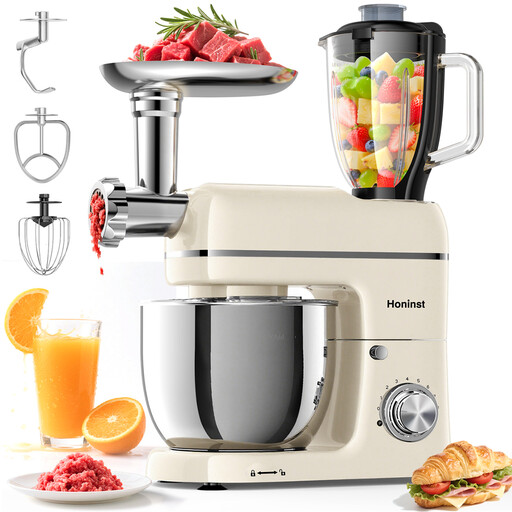 No image available
The beater is useful for mixing and beating; check that this version is suitable for the batch size you’re planning for the workshop.
The product title lists a 6.5 QT bowl and 8 speeds. Includes a dough hook, beater and whisk.
The product description says this model is intended for domestic use only. Check whether your planned workshop use is covered by this condition.
For a KitchenAid mixer, the manufacturer recommends the flat beater for biscuit dough, while the dough hook is designed for yeasted dough. If you have another brand, follow the instructions for the exact model and the attachments supplied with it.
No, bowl capacity alone doesn’t tell you how much dough you can process. Manufacturers may give capacities in kilograms of dough, kilograms of flour or numbers of standard biscuits. Compare the weight and composition of your recipe with the relevant limit for the exact model.
No, it depends on the part and version. Check the cleaning instructions for the exact set; KitchenAid, for example, says that a standard wire whisk with an aluminium hub is not dishwasher-safe.
If you sell food or drink to consumers, the NVWA says you must follow rules on safe food handling and allergen information. The NVWA also requires registration and a food safety plan or hygiene code if you sell more than once a year; simply running a workshop doesn’t automatically mean these sales requirements have been met.
The NVWA says CE marking is mandatory for the relevant electrical products placed on the market in the Netherlands. Check the marking on the specific appliance; a product listing alone doesn’t confirm that it has one. According to the NVWA, this product category doesn’t require an inspection.