
Baker with limited worktop space
You want to mix butter biscuit dough while still leaving room for ingredients and shaping the biscuits. Look beyond the stated height: access to the bowl and the space you need while using the mixer matter too.


Choose a stand mixer whose supplied mixing paddle or beater is suitable for your butter biscuit dough according to the instructions, and measure both the space for the appliance and the room you need to use the bowl. A smaller bowl may suit small batches; a larger capacity alone doesn’t tell you how much dough a particular model can handle. Before buying, also check the CE marking and safety documentation for the specific appliance. The NVWA sets out the general requirement in the Netherlands, but this does not confirm that every individual appliance meets it.
You want to mix butter biscuit dough while still leaving room for ingredients and shaping the biscuits. Look beyond the stated height: access to the bowl and the space you need while using the mixer matter too.
You usually make small quantities and want a bowl that suits your recipes, rather than relying on the stated capacity alone.
You sometimes want to make more dough, so you need to weigh the model-specific limits against the space the machine takes up.
| What to consider | What should you look for? | Who is this important for? |
|---|---|---|
| Worktop and operating space | Measure the space for the appliance and leave room to use the bowl, add ingredients and shape biscuits. | If I have limited worktop space, I want to use the mixer without losing room for ingredients and biscuits; around 40% of consumers prioritise worktop space. |
| Suitable mixing paddle | Check which attachment comes with the exact version and whether the instructions say it’s suitable for your recipe. KitchenAid recommends a flat beater for cookie batter. | I want to know whether the supplied attachment is suitable for my butter biscuit dough; around 31% of consumers prioritise suitability for mixing. |
| Batch size and bowl capacity | Compare the quantity in your recipe with the model-specific limits; bowl capacity alone doesn’t tell you how much dough it can handle. | When I make different-sized batches, I want to know the limit for my recipe before comparing capacities in litres; around 15% of consumers prioritise batch size. |
| Cleaning and use | Check the cleaning instructions for the exact model and leave room to clean and store the bowl and attachments. | If I use the mixer regularly, I want to know how much space cleaning and storage require; around 14% of consumers prioritise ease of use. |
The height of a stand mixer doesn’t tell you how much worktop space you’ll have left when you need to use the bowl, add ingredients or shape the dough.
Measure the full space and check the dimensions of the exact version. If the stated measurements differ, don’t treat them as a guarantee of the clearance you’ll need.
The capacity filled to the brim and the permitted quantity for a specific recipe are two different things. For the 3.3 L model group, KitchenAid states a maximum of 60 standard biscuits measuring 5.1 cm; this manufacturer’s figure isn’t a general measure of butter biscuit dough capacity.
Compare the quantities of ingredients in your recipe with the limits for the exact model.
Kenwood says that existing Chef attachments won’t fit the Go. KitchenAid accessories also depend on the size of the mixer.
Before buying, check the full model number and the compatibility of every attachment you want to use.
You may need to buy a separate compatible attachment.
The Kenwood Go KZM35.000GY is a compact model designed for baking, with a stated bowl capacity of 4 L and a K-beater, whisk and dough hook.
The KitchenAid Mini 5KSM3311XEGU has a lower stated bowl capacity, making it a good fit if you mostly make smaller batches.
The Bosch Serie 2 MUMS2VM00 combines a 3.8 L bowl with a beater, whisk and dough hook.
These stand mixers with mixing bowls are suited to baking and mixing, but attachments, dimensions and stated bowl capacities vary by model. According to the NVWA, CE marking is mandatory for electrical products in the Netherlands. Check the marking and safety documentation for the specific appliance, as the general requirement doesn’t confirm that every individual appliance meets it.
 No image available
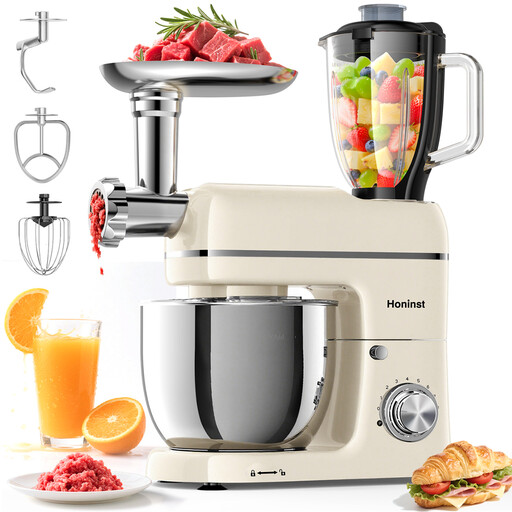
An option to consider if you want to prepare dough in a mixing bowl and use other attachments as well as the beater.
The description lists a 5 L stainless steel bowl, 10 speeds and a pulse function. It also mentions a tilt-head design and dimensions of 35.4 × 22.5 × 29.6 cm.
 No image available
An option if you want to use a range of attachments when mixing in a bowl.
The product title lists a 6.5 QT bowl and 8 speeds, with a dough hook, beater and whisk. The description mentions a tilt-head design to make it easier to fit or remove the bowl and attachments.
 No image available
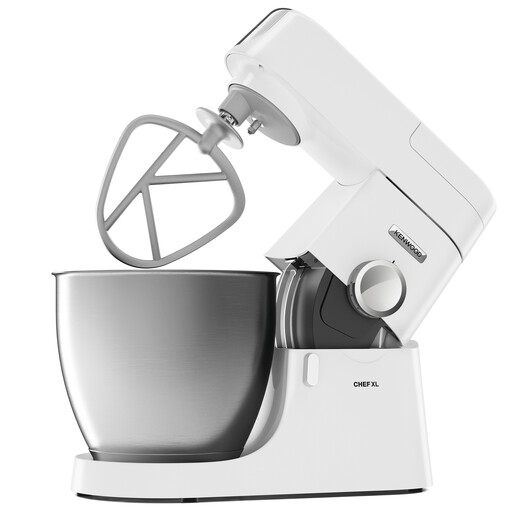
An option if you’re looking for a stand mixer with a K-beater for mixing in a fixed bowl.
The product description lists a 4 L bowl, a K-beater, whisk and dough hook, 6 speeds plus pulse, and dimensions of 33.5 × 18 × 30 cm. The stated maximum dough quantity is 1.4 kg; check the instructions to see which limit applies to your recipe.
 No image available
An option to compare if you want to knead as well as mix, and are considering a larger bowl capacity.
The product description lists a 6.7 L bowl, 1200 W of power and dimensions of 34.5 × 28 × 38.5 cm. Compare these measurements with the space you’ll need to use it.
 No image available
An option if you want to compare a flat beater with other supplied attachments.
The product title lists a 5.0 L stainless steel bowl; the description mentions 8 speeds, a flat beater, dough hook and whisk. It also mentions a tilt-head design.
Check the recipe and model instructions. KitchenAid recommends the flat beater for cookie batter; a whisk or dough hook isn’t automatically the right attachment.
Measure the space for the appliance, then check separately that you can use the bowl and add ingredients. The stated machine dimensions aren’t the same as the worktop space you’ll need while using it.
Following Kenwood’s instructions, switch off the machine and unplug it before you start. Kenwood says the bowl is dishwasher-safe and recommends hand-washing the K-beater, whisk and dough hook.
According to the NVWA, CE marking is mandatory for electrical products. This general requirement doesn’t prove that a specific appliance on offer meets it; check the marking and product documentation for that appliance.
The Netherlands Nutrition Centre advises against eating raw biscuit dough, as both raw egg and flour can contain harmful bacteria. This food safety advice has nothing to do with choosing a mixer.