Choose a stand mixer based on the weight of one recipe batch, the beater and the speed control you need. Bowl capacity alone won’t tell you how much banana cake batter it can handle. A compact model can save space, but running several groups may mean extra mixing and cleaning between batches. Measure your worktop, and ask the manufacturer to confirm that the exact model meets the relevant electrical and food-contact requirements.
Who is this buying guide for?
Workshop leader running several groups
You want to plan batches and changeovers between groups without confusing bowl capacity with the stated capacity for cake batter. Kenwood and Bosch provide capacity and bowl-size information for specific models.
Supporting beginner bakers
You want a straightforward mixing process, a suitable beater and a clear view of the batter, so you can tell when it has been mixed enough according to the recipe. KitchenAid describes using a flexible flat beater in its banana bread recipe.
Organiser with limited worktop space
You need a setup that fits on the available worktop and is practical to clean after each batch. Compare the dimensions and included bowls for the exact model; Kenwood publishes this information for its models.
What should you look for when buying?
Start by weighing one recipe batch and deciding how many batches you want to mix at once. Then compare the mixing controls, the space available, and how easy it is to change and clean the mixer between batches.
The percentages below refer to consumers considering a stand mixer for this baking workshop; each consumer’s main buying priority is shown.
| Factor |
What to look for when buying |
Who might prioritise this? |
| Batches per mixing cycle |
Weigh one recipe batch and compare it with the stated cake capacity for the exact model. |
If I’m baking for several groups, I want to know how much weighed-out batter I can make per batch and how many changeovers that will involve. Around 33% of consumers prioritise batch size. |
| Mixing control |
Check which beater is included and whether you can adjust the speed while mixing. |
When I’m supporting beginners, I want to follow the mixing process and stop when the batter reaches the consistency required by the recipe. Around 27% of consumers make mixing control their top priority. |
| Worktop space |
Measure your worktop and the clearance around the mixer, then compare these with the dimensions of the exact model. |
If my worktop space is limited, I want to set up the mixer without losing the space available for the workshop. Around 20% of consumers prioritise the space available. |
| Cleaning and changeovers |
Check which bowls and mixing attachments are included, and follow the cleaning instructions for that model. |
If I’m running several batches one after another, I want to be able to switch to clean bowls and attachments easily. Around 20% of consumers make cleaning between batches their top priority. |
Common pitfalls
-
Assuming dough capacity is the same as batter capacity
Manufacturers sometimes give separate capacities for batter, cake and dough. These figures are not interchangeable and don’t prove how much of your banana cake batter the mixer can handle.
Compare your weighed recipe batch with the stated capacity for the right preparation and bowl on the exact model.
A smaller usable batch may mean you need to plan for extra mixing cycles.
-
Following the mixing time automatically
KitchenAid recommends adjusting the mixing time based on what you can see, to avoid overmixing the batter.
Use the steps in your chosen recipe as a starting point, and check the batter as it mixes.
-
Assuming a second bowl is included
The number of bowls supplied varies by model, even within the same product range.
Check the full model code and what’s included in the box before ordering.
If your plans call for a second bowl and it isn’t included, you may need to buy one separately.
-
Assuming consumer rules apply automatically to a business purchase
The ACM explains the statutory guarantee for sales to consumers. Buying a mixer for a workshop doesn’t automatically make it a consumer purchase.
Establish who the buyer is and check which purchase and warranty terms apply in that situation.
Brands to compare
Kenwood
Compare the compact Go KZM35.000GY with the larger Titanium Chef Baker XL KVL85.004SI if you want to match batch sizes to your workshop plan.
- Kenwood states that the Go has a 4-litre bowl and a stated cake capacity of 1.8 kg. For the Baker XL, Kenwood lists 7- and 5-litre bowls and a stated cake capacity of 4 kg.
- These are manufacturer specifications, not an independent test using banana cake batter, and they don’t necessarily tell you the right quantity for your recipe.
Bosch
The MUM5XW20 is worth comparing if you want to weigh ingredients in the bowl or keep track of mixing time.
- Bosch lists an integrated scale, timer and 3.9-litre bowl for this model.
- Bowl capacity alone doesn’t determine the limit for your particular banana cake batter.
KitchenAid
The Artisan 5KSM175PSEAC is worth comparing if a flexible flat beater and a smaller second bowl would be useful.
- KitchenAid states that this model comes with 4.7- and 3-litre bowls and two flat beaters, including one with a flexible edge.
- KitchenAid mentions the flexible beater in its own banana bread recipe; this isn’t an independent comparison with other mixers.
Ankarsrum
The Assistent Original AKM6230 offers a different bowl and whisk setup to consider for batter.
- Ankarsrum states a batter capacity of 1.5 litres and includes a 3.5-litre Tritan mixing bowl with whisks.
- The stated dough bowl capacity and dough capacity don’t prove that it can handle a larger amount of banana cake batter.
Stand mixers at Joybuy
These Joybuy products are stand mixers with bowls and attachments for mixing batter. Check the product information for the exact model to see which batch sizes, accessories and usage scenarios it covers.
Before buying, check that the exact model meets the relevant requirements for electrical equipment and parts that come into contact with food. The NVWA explains the requirements for electrical products and food-contact materials; you should check how these apply to the specific model.
 No image available
Bosch MUM 54251 Series 4
The stated bowl size and baking set are useful details to consider when planning batter batches for a workshop.
The product information lists a 3.9-litre stainless steel bowl, a baking set, and attachments for mixing and kneading.
The product information specifies domestic use; suitability for commercial use has not been established.
View at Joybuy
 No image available
AUCMA stand mixer, 5 litres, 10 speeds
The stated bowl capacity and speed settings give you specific features to compare with your weighed recipe batch and the level of mixing control you want.
The product information lists a 5-litre bowl, 10 speeds, a pulse function, a tilt head and a mixing beater.
View at Joybuy
 No image available
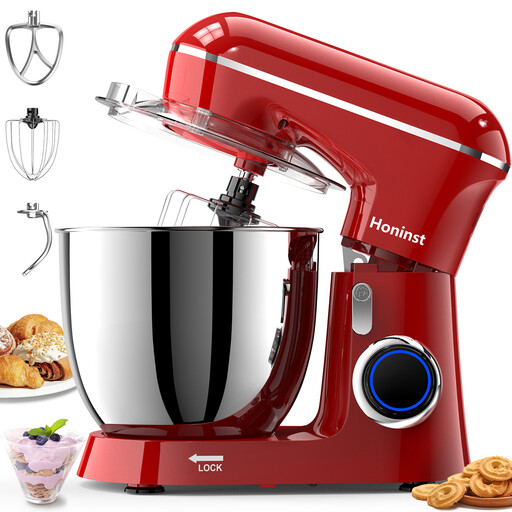
Honinst stand mixer, 6.5 QT, 10 speeds
The bowl and mixing beater are useful features to consider when planning a batch of batter.
The product information lists a 6.5 QT bowl, 10 speeds, a tilt head and a beater.
The product information specifies domestic use; suitability for commercial use has not been established.
View at Joybuy
 No image available
Kenwood Chef XL KVL4110, silver
The stated K-Beater and bowl capacity give you useful points to compare with your recipe and the number of batches you need to make at a time.
The product information lists a bowl capacity of 6.70 litres, a K-Beater, a whisk and a dough hook.
View at Joybuy
 No image available
Kenwood Go KZM35, grey
Its compact dimensions can help you work out whether the mixer will fit on your available worktop.
The product information lists a 4-litre bowl, six speeds, a K-Beater and dimensions of 33.5 × 18 × 30 cm.
View at Joybuy
Frequently asked questions
Which beater should you use for banana cake batter?
KitchenAid’s banana bread recipe uses a flat beater with a flexible edge. For a different recipe or model, follow the relevant instructions and check the batter against the result described in the recipe.
Can you work out the batter’s weight from the bowl capacity alone?
No. Bowl capacity and the stated capacity for cake or dough are different measurements. Weigh your recipe batch and compare it with the stated capacity for the right preparation and exact model.
What should you clean between two workshop batches?
Follow the cleaning instructions for the exact bowl and mixing attachments. If the workshop is run by a food business, it must also follow the relevant food hygiene rules; the word “workshop” alone doesn’t mean those rules apply.
Which product rules apply to a stand mixer in the Netherlands?
According to the NVWA, CE marking is mandatory for electrical products. Parts intended to come into contact with food must comply with the relevant food-contact rules. Check that the specific model meets these requirements.
Does HACCP automatically apply to every baking workshop?
No. The NVWA explains that HACCP requirements apply to businesses that prepare, process or sell food. Check whether the organiser of the specific workshop falls into this category.


