Who is this buying guide for?

Baker making large batches for the neighbourhood

Wants to limit the number of kneading sessions and is looking for a dough capacity that’s clearly suited to the batch. The product specifications from Ankarsrum and Wilfa provide useful figures for comparing recipe sizes.

Planner of smaller batches

Can divide the dough between several bowls or kneading sessions and compares the specification for the exact model. Kenwood and Bosch list different dough capacities, using different descriptions of the dough.

All-round home baker

Makes other bakes as well as bagels, and considers which attachments are included, how much space the mixer takes up and how to look after it. The Consumers’ Association describes mixing, kneading and whisking as key functions of a food mixer.

What should you look for when buying?

Large batches with a dough-focused mixer

A good fit if: your recipe makes a large batch and you’d rather knead less often. Ankarsrum and Wilfa list a capacity of up to 5 kg of dough for specific models.

Bear in mind: these are manufacturer figures for dough in general, not an independent bagel test or confirmation that the mixer can handle every quantity of stiff dough.

All-round mixer with planned batches

A good fit if: you also bake other things and can plan smaller batches. Kenwood lists 2.42 kg of dough for the Chef XL KVL4100S; Bosch lists 1.5 kg of yeast dough for the MUMS6EW22.

Bear in mind: the dough specifications use different descriptions and aren’t directly comparable as bagel capacity.

What to consider What should you check? Who should pay particular attention?
Firm bagel dough Compare the weight and composition of one batch with the instructions for the exact model, including the dough hook and permitted kneading time. If I make firm dough, I want to know whether my recipe is suitable for the mixer and its instructions. Around 31% of consumers prioritise suitability for firm dough.
Dough capacity and number of batches Calculate the total quantity in your recipe and divide it into batches according to the stated limit for the exact model and the type of dough specified. If I’m making dough for a get-together, I want to know in advance how many kneading sessions I’ll need. Around 31% of consumers prioritise limiting the number of batches.
Other baking Check which whisk, beater and dough hook are included with that exact version. If I also use the mixer for other recipes, the included attachments influence my choice. Around 25% of consumers prioritise versatility.
Use and aftercare Read the cleaning and kneading instructions, and keep your proof of purchase in case you need help with a fault. If I want the mixer to be easy to use and to know where to turn if something goes wrong, I look for clear instructions and aftercare. Around 13% of consumers prioritise this.

Common mistakes

  • Assuming the largest bowl means the biggest bagel batch

    Bowl capacity and dough capacity are different measurements. King Arthur Baking explains that dough with little water can be difficult to knead thoroughly, even in a stand mixer.

    Start with the weight of your recipe and compare it with the dough specification and manual for the exact model, rather than relying on the bowl’s capacity in litres alone.

  • Treating wattage or a general bread dough specification as proof it can handle stiff bagel dough

    The manufacturers reviewed use different descriptions of dough; their specifications don’t automatically confirm a maximum quantity of bagel dough.

    If in doubt, check which instructions apply to your model and make smaller batches until you have a clear, suitable limit.

  • Following a recipe’s timings as machine instructions without checking

    A brand may specify its own speed and kneading time limits, which won’t necessarily apply to other mixers.

    Follow the manual for your exact mixer. Don’t automatically apply KitchenAid’s general guidance to another brand or model.

Brands to compare

Ankarsrum

The Assistent Original is worth considering if you want to make a large batch. For the version reviewed, Ankarsrum lists a 7-litre bowl and a capacity of up to 5 kg of dough.

  • The manufacturer’s specification gives you a clear starting point for planning batches.
  • The stated quantity is for dough in general and doesn’t prove the maximum load for stiff bagel dough.

Wilfa

For the ProBaker base model, Wilfa lists a 7-litre bowl and a capacity of up to 5 kg of dough.

  • According to Wilfa, the Timer version has a built-in timer.
  • The stated dough capacity isn’t automatically a tested bagel capacity.

Kenwood

For the Chef XL KVL4100S, Kenwood lists a 6.7-litre bowl and a dough capacity of 2.42 kg.

  • Kenwood lists a dough hook as included.
  • The capacity isn’t specific to bagel dough and doesn’t automatically apply to other Kenwood models.

Bosch

For the MUMS6EW22, Bosch lists a 5.5-litre bowl and a capacity of 1.5 kg of yeast dough.

  • Bosch lists a kneading hook as included.
  • Use the model-specific figure of 1.5 kg of yeast dough; don’t assume a higher capacity from a general range comparison.

KitchenAid

For the Artisan 5KSM70SHX, KitchenAid lists a height-adjustable 6.6-litre bowl and an included PowerKnead dough hook.

  • The product specification describes the bowl and the included kneading attachment.
  • The product specification doesn’t give a maximum quantity of stiff bagel dough; don’t work it out from the bowl capacity.

Joybuy products for dough and batch planning

These stand mixers are worth considering for kneading dough and planning batches at home. When buying, check that the electrical appliance on offer carries the required CE marking; this marking doesn’t confirm how much stiff bagel dough a mixer can handle.

HAUSWIRT M5 Max stand mixer, 5.5 l, 11 speeds, silver

HAUSWIRT M5 Max Stand Mixer, 5.5L, 11-Speed, Silver

The product description mentions dense bread dough; the bowl capacity may help you plan your batches.

Bowl: 5.5 litres. 11 speeds.

Joybuy

HAUSWIRT M5 High-End Smart stand mixer, 5.5 l, green

HAUSWIRT M5 High-End Smart Stand Mixer, 5.5L, Lake Green

The product description mentions bread dough and a dough programme; check the manual for the batch you want to make.

Bowl: 5.5 litres. 11 speeds and five preset programmes.

Joybuy

AUCMA tilt-head stand mixer, 6 l, 6 speeds, black

AUCMA Stand Mixer, 6L, 6-Speed, Tilt-Head, Black

The product details list a dough hook for kneading, as well as a whisk and beater for other baking.

Bowl: 6 litres. The instructions advise against running it for more than 6 minutes at a time without a break.

Joybuy

Kenwood Chef XL KVL4110 stand mixer, silver

Kenwood Chef XL KVL4110 Stand Mixer, Silver

The product description lists a dough hook for kneading, as well as a K-beater and whisk for other baking.

Bowl: 6.70 litres.

Joybuy
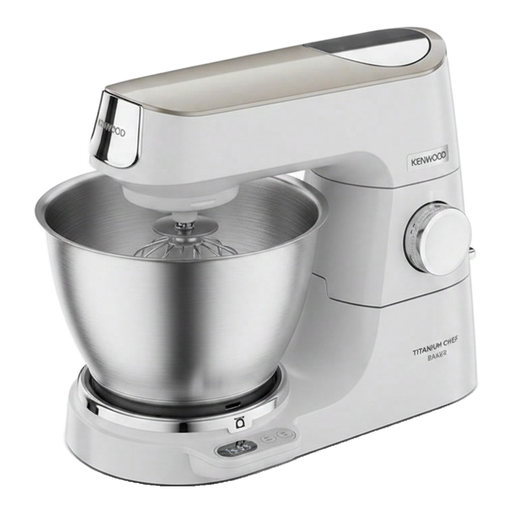
Kenwood Titanium Chef Baker KVC65 stand mixer, white

Kenwood Titanium Chef Baker KVC65 Stand Mixer, White

The product details list a dough hook for kneading, as well as a whisk and K-beater.

Bowl: 5 litres.

Joybuy

Frequently asked questions

Can I tell how much bagel dough will fit from the bowl capacity?

No. Compare the recipe weight per batch with the dough or yeast dough specification for the exact model; litres describe the bowl. A general dough specification also doesn’t automatically confirm a maximum for stiff bagel dough.

What kneading time and speed should I use?

Follow the manual for your exact model. In its general guidance for yeast dough, KitchenAid recommends speed 2, kneading for a maximum of 2 minutes at that speed, and mixing and kneading for a total of no more than 4–6 minutes. Don’t automatically apply this brand’s instructions to other brands.

Who should I contact about a fault after buying in the Netherlands?

According to the Dutch government, consumer purchases are covered by a legal guarantee and you’re entitled to a product that works properly. If there’s a problem, the seller must provide a solution; a manufacturer’s guarantee may also apply.

Is CE marking compulsory for an electric stand mixer in the Netherlands?

Yes. The Netherlands Food and Consumer Product Safety Authority states that CE marking is compulsory for electrical products. The marking is the manufacturer’s declaration of conformity, not a separate product inspection, so check the specific item on offer too.
