
Leaders of group baking sessions
You mix a larger quantity in each batch and want to compare the recipe weight with the stated cake-making capacity. Bosch and Kenwood list both bowl capacity and cake-making capacity for various models.


Choose a stand mixer based on the weight of batter per batch and the space available on your work surface. A larger capacity may suit group batches, while a more compact model could be more practical for smaller recipes. Also check which mixing attachments are included, and how you can control the speed and clean the mixer between batches. Bowl capacity in litres is not the same as the maximum amount of cake batter in kilograms.
You mix a larger quantity in each batch and want to compare the recipe weight with the stated cake-making capacity. Bosch and Kenwood list both bowl capacity and cake-making capacity for various models.
You ask participants to work with smaller portions and look for a suitable mixing attachment, adjustable speed and easy access to the bowl.
You need to make room for the mixer, ingredients and participants, while taking account of the available work and storage space and cleaning between batches.
Start with the amount of batter per batch and the space around your work surface. Then consider attachments, controls and cleaning as separate practical factors.
Suitable for: smaller recipes and limited work or storage space. Kenwood lists a 4-litre bowl and a cake-making capacity of 1.8 kg for the Go KZM35.000GR.
Trade-off: a recipe that exceeds the stated capacity may need to be mixed in more than one batch.
Suitable for: a batch where you want to consider both bowl capacity and the stated amount of batter. Bosch lists a 3.9-litre bowl and a maximum of 2.7 kg of cake batter for the MUM58200.
Trade-off: litres and kilograms measure different things. Compare the recipe weight with the stated cake-making capacity.
Suitable for: a large amount of batter per batch. Kenwood lists a 6.7-litre bowl and a cake-making capacity of 5 kg for the Chef XL KVL4100S.
Trade-off: remember to allow enough space on your work surface.
| What to consider | What to look for | Who should prioritise it? |
|---|---|---|
| Amount of batter | Weigh the full recipe and compare its weight with the cake-making capacity stated by the manufacturer for the exact model. Don’t treat litres as kilograms of batter. | If I’m making one batch for the whole group, I want to know whether the recipe fits within the stated capacity. Around 36% of consumers say the amount per batch is their top priority. |
| Mixing control | Check which mixing attachment is included and whether the speed is adjustable. Follow the recipe for the mixing order and when to add ingredients. | If I want to mix the batter gently and add the apple at the right time, I focus on the attachment and controls. Around 29% of consumers put this control first. |
| Workspace | Measure the available work and storage space, including room to reach the bowl and operate the mixer head. | If the mixer has to share a table with ingredients and participants, it needs to fit the available space. Around 21% of consumers put the space required at the top of their list. |
| Cleaning and changing attachments | Check the cleaning instructions for each part and decide whether you need any extra accessories for the workshop activities. | If I want to change things over quickly between batches, I want to know which parts need to be reused and cleaned. Around 14% of consumers put changeover time and cleaning first. |
Bowl capacity and the maximum amount of cake batter are two different measurements. A recipe that exceeds the stated cake-making capacity may need to be mixed in more than one batch.
Weigh the full recipe and compare it with the cake-making capacity stated by the manufacturer for the exact model variant.
A food processor and a stand mixer aren’t necessarily designed for the same main task. Consumentenbond describes a stand mixer as geared towards baking, while a food processor is suitable for tasks such as slicing, grating and chopping.
Check the full model code, appliance type, and which bowl and attachments come with that particular version.
Cleaning instructions for the mixing bowl don’t automatically apply to the whisk, beater or other parts.
Read the instructions for each included part separately, especially if you’ll be using the mixer again between workshop batches.
The MUM58200 is a mid-sized option with separate figures for bowl capacity and cake-making capacity.
The Go KZM35.000GR and Chef XL KVL4100S offer different sizes for smaller and larger workshop batches.
The Artisan 5KSM125EER is worth considering if the included mixing attachments and speed control are important to you.
The Bake Partner QB525838 combines batter mixing with accessories for other food preparation tasks.
These stand mixers are designed for mixing batter during a baking workshop. Compare the stated bowl capacity, mixing attachments and speed settings with your recipe and available workspace.
 No image available
The product name describes a stand mixer for mixing and kneading, with a 5.5-litre bowl.
It has 11 stated speed settings.
 No image available
The included beater and stated speed settings make this an option to compare for batter you want to mix with care.
The product name lists 10 speeds, 600 W, a dough hook, beater, whisk and splash guard.
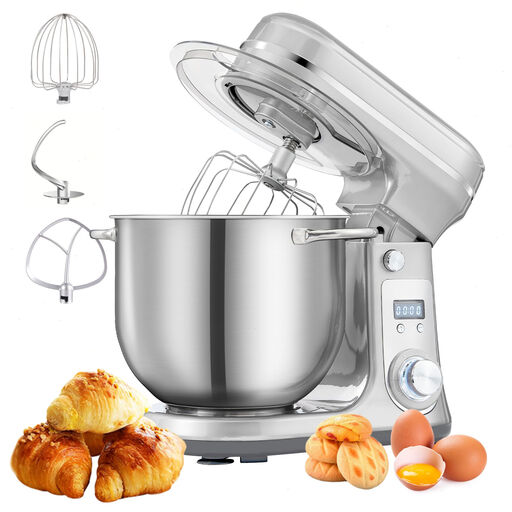 No image available
Compare the stated bowl capacity with the amount of batter you make for each workshop batch.
The product name lists six speeds, a pulse function and a tilt-head design.
 No image available
The product name lists a beater and bowl for baking. Compare the included parts with the tasks you’ll be doing in your workshop.
This version has 10 speeds, a pulse function, a dough hook, whisk and beater.
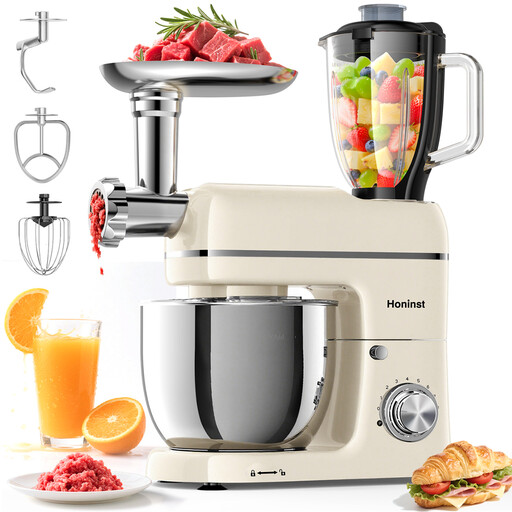 No image available
The product name describes a stand mixer for a range of kitchen tasks. Compare the stated bowl capacity with the amount required for your recipe.
This version has eight speeds and accessories including a dough hook, beater and whisk.
If mixing batter is the main task, a stand mixer is the more obvious choice. According to Consumentenbond, a food processor is mainly intended for slicing, grating and chopping. Treat slicing the apple as a separate task.
Don’t assume you can. Compare the total recipe weight with the maximum cake-making capacity stated by the manufacturer for the exact model. A bowl capacity in litres isn’t a batter limit in kilograms.
Follow your chosen recipe for how and when to add the apple. For example, the Voedingscentrum’s recipe for apple crumble cake layers slices of apple between layers of batter, so not every recipe calls for apple pieces to be mixed in for a long time.
If you sell food or drink to consumers, the NVWA requires you to work safely with food and have a food safety plan or hygiene code based on HACCP. Rules on allergen information also apply to unpackaged foods. Whether these requirements apply to your workshop depends on what you offer.
No. According to the Dutch government, consumer purchases in the Netherlands don’t have a fixed statutory warranty period. A manufacturer’s warranty is in addition to your rights, and the seller is your point of contact if something is faulty. Check the terms separately if you’re buying the mixer for business use.