
Baker with limited worktop space
You want to mix your own dough, but need to fit in the machine, bowl and working space, or put the mixer away after use. The dimensions listed by Bosch and Kenwood can help you measure the space available.


You don’t need to buy a stand mixer just to make almond rolls with ready-rolled puff pastry and almond paste; Rutger Bakt’s recipe allows for this method. If you make your own dough regularly, choose a mixer based on the space it takes up both in use and in storage, as well as the load permitted for your type of dough. A large bowl or higher wattage alone doesn’t prove that a machine is suitable for small batches or heavy dough.
You want to mix your own dough, but need to fit in the machine, bowl and working space, or put the mixer away after use. The dimensions listed by Bosch and Kenwood can help you measure the space available.
You regularly make sweet or other enriched dough and want to follow the flour quantities, speed, mixing times and rest periods specified for your chosen machine. Kenwood provides separate instructions for bread and enriched dough for the Go.
You sometimes make a small batch of almond rolls and want to decide first whether you need a mixer. Rutger Bakt also describes a recipe using ready-rolled puff pastry and almond paste.
| Buying concern | What to look for | Who is this important to? |
|---|---|---|
| Worktop space and storage | Measure the available width, depth and height where you’ll use the mixer. Also allow for access to the bowl and the space needed to store the mixer. | If I have limited worktop space, I want to know whether the machine will fit while I’m mixing and where I can put it afterwards. Around 36% of consumers focus mainly on the work and storage space available. |
| Type of dough and load | Compare the flour or dough quantity in your recipe with the model’s instructions; bowl capacity and maximum dough load are different specifications. | If you regularly make your own bread or enriched dough, you’ll want to be able to follow the instructions for your recipe. Around 29% of consumers are chiefly concerned with the permitted load. |
| Small batches and whether you need a mixer | Decide whether you’ll make your own dough or use ready-rolled puff pastry; for small quantities, check whether the manufacturer provides guidance. | If I only make a small batch occasionally, I want to know whether a permanent fixture on my worktop is worth buying. Around 21% of consumers prioritise small batches and whether a mixer is necessary. |
| Accessories and cleaning | Check which accessories are included with the exact model, how they should be cleaned and whether you have space to store them. | If you want to use attachments other than the dough hook, check that the functions and parts are included with the model you’re choosing. Around 14% of consumers focus mainly on accessories, cleaning and aftercare. |
If the mixer has a tilting head, also measure the space needed to raise it. Compare your recipe with the instructions for the exact model you’ve chosen. For example, Kenwood gives separate limits for bread and enriched dough, while Bosch’s stated flour and dough quantities aren’t directly comparable.
Rutger Bakt’s recipe can also be made with ready-rolled puff pastry and almond paste, so you don’t need to knead dough for this method.
First decide how often you want to make your own dough, then consider whether a stand mixer suits the way you bake.
For a recipe using ready-made pastry, an appliance could take up worktop and storage space unnecessarily.
Manufacturers state limits in different ways. Some types of dough also have separate instructions for speed, mixing time and resting.
Compare your recipe’s ingredients and quantities with the manual for the exact model, rather than relying on bowl capacity alone.
A mixer with a tilting head also needs room for the head to be raised and for you to access the bowl.
Check the full range of movement in the place where you plan to use the mixer.
According to ACM ConsuWijzer, the seller remains responsible for the statutory guarantee if a product doesn’t perform as you could reasonably expect under normal use. An additional service plan is separate from this.
Before buying, check the full model code, capacity and accessories. Consider any additional service separately from your statutory rights.
A separate service plan may incur extra costs; terms vary by offer.
According to the Netherlands Food and Consumer Product Safety Authority, CE marking is mandatory for a new electric kitchen machine placed on the Dutch market as an electrical product. A general product description doesn’t automatically confirm that the individual model carries the marking.
Before buying, check the CE marking on the exact model.
The MUM Serie 2 offers a compact model whose dimensions and dough specifications you can compare with your worktop space and recipe.
The Go is worth considering if you’re comparing height and front-mounted controls. A Prospero+ bundle may appeal if you want to use other functions too.
A tilt-head mixer may be worth considering if you’re looking for a smaller bowl and have room to raise the head.
This selection features stand mixers listed with a dough hook or kneading function for anyone who wants to make their own dough. Check the accessories, dough limits and space needed for the exact model. For a product placed on the Dutch market, also check that it carries the required CE marking.
 No image available
An option for kneading your own dough; check the instructions for the exact model to find the permitted load for your recipe.
5-litre stainless steel bowl; dough hook, beater, whisk and splash guard with an opening for adding ingredients.
 No image available
The product name mentions dough kneading and a tilting head; check that the functions and parts suit your needs and the storage space available.
4.5-litre stainless steel bowl, six speeds plus pulse function, 1300 W and dough hooks.
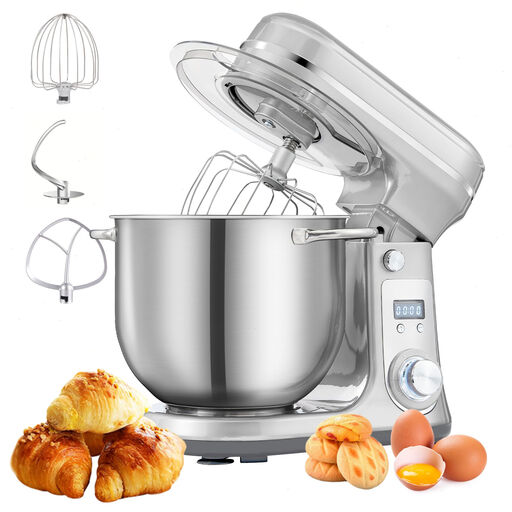 No image available
The product description mentions a dough hook and kneading; compare the manual with the amount and type of dough you want to make.
6-litre bowl, 1200 W, planetary mixing action, tilting head, LCD screen and timer.
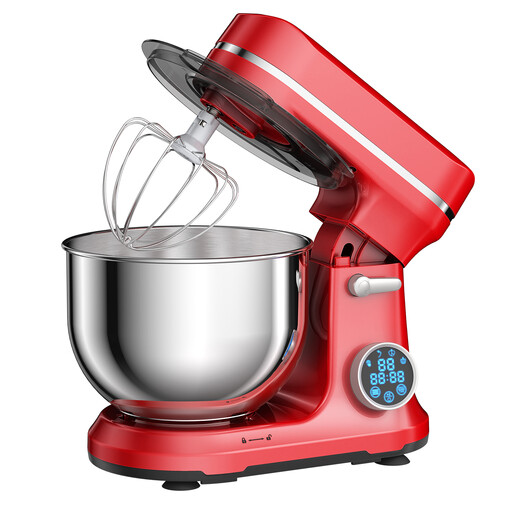 No image available
The product information mentions kneading and a dough hook; check the permitted load for your type of dough for the exact model.
5-litre bowl, 1200 W and planetary mixing action.
 No image available
The included dough hook makes this an option for kneading your own dough; also measure the space needed for the tilting head.
5-litre bowl, pulse function, 400 W, dough hook, whisk and beater.
No, not if you use ready-rolled puff pastry and almond paste. Rutger Bakt’s recipe allows for this method. If you make your own dough, check the manual to see which attachment to use and what load is permitted for that type of dough.
Don’t measure only the height of the mixer with the head down. A mixer with a tilting head also needs space for the head to move backwards and for you to access the bowl; check the full movement in the place where you’ll use the appliance.
Kenwood provides different instructions for bread and enriched dough for the Go KZM35.000RD, including separate quantities, speeds and mixing times. Follow the instructions for the type of dough you’re making and allow for the recommended rest period when handling heavy loads.
Yes. According to the Netherlands Food and Consumer Product Safety Authority, CE marking is mandatory for a new electric kitchen machine placed on the Dutch market as an electrical product. Check the marking on the exact model; its presence alone isn’t an independent kneading or safety test of a specific unit.
According to ACM ConsuWijzer, the seller is responsible for the statutory guarantee if the product doesn’t perform as you could reasonably expect under normal use. A manufacturer’s guarantee or additional service plan doesn’t replace this statutory right.