
Baking for a group
You’re making several batches for one coffee morning and want to compare the weight of your recipe with the stated capacity per batch.


First, compare the weight of your recipe batch with the stated capacity for a similar type of preparation, and check which mixing attachment comes with the stand mixer. A compact machine may mean mixing larger quantities in several batches. An extra bowl or built-in scales are most useful if you’ll actually use them. If you’re serving biscuits, also consider allergens and how the coffee morning is being organised.
You’re making several batches for one coffee morning and want to compare the weight of your recipe with the stated capacity per batch.
You want to mix butter, sugar, almonds and, if needed, flour with an attachment suited to the method. A dough hook isn’t automatically right for every biscuit dough.
You share the kitchen with other food preparation and want to clean the parts thoroughly and have clear allergen information when serving biscuits.
First, weigh a full batch of your recipe and compare it with a relevant capacity specification. Then consider the right mixing attachment, the space available for use and storage, and the parts you actually need.
| What to consider | What to look for | Best suited to |
|---|---|---|
| Quantity per batch | Weigh one batch of your recipe and compare it with the capacity for a similar type of preparation. Bowl capacity in litres is not the same as dough capacity. | If I’m making several batches for the coffee morning, I want to know whether one batch will fit in one go. Around 31% of consumers put the amount per batch first. |
| Suitable mixing attachment | Read the recipe steps and check which attachment comes with the exact model and is suitable for that preparation. | If my recipe mainly involves mixing, I don’t want to assume a dough hook, which is designed for kneading, will do the job. The right mixing attachment is the top priority for around 25% of consumers. |
| Cleaning and allergens | Check the cleaning instructions for each part and keep ingredient information to hand when serving the biscuits. | In a shared kitchen, I want to handle almonds and other recipe ingredients carefully. This is a top priority for around 19% of consumers. |
| Worktop and storage space | Measure the space available and compare it with the dimensions of the exact model. Remember to leave room to use the machine too. | If my kitchen is short on space, I’d rather make an extra batch if needed than have a machine that’s difficult to store. Around 13% of consumers prioritise space. |
| Parts and service | Compare what’s included with the exact product and check the warranty terms. The manufacturer’s warranty is separate from your statutory rights. | For occasional baking, I mainly want to pay for parts and service I’ll actually use. Around 12% of consumers prioritise value and service. |
Alongside the capacity in litres, manufacturers may give separate capacities for flour or dough. These figures aren’t necessarily directly comparable with one another or with the capacity for your almond biscuit dough.
Weigh your recipe batch and compare it with the model specification for a similar type of preparation. Plan to mix in several batches if needed.
Kneading and mixing are different types of preparation, and the attachments supplied vary by model.
Follow your recipe method and check which suitable attachment comes with the exact model before buying.
Almonds are nuts, so accidental transfer to other food is a separate risk.
Clean parts that come into contact with food according to the instructions and keep ingredient information available. Also consider which rules apply to the way you’re serving the biscuits.
MUM models offer different combinations of mixing capacity and features.
The Go KZM35.000GY and Chef KVC3100S differ in bowl capacity and stated flour capacity.
The Artisan 5KSM175PSECA is worth looking at if you want to compare an extra bowl and different flat beaters.
These stand mixers are options to compare by bowl capacity, stated mixing attachments and features that may be useful when mixing biscuit dough. Bowl capacity alone doesn’t tell you how much of your recipe will fit in one batch.
 No image available
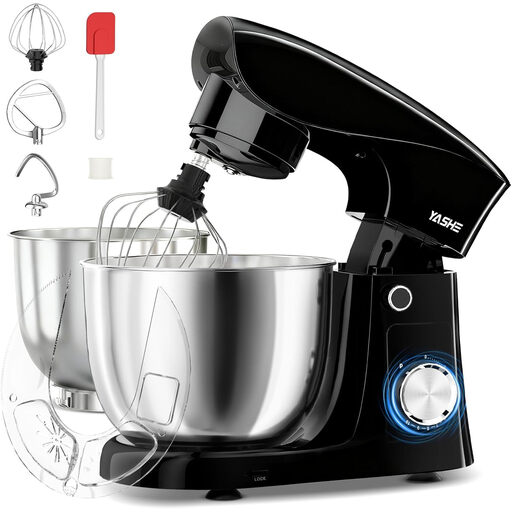
An option to compare if you want to weigh the stated bowl capacity against the weight of your recipe batch.
The product name lists 11 speeds and a 4.5-inch LED touchscreen.
 No image available
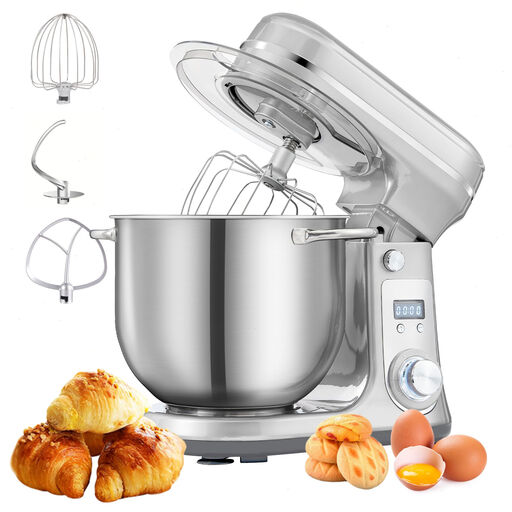
The two bowls listed may be useful if your recipe involves different mixing steps, but they don’t determine how much dough will fit in one go.
The product details list 4.5- and 5-litre bowls, a beater and a dough hook.
 No image available
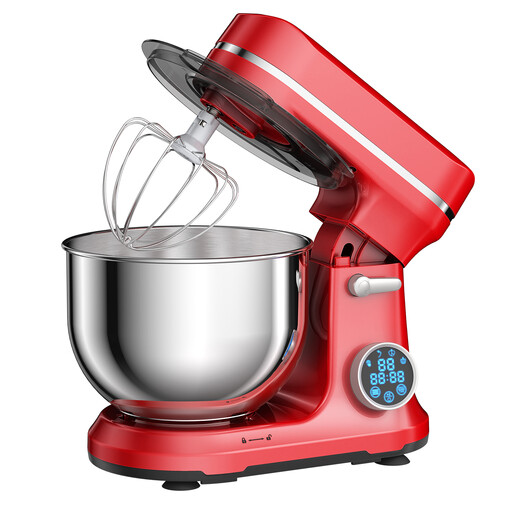
You can compare the stated bowl capacity with your recipe batch, but it doesn’t tell you how much almond biscuit dough will fit in each batch.
The product name lists 6 speeds plus a pulse setting, an LCD screen and a timer.
 No image available
An option to compare if you want to factor in the stated bowl capacity and cleaning information when choosing for your recipe.
The product name lists 11 speeds and dishwasher-safe parts.
 No image available
The listed beater is worth comparing with a recipe that mainly involves mixing. Check the method and the exact attachment supplied.
The product name lists a 5-litre bowl, a dough hook, a whisk and a beater.
Not necessarily. A flat beater is suited to recipes that mainly involve mixing, while a dough hook is designed for kneading. Follow your recipe method and check which attachment comes with the exact model.
Weigh one full batch of your recipe and compare it with the capacity the manufacturer states for a similar type of preparation with the exact model. Bowl volume in litres, or a capacity for a different type of preparation, doesn’t prove how much almond biscuit dough will fit in one go.
A manufacturer’s warranty is separate from your statutory guarantee. ACM ConsuWijzer says that if a product breaks sooner than you could reasonably expect under normal use, you can ask the seller to put things right. An additional warranty doesn’t replace that right.
The Netherlands Food and Consumer Product Safety Authority lists nuts among the allergens that food sellers and suppliers must tell customers about. For unwrapped products, this can, under the conditions described, be done with a card or verbally, with a visible sign directing customers to the information. The sales rules that apply depend on how you serve the biscuits; don’t assume without checking that giving them away for free is the same as selling them.
Not simply because it’s described as a ‘neighbourhood coffee morning’. The Netherlands Food and Consumer Product Safety Authority says that, for sales at markets and events, anyone who prepares and sells food several times a year must have an HACCP food safety plan. So first establish whether and how the biscuits will be sold, and how often.