What should you look for?
Your existing phone or compact camera
Choose this when: you mainly want to record whole stamps and test shots show enough detail.
Trade-off: with a compact camera, check its macro function and focusing distance. On their own, these don’t tell you how much of the frame the stamp will fill.
Compact camera with macro function
Choose this when: you want to take close-ups without using an interchangeable lens. Ricoh lists a digital microscope function from 1 cm and built-in macro lights for the PENTAX WG-90.
Trade-off: use test shots to check that your stamps’ details and colours come out well; the feature alone won’t guarantee this.
Mirrorless camera with a suitable macro lens
Choose this when: you want to capture small details or already own a body that can take a suitable macro lens.
Trade-off: check the mount and magnification of the exact lens you’ve chosen. The specifications of a separate lens don’t automatically apply to the body or kit lens.
Start with the framing you want: for a whole stamp, it’s important to see the edges, while small printing details may call for a different magnification. When photographing a series of stamps, a consistent setup helps you keep the distance, angle and lighting the same.
| What to consider |
What to look for when buying |
Who this matters to |
| Small details |
Compare the maximum magnification of the specific lens or macro function, and look at a test image. |
If I want to show small printing details, I look at how large the stamp appears in the image. Around 36% of consumers say detail is their main concern when buying. |
| Repeatable results |
Check whether you can position the camera securely and reproduce the same distance and framing. |
For a catalogue, I want to photograph stamps from the same distance and angle so the images remain comparable. Around 29% of consumers prioritise repeatability. |
| Colour and lighting |
Keep the lighting consistent throughout a series and assess test shots of the same stamp. |
When I take photos at different times, I want to minimise variations caused by the setup. Around 21% of consumers prioritise consistent colour and lighting. |
| Cost and simplicity |
Test the camera you already have first; if you’re considering a new mirrorless camera, compare both the body and the lens you’ll need. |
I want to know whether my current camera is good enough before choosing a body and possibly buying a separate macro lens. Around 14% of consumers prioritise ease of purchase and the overall cost. |
Cameras at Joybuy
Below are cameras for photography available at Joybuy. For stamp photography, use test shots to check whether you can achieve the framing and detail you want.
 No image available
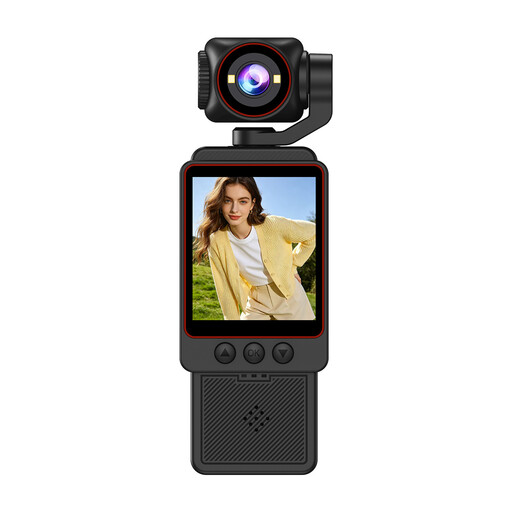
Small Video Camera 1080P HD
The product title mentions photography; take a test shot to see whether the camera captures the whole stamp and the detail you want.
The product title specifies 1080P HD video and HD photos.
View at Joybuy
 No image available
DJI Osmo Pocket 4 Standard Combo
The product title mentions photography; take a test shot to check whether you can achieve the framing you want for your stamps.
The product title specifies a 1″ CMOS sensor, 4K/240fps, 3-axis stabilisation, 107GB of built-in storage and a 2″ rotatable screen.
View at Joybuy
 No image available
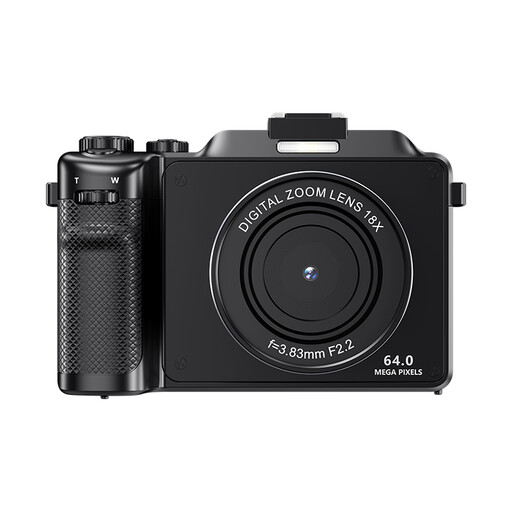
Komery X9 4K 64MP, black
The product title mentions photography; take a test shot to check whether your chosen stamp framing and details are visible.
The product title specifies 4K, 64MP, autofocus and 18× digital zoom. The product information states that image quality decreases when using digital zoom.
View at Joybuy
 No image available
Songdian Pocket Camera 4K 44MP, pink
The product title mentions photography; take a test shot to check whether the whole stamp and the detail you want fit in the frame.
The product title specifies 4K, 44MP and 16× zoom.
View at Joybuy
Frequently asked questions
Do you need a 1:1 macro lens for every stamp photo?
No, a 1:1 macro lens isn’t always needed for an overview photo. The Cultural Heritage Agency of the Netherlands also considers a suitable compact camera or phone useful for object photography. If you want to capture small details, compare the magnification offered by the specific lens or macro function.
How can you make photos from the same collection easier to compare?
Where possible, use the same camera, distance, angle and lighting. Take an overview photo and, if needed, add a close-up or a photo of the reverse.
Do you also need to buy a macro lens for a mirrorless camera?
Not before you’ve assessed the framing you want and the lens you already own. Canon’s 0.5× magnification applies to the RF 35mm F1.8 MACRO IS STM lens, while Nikon’s 1:1 magnification applies to the NIKKOR Z MC 50mm f/2.8. These specifications don’t automatically apply to every body or kit.
What warranty applies to a camera you buy as a consumer in the Netherlands?
According to the Dutch government, a product must be fit for purpose; the Netherlands has no fixed statutory warranty period. A manufacturer’s or extra warranty is in addition to your statutory rights. If something goes wrong, contact the seller.
Can you return a camera ordered online?
For applicable distance purchases made by consumers, the Dutch government says there is often a 14-day cooling-off period. Online purchases from a private individual aren’t covered by the distance-selling rules described here by the Dutch government; check the terms of the specific transaction.


