Who is this choice for?

Collectors capturing printing details

If you need to capture small features individually, magnification, precise focusing and a suitable macro lens are important considerations. Canon Netherlands and Nikon Netherlands outline the relevant lens options.

Collectors cataloguing their collection

When photographing a series of stamps with similar framing, a consistent, repeatable setup may matter more than maximum magnification. Canon Netherlands explains how to use a tripod and diffuse harsh light.

Beginners who want to take photos without changing lenses

If you want to try close-ups easily, consider a camera with a built-in close-up function and check whether it captures enough detail for the crop you want. OM Digital Solutions describes this feature on the Tough TG-7.

What should you look for when choosing?

Compact camera with close-up function

A good fit if: you want to use one camera without choosing or changing a separate macro lens. OM Digital Solutions states that the Tough TG-7 can focus as close as 1 cm in close-up mode.

Bear in mind: that distance alone doesn’t prove the whole stamp or every printing detail you want to capture will appear large enough and in focus.

Mirrorless camera with a macro lens

A good fit if: fine details matter or you already own a compatible camera body. Nikon Netherlands lists 1:1 magnification for the Z MC 50mm f/2.8; Canon Netherlands lists a maximum of 0.5× for the RF 35mm F1.8 Macro.

Bear in mind: a body or standard kit zoom doesn’t automatically include a macro lens, and close-ups require precise focusing.

What to consider What should you check? Who should pay particular attention?
Magnification and working distance Compare the maximum magnification of the exact lens with the crop you want. Also consider the space between the lens and the stamp; Sony Netherlands distinguishes between working distance and focusing distance. If I want to capture fine printing details, I check that the magnification suits the crop. Around 36% of consumers prioritise enlarging details.
A steady setup and window light Check whether you can position the camera steadily above the stamp. Canon Netherlands recommends diffusing harsh light where necessary; Nikon Netherlands highlights the effect of mixed daylight and artificial light on colour reproduction. For a collection, I want to photograph stamps with similar framing and lighting. Around 29% of consumers prioritise repeatable shots.
Taking close-ups easily Assess a sample photo taken from the distance and with the crop you need. Also check whether the camera or your hand blocks the window light; if you see reflections, adjust the shooting angle as needed. If I don’t want to choose or change a separate lens, I want to see whether the built-in close-up function captures enough detail. Around 21% of consumers prefer an all-in-one camera.
Lens mount and what’s included Check that the lens fits the camera body and confirm which lens is actually included. Canon Netherlands lists RF and RF-S support for the EOS R50; the kit mentioned includes an RF-S 18-45mm lens, not the separate RF 35mm macro lens. When I choose a mirrorless camera, I want to know in advance which compatible lens I’ll need and what the kit includes. Around 14% of consumers start by considering the complete camera-and-lens combination.

Common purchasing mistakes

  • Assuming every macro lens offers 1:1 magnification

    According to Canon Netherlands, the Canon RF 35mm F1.8 Macro mentioned here has a maximum magnification of 0.5×, while Nikon Netherlands lists 1:1 for the Z MC 50mm f/2.8.

    Compare the magnification ratio of the exact lens with the detail crop you want to capture.

  • Considering only the camera body or standard kit lens

    A mirrorless camera or standard kit zoom doesn’t automatically include the macro lens you need for the close-ups you want. The Canon EOS R50 kit described by Canon Netherlands includes an RF-S 18-45mm lens, not the RF 35mm macro lens.

    Check the lens mount and the contents of the specific kit. A separate macro lens also needs to be compatible with the camera body.

  • Confusing focusing distance with magnification

    The minimum focusing distance alone doesn’t tell you how large the stamp will appear on the sensor. Depth of field is shallow in close-up photography, so focusing may need to be especially precise.

    Check magnification and working distance separately, and take test photos by your window. See whether the whole stamp is in focus and watch out for reflections.

Brands and systems to consider

Canon

EOS R50 system with interchangeable RF lenses.

  • Canon Netherlands lists a maximum magnification of 0.5× for the separate RF 35mm F1.8 Macro.
  • Check whether the macro lens is included in your chosen kit; the EOS R50 kit described includes an RF-S 18-45mm lens.

Nikon

Z system with separate macro lenses for compatible camera bodies.

  • Nikon Netherlands lists 1:1 magnification for the Z MC 50mm f/2.8 and a maximum of 0.67× for the DX MC 35mm f/1.7.
  • The stated magnification and compatibility apply to the specific lens and a suitable camera body; check which lens is included in a kit.

OM SYSTEM

The Tough TG-7 is a compact camera with a built-in lens and close-up function.

  • OM Digital Solutions states that its close-up function can focus as close as 1 cm.
  • That stated distance doesn’t automatically mean the stamp details you want will be sharp enough in your setup.

Sony

E-mount system with a separate SEL30M35 macro lens for small subjects.

  • Sony Netherlands lists 1:1 magnification for the SEL30M35.
  • Sony distinguishes between an approximate 2 cm working distance and a 9.5 cm focusing distance; allow for the limited space available for lighting and positioning.

Cameras at Joybuy

These cameras are options for photography; check the close-up capabilities and focusing distance of each model to see whether they suit the stamp crop you need.
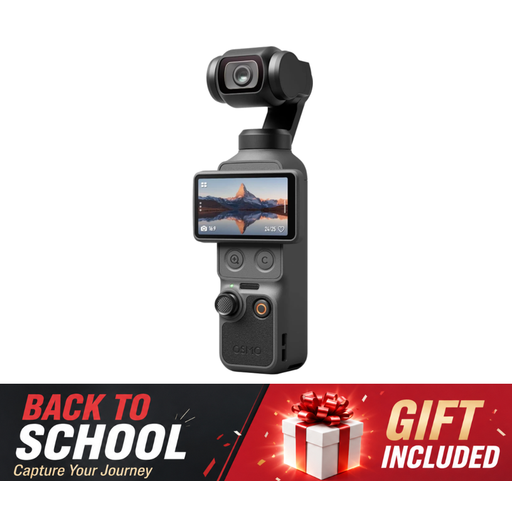
DJI Osmo Pocket 4 Standard Combo

DJI Osmo Pocket 4 Standard Combo

For stamp photography, check that the camera can focus from the distance required for your close-up; the stated zoom specification doesn’t establish whether it’s suitable for macro photography.

The product name lists a 1-inch CMOS sensor, 2× lossless zoom, 3-axis stabilisation, 107 GB of built-in storage and a 2-inch rotatable screen.

View at Joybuy

Songdian Pocket Camera 4K 44MP, pink

Songdian Pocket Camera 4K 44MP, pink

If you’re considering this pocket camera for photographing stamps, check that its focusing distance and close-up function suit the crop you want.

The product name lists 4K, 44 MP and 16× zoom. The zoom specification alone doesn’t tell you anything about macro magnification.

View at Joybuy
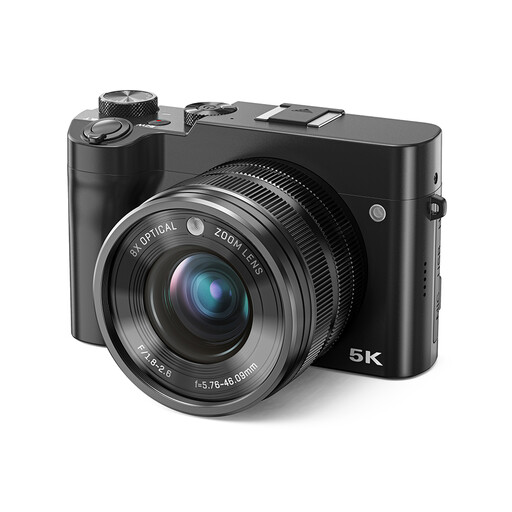
Songdian Digital Camera 5K 64MP with dual lens, black

Songdian Digital Camera 5K 64MP with dual lens, black

For stamp close-ups, check whether the camera can focus at a short distance to suit the way you plan to use it; the product specifications don’t state a macro magnification.

The product name lists 5K, 64 MP, a dual lens and 8× optical zoom.

View at Joybuy

Frequently asked questions

Do I need a macro lens to photograph an entire stamp?

No, not necessarily: what matters is whether the camera and lens you have can capture the whole stamp and the details you want, in focus and at a large enough size. For detailed close-ups, the magnification ratio of a suitable macro lens is a more useful guide than the word ‘macro’ alone.

How should I set up a shot in window light?

Place the stamp on a plain surface and keep the camera steady, especially if you’re taking a series of photos. Diffuse harsh light where needed, check that the whole stamp is in focus and change the shooting angle if you see reflections. Avoid unnecessary mixing of daylight and artificial light when colour accuracy matters.

What should I check before placing an order?

Check whether the camera includes the macro lens you need, whether the lens fits the camera body and who the seller is. According to the Government of the Netherlands, the seller must offer a solution if a product is faulty; in the Netherlands, there is no fixed two-year statutory warranty period for all products.

Do I always have 14 days to change my mind when buying a camera online?

No, this doesn’t apply in every case. According to the Government of the Netherlands, many online distance purchases from a business come with a 14-day cooling-off period, but there are exceptions; buying online from a private seller doesn’t fall under the same example of a distance purchase. Check which terms apply to your purchase.
