
Detail-focused flower photographer
You want to capture individual stamens in close-up, so you compare the stated magnification and the camera-and-lens combination that will deliver it.


First decide how large you want the stamens to appear in your photos, then work out how much equipment you want to carry. A compact camera with a close-up function could suit spontaneous photography on the go. If you want more choice over magnification, it’s worth comparing a mirrorless camera with a suitable macro lens. Check the lens mount, what’s included in the kit and the focusing distance. Canon and Nikon publish magnification specifications for their macro lenses; OM Digital Solutions gives a short shooting distance for the Tough TG-7, but this is not the same as magnification.
You want to capture individual stamens in close-up, so you compare the stated magnification and the camera-and-lens combination that will deliver it.
You want to take close-up photos on the go without carrying lots of separate equipment, and weigh that convenience against the level of detail you’re after.
You want to check whether a compatible macro lens can provide the magnification you need before buying a new camera body.
A short focusing distance is not the same as high magnification. Compare magnification, ease of carrying on a walk, working in shade and the complete compatible setup.
Best suited to when: you want to take close-up photos of flowers while out walking, without changing lenses.
The trade-off: a short shooting distance doesn’t tell you how large a stamen will appear on the sensor. The distance from the flower can also affect how much light is available.
Best suited to when: you want to compare magnification and lens options carefully for capturing small details.
The trade-off: you’ll carry the body and lens together, and the lens won’t necessarily be included with a camera-body offer.
Best suited to when: you already have an interchangeable-lens camera and want to assess a suitable macro lens first.
The trade-off: check the lens mount and magnification. An existing zoom lens and a macro lens aren’t interchangeable without checking first.
| What to consider | What to check before buying | Who is this important to? |
|---|---|---|
| Magnification | Check the maximum magnification of the specific lens or close-up function, as well as the focusing distance. | If I want to capture individual stamens in close-up, I compare the magnification of the complete camera-and-lens combination. Around 36% of consumers put magnification first. |
| Ease of carrying | Compare the weight of the complete setup and check whether you’ll need a separate macro lens. | If I want to take spontaneous photos on a woodland walk, I don’t want to carry more equipment than I need. Ease of carrying is the top priority for around 29% of consumers. |
| Focusing in shade | Look at the focusing options and the conditions attached to stabilisation specifications. | If I want to photograph stamens in the shade, I look for accurate focusing and a stable shot. Around 21% of consumers prioritise working in shade. |
| Complete setup and compatibility | Check the exact lens mount, what’s in the box and the terms of the offer. | If I already have a camera body or want to work out the total cost, I check which extra components I’ll need. Around 14% of consumers prioritise the cost and compatibility of the complete setup. |
Shooting distance and magnification ratio describe different features. So a camera that can focus at close range won’t automatically show an individual stamen in close-up.
Compare sample photos and the magnification specification for the exact model. Also check how much space will be left between the lens and the flower for light.
The magnification of a macro lens doesn’t automatically apply to every camera body or kit on offer. A suitable lens may be sold separately.
Check the lens mount and what’s included in the offer, then compare the complete setup you’ll need.
Canon quotes up to 5 stops of optical stabilisation for the RF 100mm F2.8L Macro IS USM, but 2 stops at 1.0× under Canon’s test standards. So the general maximum doesn’t necessarily apply at that magnification.
Read the conditions attached to the figure for the magnification you want to use. In low light, also plan how you’ll keep the camera steady or support it.
The Tough TG-7 is a compact camera option for close-up shots on the go, without a separate lens.
The EOS R50 with a suitable RF macro lens is a mirrorless camera option if you want to compare lens choices and magnification.
The NIKKOR Z MC 50mm f/2.8 is a macro option for Z cameras and may be worth considering if you already have a compatible Nikon body.
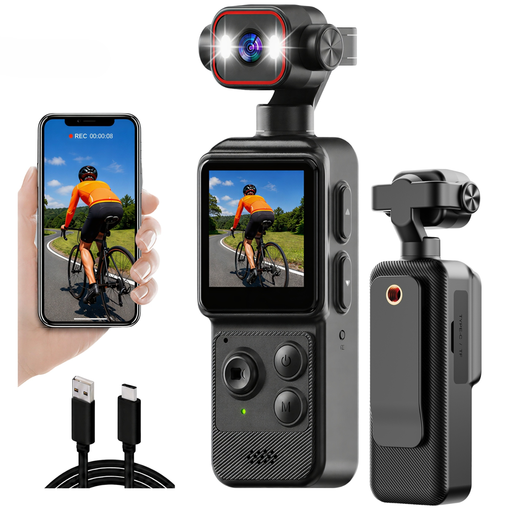
The products below are camera options for photography and vlogging. Check whether the focusing distance and magnification of each model are suitable for capturing stamens.
 No image available
The product title mentions a clip and a wide-angle lens. Check whether the camera can focus close enough to capture stamens.
The title lists a 1.54-inch screen and a 140° viewing angle.
 No image available
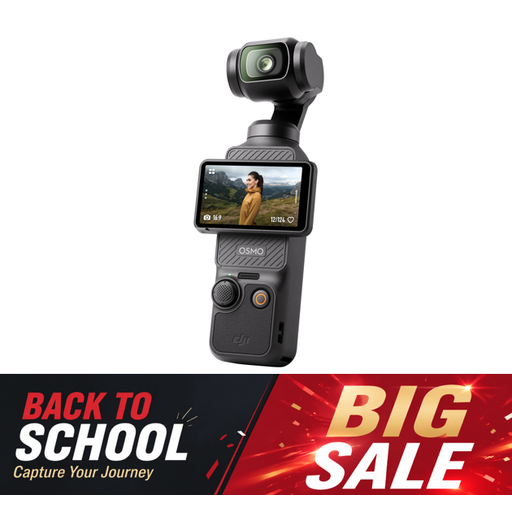
The product title describes a pocket camera for video and vlogging. Check separately whether it can focus close enough to capture stamens.
The title lists a 1″ CMOS sensor, 4K/240fps, 107 GB of built-in storage and a 2″ rotating screen.
 No image available
The product title mentions video and vlogging features. Check whether the camera is also suitable for the close-up shots of stamens you’re looking to take.
The title lists a 1″ CMOS sensor, 4K/120fps, 3-axis stabilisation and a 2″ rotating touchscreen.
 No image available
The included zoom lens is described in the product information as suitable for close-ups. Check its maximum magnification and focusing distance for photographing stamens.
The product title lists a 16–50mm zoom lens.
No. OM Digital Solutions gives the TG-7 a shooting distance of down to around 1 cm, while Nikon specifies a 1:1 magnification ratio for the NIKKOR Z MC 50mm f/2.8. These figures describe different features and aren’t directly comparable.
Focus carefully and review test shots to see how much of the subject is in focus. Canon points out that close-ups generally have a shallow depth of field. Keep to permitted paths, and don’t move or pick the flower to take your photo.
Follow the care instructions for your exact camera and lens before cleaning or storing them. OM Digital Solutions describes the TG-7 body as dust- and water-resistant. Canon warns that the RF 100mm lens’s dust and moisture resistance doesn’t completely prevent ingress, so don’t assume that a feature of one component automatically applies to the whole setup.
No, you’re already covered by the legal guarantee when you buy a product. According to the Dutch government, the seller must provide a solution if a product is faulty; there’s no fixed statutory guarantee period in the Netherlands. When considering paid-for extra cover, check what additional rights it actually provides.
Access rules depend on the area. Natuurmonumenten asks visitors to stay on the paths in its nature reserves and doesn’t allow foraging there. Check the local information and signs; the rules for one area don’t automatically apply to every woodland.