
Vandaag of morgen in huis

Kwaliteit gegarandeerd

Welkomstaanbiedingen ontgrendelen: GRATIS bezorging | Tot 80% korting | Gratis 30 dagen JoyPlus-proefperiode
Download de app
Buying a new pan seems simple until you have to choose between a stainless steel pan, a tri-ply pan, a stainless steel frying pan or a stainless steel wok. Marketing copy often uses terms such as “even heat distribution”, “built to last” and “suitable for all hobs”. These claims only mean something when you check the underlying specifications.
For British kitchens, heat distribution, hob compatibility, size and maintenance are particularly important. Below, you’ll find what to look for, which common pitfalls to avoid and which type of stainless steel cookware best suits your needs.
A single-layer stainless steel pan can be sturdy, but it may distribute heat less evenly. This can create hot spots more quickly, particularly on induction or when cooking at a high setting. Check whether the pan has a multi-layer base or a tri-ply construction.
Tri-ply pans generally consist of layers of stainless steel with aluminium in between. Aluminium conducts heat well, while stainless steel provides strength and contact with the food. According to the product descriptions of several PURECOOK models, the construction is stainless steel-aluminium-stainless steel. This is a product specification, not a guarantee that every dish will automatically cook evenly.
A pan suitable for all hobs should work on induction, gas, ceramic and electric hobs. However, there may still be restrictions concerning the oven, lid or handles. For example, a glass lid may have a lower maximum temperature than the pan itself.
Also check the diameter of the base. A large pan on a small induction zone will heat less efficiently. For an induction pan, it’s a good idea to compare the base size with the cooking zone you use at home.
A dishwasher-safe pan can be convenient, but harsh detergents, high temperatures and contact with other metal items can affect its appearance. For pans with a ceramic non-stick coating, wooden handle or plastic components, hand washing is often the wiser choice.
White marks and rainbow discolouration on stainless steel are usually caused by minerals in the water, starch or overheating. They do not automatically mean that the pan is defective. A soft sponge and a little vinegar can help remove this residue. Do not use wire wool on polished surfaces or coatings.
304 stainless steel is widely used in household cookware. Product information often describes the material as corrosion-resistant and suitable for contact with food. 316 stainless steel contains a different alloy and, according to manufacturers’ information, is used when greater corrosion resistance is required. The overall performance also depends on the base, finish and maintenance.
Claims about food safety or compliance with specific regulations should always be linked to the product information. For example, PURECOOK states for some models that the materials comply with the Chinese GB 4806.9 standard and US FDA regulations. This is a statement in the brand’s product description and is not a general characteristic of all stainless steel pans.
For everyday cooking, the following features are relevant:
A stainless steel frying pan without a non-stick coating requires a different cooking technique. Heat the pan gently first, then add oil and allow the food to sit for a while before turning it. This helps prevent sticking without immediately having to rely on a coating.
Choose the capacity based on the size of your household and your cooking habits:
A saucepan with a lid is handy for sauces and reheating. A soup or stock pot provides more room for pasta, soup and potatoes. A steamer is useful if you want to steam and cook at the same time, but it takes up more cupboard space.
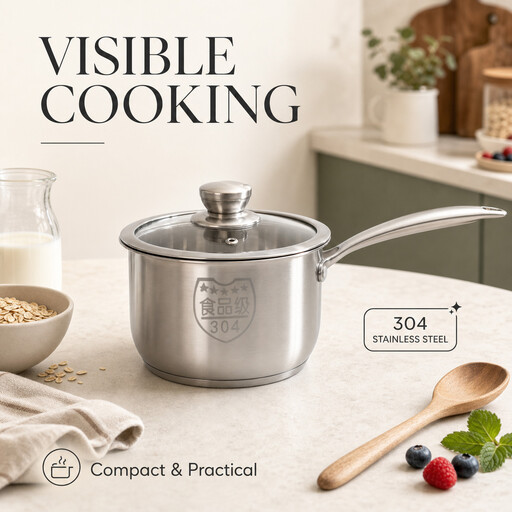
Why it suits this profile: The 18 cm saucepan is designed for small portions, milk, porridge, sauces and noodles. The glass lid lets you keep an eye on the cooking process.
The product description mentions a multi-layer, magnetically conductive base and compatibility with induction, gas and ceramic hobs. Before buying, check the current instructions for dishwasher use.
18 cm diameter, 304 stainless steel, glass lid and a deep design to help prevent boiling over.
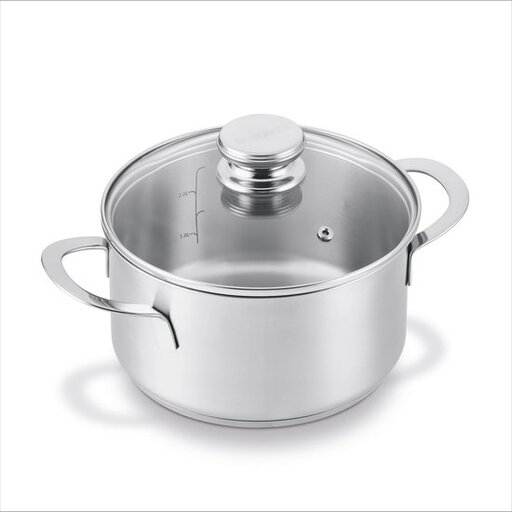
Why it suits this profile: According to the product information, this cooking pot has a capacity of 5.5 litres, a glass lid and an integrated measurement scale. That makes it suitable for families who regularly prepare larger portions.
The product listing specifies suitability for induction, gas, electric, ceramic and halogen hobs. According to the description, the steam vents in the lid help prevent boiling over.
24 cm, 5.5 litres, dishwasher-safe according to the product information and suitable for all the listed hobs.
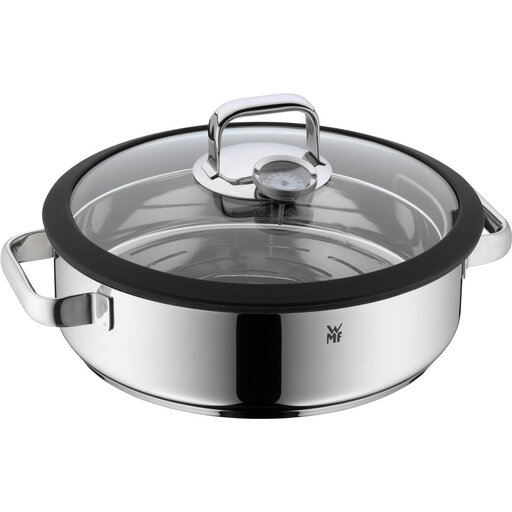
Why it suits this profile: This steamer is designed for steaming, roasting and cooking larger portions. According to the product information, it has a capacity of approximately 5 litres.
The product description mentions a TransTherm universal induction base and a steaming insert. The model is dishwasher-safe, except for the thermometer, so this component requires separate care.
28 cm, approximately 5 litres, steaming insert, thermometer and use on all heat sources according to the product listing.
Wash a new stainless steel pan with warm water and washing-up liquid before using it for the first time. For some models, the manufacturer states that production residue or polishing wax may remain; follow the instructions supplied with the pan.
It’s best to use:
Allow a hot pan to cool down before adding cold water. Sudden changes in temperature can cause warping or damage a glass lid. For a pan with a coating, always check the brand’s care instructions.
We’ve put together a complete, up-to-date list of products that fully meet these strict selection criteria and the applicable European safety regulations.
That depends on the base. A stainless steel pan is suitable for induction if the manufacturer states this and the base is magnetic. Look for terms such as induction-compatible, magnetic base or all hobs. Also check whether the base diameter matches your induction zone.
Stainless steel usually does not have a traditional non-stick coating. A pan that is too cold, too little fat or turning the food too soon can cause sticking. Heat the pan gently, add oil and give the food time to release naturally. This technique is particularly important when using a stainless steel wok without a coating.
The lifespan depends on the material, base construction, usage and maintenance. A pan without a coating does not have a non-stick layer that can wear away, but it may still become discoloured or scratched. Handles, lids and any coatings require extra care. Store pans with space between them and follow the manufacturer’s care instructions.
