
当日/次日达

品质保障

开启新人专享福利: 全场免邮 | 低至 2 折 | 免费试用 30 天 JoyPlus 会员
下载 Joybuy
Stainless steel pans are popular with home chefs and families because they are available without a non-stick coating and can be suitable for different hobs. Yet simply seeing "RVS" on the packaging tells you little about the practical quality. A thin base, an unsuitable diameter or an unclear material specification can cause a pan to heat unevenly, stick or be difficult to clean.
With this buying guide, you can compare stainless steel pans on material, heat distribution, size and maintenance. That way, you'll find the right stainless steel pan for induction, gas, ceramic or electric cooking.
Not every product page states which type of steel has been used. A designation such as 304 stainless steel gives you more information than just "stainless steel". This material is widely used for products that come into contact with food. However, always check the full product description and any information about food contact; a material name on its own is no substitute for product documentation.
Some pans use a different type of steel, such as 316L. That can be interesting if you are looking for a specific material composition, but also look at the base construction, handles and care instructions.
A pan can technically work on induction, yet still heat slowly or unevenly. So pay attention to a composite base, multi-layer base or magnetically conductive base. These constructions often combine stainless steel with other metals to distribute heat better across the base.
Also check that the diameter matches the cooking zone. With a small induction zone, a 30 cm pan can heat up less efficiently than a 24 cm or 26 cm pan.
A wok without a non-stick coating or a stainless steel frying pan can cause food to stick if used incorrectly. That is not a defect in itself: stainless steel requires a different cooking technique.
Use the pan as follows:
A smooth or brushed interior is easy to wipe clean, while a polished interior can hold onto less oil and food residue. According to the product descriptions of the models mentioned, various pans have a 304 stainless steel interior without a non-stick coating.
That makes them suitable for cooking on a high or medium-high heat, but watch out for discolouration from overheating. According to the product information, white marks are often caused by minerals or starch from water and food. A little vinegar or lemon can help with cleaning. Do not use steel wool or harsh abrasives if the manufacturer advises against it.
For an induction pan, a magnetic base is essential. Alongside "suitable for induction", also look at the stated compatibility with gas, electric and ceramic hobs. A thick, multi-layer base helps with more even heat distribution.
A family that often makes soup, pasta or stews will get more use from a soup pot for induction of 24 cm with a deep shape than from a shallow frying pan. For stir-frying, a wok shape with enough base surface area and a sturdy handle is more practical.
A 24 cm pan with a capacity of around 5.6 litres is, according to the product information, suitable for meals for approximately three to five people. A cooking pot with a glass lid makes it possible to monitor the cooking process without lifting the lid constantly.
Note the difference between a regular hotpot pan, a divided hotpot pan and a steamer:
Also check whether the pan is dishwasher-safe. "Dishwasher-safe pan" does not always mean that handles, silicone parts or the finish will stay the same in the long term. Hand washing with a soft sponge often remains the safest choice.
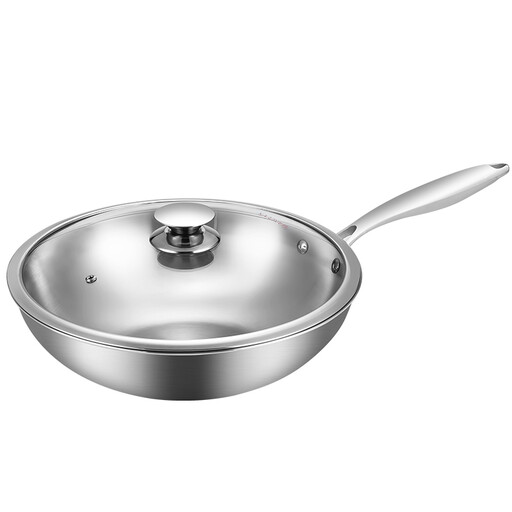
Why this fits the profile: This wok offers a versatile start for stir-frying, searing and everyday cooking on gas, induction, electric and ceramic hobs.
The product description states 304 stainless steel, no non-stick coating, a composite base and compatibility with multiple hobs. This means the key specifications are clearly outlined.
28 cm diameter, glass lid, suitable for four types of hob and, according to the product information, dishwasher-safe.
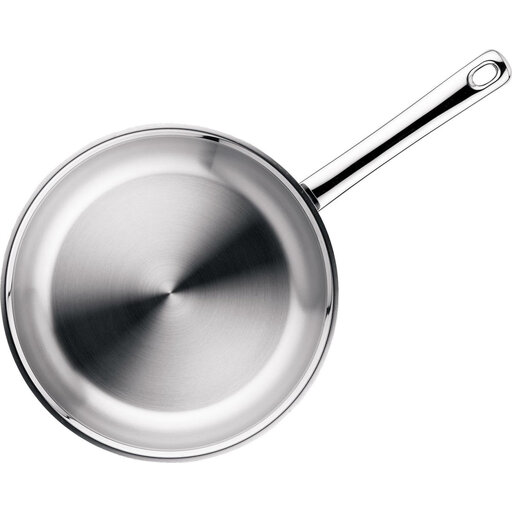
Why this fits the profile: A compact stainless steel frying pan for those who mainly cook meat, fish, burgers and sauces, and value a well-known product specification.
The product information mentions Cromargan 18/10 stainless steel, a TransTherm base and suitability for induction. The pan does not rely on a chemical non-stick coating.
24 cm for approximately three people, oven-safe according to the product description up to 250 °C and dishwasher-safe.
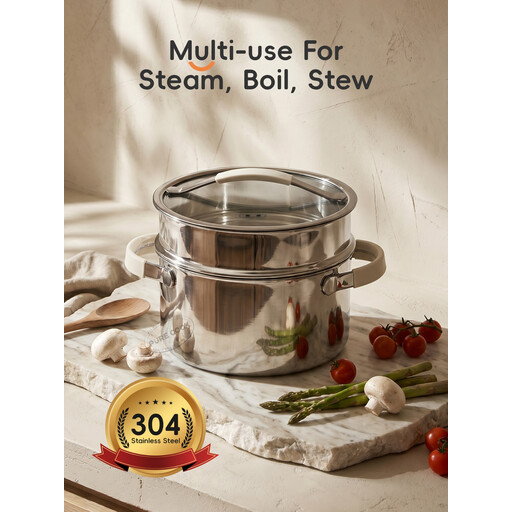
Why this fits the profile: This deep pot combines soup cooking and steaming. That suits families who want to prepare multiple dishes in one cooking session.
The product description specifies 304 stainless steel, a multi-layer composite base, two levels for steaming and compatibility with induction, gas and ceramic hobs.
24 cm, suitable for three to five people, glass lid and a removable steamer insert. The product information recommends hand washing with mild washing-up liquid or cleaning in the dishwasher.
We have put together a full, up-to-date list of products that fully meet these strict selection criteria and comply with current European safety regulations.
A stainless steel pan can remain usable for a long time if you do not unnecessarily expose the base to extreme heat. Do not leave an empty pan on a high setting for a long time and prevent flames from coming up the sides of the pan. Dry the pan after washing to minimise water spots.
With a new pan, according to the product information, a dark manufacturing residue may remain. Before first use, boil the pan out with water for a few minutes and then clean it thoroughly. Preferably use a soft sponge. A dishwasher-safe pan can go in the dishwasher if the manufacturer states so, but always check the instructions for the handles, lid and any silicone parts.
For outdoor cooking, a BBQ grill basket made of 304 stainless steel can be practical for fish, prawns or vegetables. Bear in mind that metal parts become very hot during use. A grill basket therefore requires heat-resistant gloves and thorough drying after cleaning.
That depends on the base. Choose a model that explicitly states it is suitable for induction and check whether the base is magnetic. A composite or multi-layer base can also help with more even heat distribution.
Stainless steel usually has no non-stick coating. A pan that is too cold, too little oil or too high a heat increases the chance of sticking. Preheat the pan moderately, add oil and give ingredients time to form a crust before turning them.
The lifespan depends on the base, the handle, the frequency of use and the care. Stainless steel itself does not flake off like a damaged coating, but the pan can discolour, scratch or warp if used incorrectly. So check the base construction, handle attachment and cleaning instructions before you buy.
