
Vandaag of morgen in huis

Kwaliteit gegarandeerd

Welkomstaanbiedingen ontgrendelen: GRATIS bezorging | Tot 80% korting | Gratis 30 dagen JoyPlus-proefperiode
Download de app
Stainless steel pans are popular with households across the Netherlands because they can be used for everyday cooking, high temperatures and a range of hob types. However, a shiny exterior tells you little about how well a pan performs in practice. A thin base, unclear hob compatibility or a handle that cannot go in the dishwasher can quickly lead to disappointment.
As a Joybuy Product Recommendation Officer, I match the most important product specifications to different cooking needs. This helps you see which features suit your kitchen and which marketing claims are worth checking before you place an order.
A 304 stainless steel pan is often described as suitable for food contact and resistant to corrosion. That’s useful information, but the material grade doesn’t tell you everything. The pan’s thickness, base construction, finish and handle all affect how easy it is to use.
So, check the following too:
A pan may be suitable for gas, electric and ceramic hobs, but that doesn’t automatically mean it will work on induction. Induction requires a magnetic base. Look for an explicit statement that the pan is induction-compatible, and check that this applies to the size you want.
Also consider the power setting on your induction hob. Some products are only recommended for medium or low heat. This is particularly relevant for pans with a thin base or wooden or plastic parts.
Uncoated stainless steel can make food stick if the pan is cold, the heat is too high or you don’t use enough fat. According to the product information for several MAXCOOK pans, the “hot pan, cold oil” method can help reduce sticking. This is the brand’s advice for use, not a guarantee that food will never stick.
Stainless steel cookware also needs careful maintenance. White marks can be caused by minerals in water or starch. According to the product description, rainbow-coloured discolouration may be linked to salt and minerals overheating. Vinegar or lemon is suggested as a cleaning option. Don’t use an abrasive scourer if the manufacturer advises against it.
For everyday cooking, 304 stainless steel, a multi-layer base and clear information about the materials are practical points to consider. Tri-ply pans often have stainless steel on the outside and an aluminium core. Aluminium conducts heat well, while stainless steel provides strength and a smooth cooking surface.
Also consider the difference between an all-stainless-steel product and a pan with additional components:
A diameter of 18 to 20 cm is often suitable for smaller portions and households of one or two people. A 24 cm stainless steel cooking pot with a capacity of around 5,6 quart is more practical for soups, pasta and stews for several people. A 28 cm frying pan gives you room to cook a family meal without taking up too much storage space.
A 30 to 32 cm stainless steel wok is suitable for stir-frying and larger portions, but needs more space on the hob and in the cupboard. Check the handles too: a single long handle can be convenient, while two side handles can make a heavy pan easier to lift.
Not every pan with a stainless steel exterior is dishwasher-safe. For example, the product information recommends hand-washing the 28 cm MAXCOOK steamer, while some tri-ply pans and divided hot pots are described as dishwasher-safe.
To help your pan last longer:
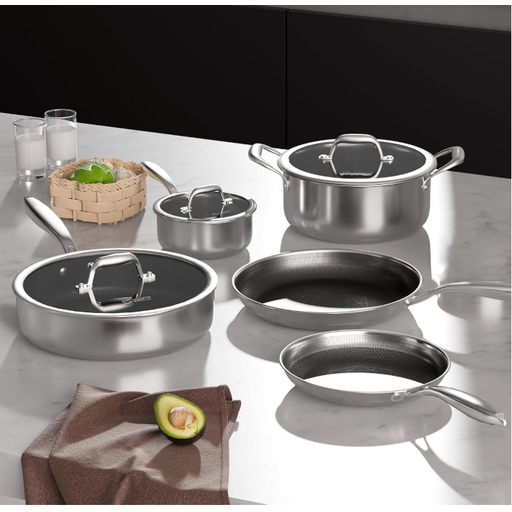
Why it suits this profile: A set can be a practical choice if you need several essential pans and don’t want to buy each one separately. Check which items are included and which hobs they’re compatible with before you buy.
The product name identifies it as a stainless steel cookware set. Check exactly what’s included before you buy, as a set doesn’t mean every item has the same material construction.
Several items in one purchase; a useful starting point for everyday cooking.

Why it suits this profile: According to the product information, this 28 cm frying pan has a tri-ply construction with 304 stainless steel and an aluminium core. It’s a good fit if even heat distribution matters to you.
The product information specifies the layer construction and compatibility with gas, induction, electric and ceramic hobs, as well as oven use. Check the current temperature limit before use.
28 cm size; tri-ply construction; glass lid; described as dishwasher-safe in the product information.
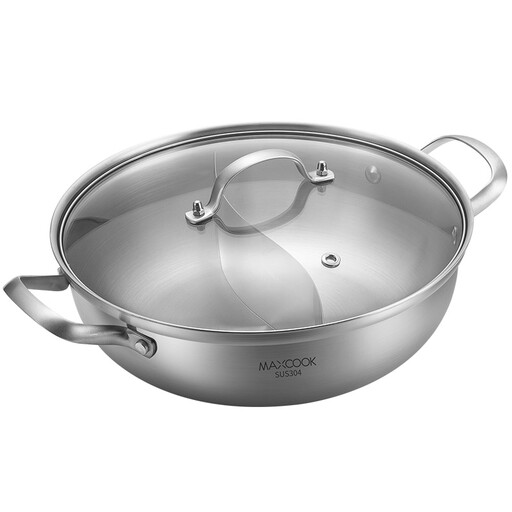
Why it suits this profile: The fixed divider lets you cook two broths or dishes at the same time. According to the product information, the pan is 26 cm and suitable for induction, gas, electric and ceramic hobs.
The fixed divider keeps flavours separate during a hot pot meal. The base construction and hob compatibility are clearly specified.
Two compartments; described in the product information as tri-ply 304 stainless steel; dishwasher-safe according to the listed product specifications.
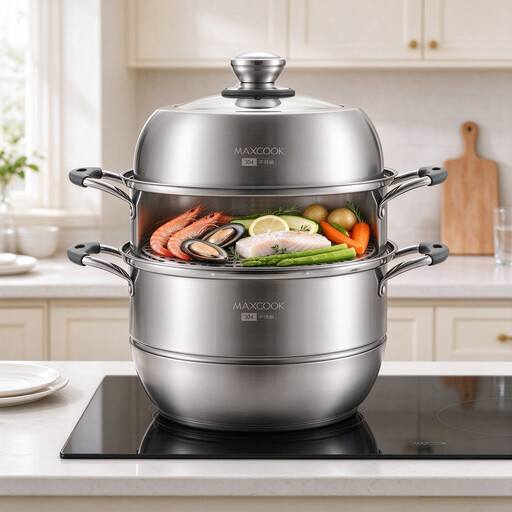
Why it suits this profile: The three tiers let you steam several ingredients at once. According to the product information, the 28 cm pan is suitable for induction, gas, electric and ceramic hobs.
Hob compatibility is clearly stated. Hand-washing is recommended, so you know not to expect it to be suitable for the dishwasher.
Three tiers; 28 cm diameter; heat-resistant silicone handles according to the product description.
We’ve put together a complete, up-to-date list of products that meet these strict selection criteria and the current European safety regulations.
That depends on the base. Choose a product that explicitly states it’s induction-compatible. A thick composite base or magnetic layer doesn’t automatically make a pan suitable, so always check the product specifications.
Heat the pan gradually, then add oil and cook over moderate heat. With uncoated stainless steel, it also helps not to turn ingredients too soon. Some brands recommend the “hot pan, cold oil” method, but the results also depend on the dish and the hob.
There’s no set lifespan for every model. A pan with a sturdy base, strong joints and the right care can remain useful for a long time. Check regularly that the base stays flat, the handles are secure and any coatings are undamaged. If you’re unsure, follow the manufacturer’s care instructions.
