
当日/次日达

品质保障

开启新人专享福利: 全场免邮 | 低至 2 折 | 免费试用 30 天 JoyPlus 会员
下载 Joybuy
A stainless steel frying pan can last for years, but not every stainless steel pan cooks in the same way. A thin base can create localised hot spots, an oversized pan may sit poorly on your cooking zone, and a dishwasher-safe model is not automatically maintenance-free.
For home chefs, keen cooks and families, choosing the right pan involves more than a shiny exterior. Pay particular attention to the material construction, heat source compatibility, diameter and included accessories. Below, we explain what to look for and which models suit different cooking habits.
Stainless steel is a broad term. A 304 stainless steel frying pan contains a type of steel widely used for food contact, but heat distribution also depends on the base construction. A single-layer pan may respond more quickly, but it is more likely to develop localised hot spots.
A tri-ply frying pan generally consists of three layers, such as stainless steel, aluminium and stainless steel. Aluminium conducts heat well, while the outer layers provide strength and a rust-resistant cooking surface. Always check the exact product description, though: “tri-ply” can refer to a different construction from one brand to another.
A traditional stainless steel frying pan does not have a conventional non-stick coating. As a result, eggs, fish or potatoes may stick more easily if the pan has not been preheated properly. The practical method is:
Models with ceramic or other coatings require different treatment. According to information provided by the respective brands, some coatings can withstand high temperatures, but always follow the instructions for use and avoid sharp metal utensils where this is advised.
A 24 cm frying pan is useful for one or two portions and smaller hobs. A 26 cm frying pan offers more space for a household of two or three people. For larger families or several pieces of meat, a 28 cm frying pan is more practical, provided the base fits the cooking zone properly.
Do not look only at the top rim. The effective base diameter determines how much heat the pan receives from an induction zone or electric hob.
Pay attention to the following points:
Claims such as “30% longer” or “31% more durable” come from the brands’ product information. Do not treat such percentages as a general guarantee for every kitchen or use case.
An induction frying pan must have a magnetic base. The models below are described in the product information as suitable for induction, gas, ceramic and electric hobs, among others. Even so, check the recommended base diameter for your cooking zone before buying.
A stainless steel wok with a thicker composite base may be interesting for stir-frying, but a wok shape heats differently from a flat frying pan. Choose a flat base if you mainly fry, sear and reduce sauces.
A frying pan with a lid is useful for simmering, braising and allowing dishes to finish cooking. Check the maximum oven temperature for both the pan and the lid. If a model’s product information states an oven limit of 220 °F, this is approximately 104 °C; that is different from a pan suitable for temperatures of up to 250 °C.
“Dishwasher-safe frying pan” does not necessarily mean that the finish will always remain unchanged. Washing by hand with a soft sponge can help minimise discolouration and dull patches. Dry stainless steel thoroughly after washing to reduce water spots.
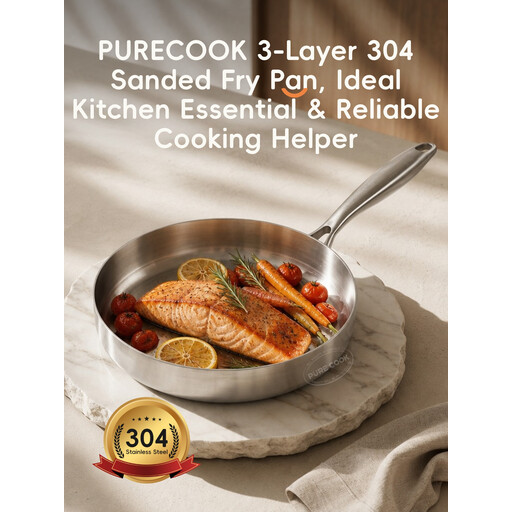
Why it suits this profile: A practical size for everyday meals and households looking for one versatile pan.
The product description mentions a three-layer construction and suitability for gas, induction, ceramic and electric cooking. No non-stick coating is specified.
26 cm, 304 stainless steel, three layers and dishwasher-safe according to the product information.
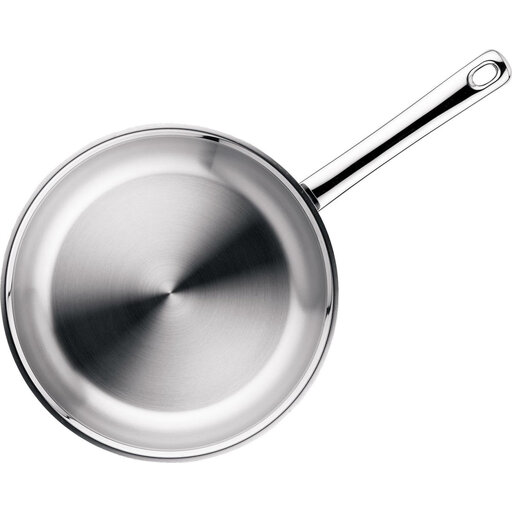
Why it suits this profile: Ideal for anyone looking for a compact stainless steel pan with a recognised multi-layer base and clear temperature specifications.
The description mentions Cromargan 18/10 stainless steel, a TransTherm base, induction compatibility and oven use up to 250 °C.
24 cm, suitable for all heat sources and dishwasher-safe according to the product information.
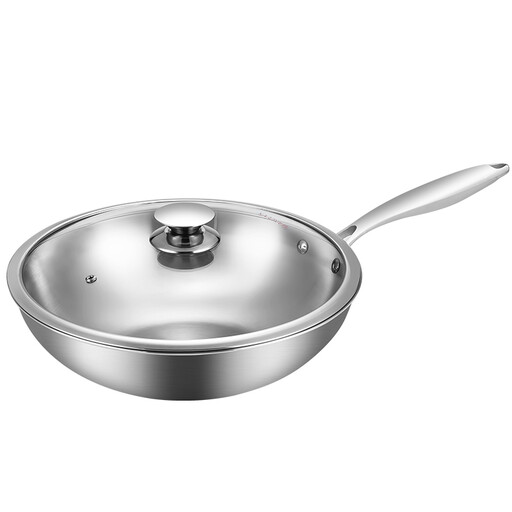
Why it suits this profile: Designed for stir-frying, searing and simmering, for users looking for a stainless steel wok with a lid.
The product information specifies a 30 cm tri-ply body, induction compatibility and a glass lid. According to the same information, this model is hand-wash only.
Generous wok shape, glass lid and compatibility with induction, gas, electric and ceramic hobs.
We have put together a complete, up-to-date list of products that fully meet these strict selection criteria and the applicable European safety regulations.
An uncoated pan requires careful temperature control. Do not set the hob straight to its highest setting, and add oil after the pan has preheated. Allow meat or fish to form a crust before trying to turn it. Do not constantly move the food around the pan.
After cooking, you can loosen baked-on residue by soaking it in warm water. For white marks or rainbow-coloured discolouration, diluted vinegar may help; rinse thoroughly afterwards and dry the pan. Do not use an abrasive sponge if the manufacturer recommends gentler cleaning.
Yes, many models are suitable for induction, but always check the product specifications. Also consider the diameter of the magnetic base and the cooking zone. A pan that is much larger than the zone may heat less evenly.
Choose 22 to 24 cm for one or two people, 26 cm for everyday use with multiple portions, and 28 cm for families or larger pieces of meat. Also consider the available space on your hob.
Its lifespan depends on the material thickness, construction, heating and maintenance. A tri-ply pan can distribute heat more evenly than a thin model, but incorrect use, heating it while empty and sudden temperature changes can damage any pan. Before buying, check the warranty, care instructions and maximum oven temperature.
