
当日/次日达

品质保障

开启新人专享福利: 全场免邮 | 低至 2 折 | 免费试用 30 天 JoyPlus 会员
下载 Joybuy
A stainless steel frying pan suits many kitchens, whether you cook on gas, induction, ceramic or electric hobs. However, not all stainless steel frying pans are the same. A thin pan may discolour quickly or heat unevenly, while a heavy pan can be awkward for everyday use. A smooth stainless steel base may also disappoint if you’re used to a traditional non-stick coating.
This practical guide will help you see what to look for and which models suit different cooking habits.
304 stainless steel is a widely used stainless steel alloy, but it doesn’t tell you everything about a pan’s performance. Check the construction, thickness, handle and base, too. A pan with an aluminium core or multi-layer construction may distribute heat differently from a single-layer pan.
Also check exactly what the product information says. A product description that mentions a “non-stick” surface doesn’t necessarily mean the pan is free from a non-stick coating. Look specifically for terms such as uncoated, “without a coating” or “without a non-stick coating”.
The diameter on the packaging is usually the pan’s external measurement. The usable cooking surface is smaller. A 20 cm frying pan is suitable for one egg, a small portion or a one-person household. A 24 cm frying pan often works well for two to three portions. For a family or several pieces of meat, a 28 cm frying pan is more practical.
On an induction hob, the pan size isn’t the only thing that matters. The base should fit the cooking zone properly. A large pan on a small zone may heat unevenly.
A pan may be dishwasher-safe, but washing it by hand with a soft sponge can help keep its shine, edges and handle in good condition for longer. Avoid steel wool and harsh abrasive cleaners. White spots or a rainbow-coloured film are often caused by minerals, salt or overheating, and don’t necessarily mean the pan is unusable.
A tri-ply frying pan usually has three layers, such as stainless steel, an aluminium core and another layer of stainless steel. Aluminium conducts heat well, while the stainless steel layers provide a durable cooking surface and a magnetic exterior for induction. Check that the product information specifically mentions an aluminium core or multi-layer base.
A single-layer stainless steel pan can be perfectly suitable for simple cooking, but it requires more attention to preheating and temperature control.
Only choose a pan that explicitly lists your heat source. Many models in this selection are suitable for gas, induction, ceramic and electric hobs. Some products also mention halogen hobs.
An induction frying pan needs a magnetic base. If the information isn’t clear, you can check it with a magnet. Also consider the weight: a heavy pan can sit steadily on the hob, but it’s less convenient if you often stir-fry or lift the pan with one hand.
A pan without a lid is handy for quick frying and is often lighter. A frying pan with a glass lid is better suited to braising, reducing sauces or cooking dishes where you want to retain moisture. Check whether the lid is included; for several models, it’s a separate item or isn’t included at all.
“Oven-safe” is only useful if the maximum temperature and any restrictions are specified. The handle may get hot in the oven, even if the pan itself is suitable for oven use. Always use oven gloves and follow the product instructions.
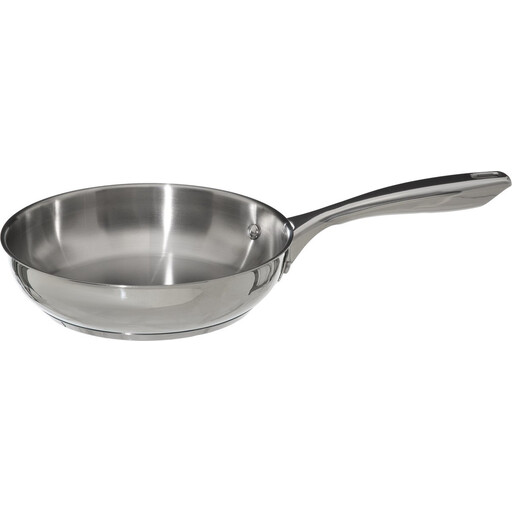
Why it suits this type of cook: The compact 20 cm size is practical for one person, a couple or small portions. According to the product information, the pan is suitable for gas, induction, ceramic, electric and halogen hobs.
The diameter is clearly stated, and the manufacturer says it’s dishwasher-safe. Check that it fits your induction cooking zone and use a moderate temperature.
20 cm, 600 grams, suitable for all the hobs listed and dishwasher-safe according to the product details.
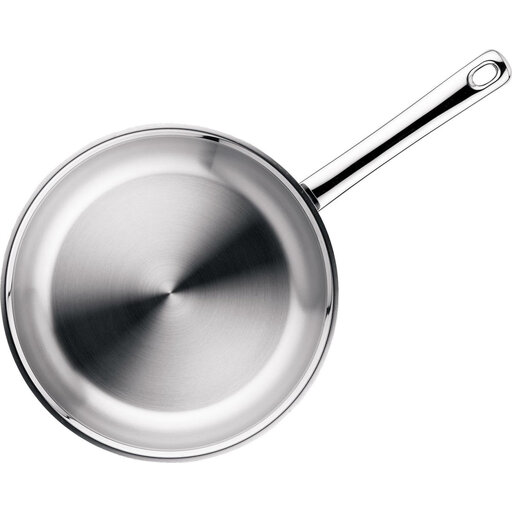
Why it suits this type of cook: The 24 cm size is suitable for everyday meals for around two to three people. The stated TransTherm base and Cromargan 18/10 steel construction make it a good fit for frequent home cooking.
The specifications state the maximum oven temperature of 250 °C, dishwasher suitability and induction compatibility. This makes its limitations clearer than a general marketing claim would.
24 cm, oven-safe up to 250 °C according to the product information, with a TransTherm base.
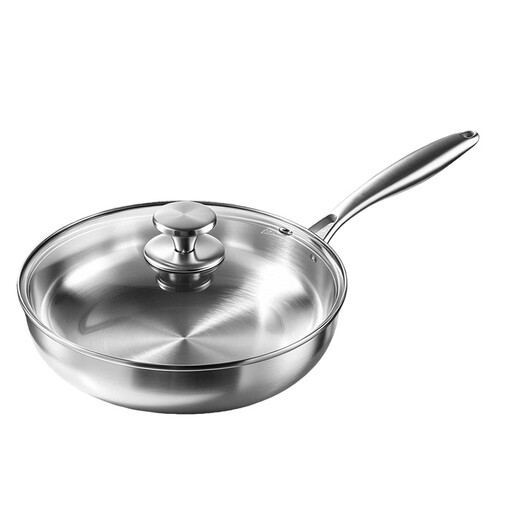
Why it suits this type of cook: If you’re specifically looking for a frying pan without a non-stick coating, the product description says this one has a tri-ply construction of 304 stainless steel with an aluminium core.
The listing explicitly says “uncoated”. Preheating is important without a coating: follow the method described, using a warm pan, oil and a medium temperature to help prevent food sticking.
22 cm, tri-ply 304 stainless steel with an aluminium core, suitable for induction and dishwasher-safe according to the product information.

Why it suits this type of cook: The 28 cm diameter leaves room for several portions. The included glass lid is handy for simmering, making sauces and cooking dishes you want to keep an eye on.
The product details list the tri-ply construction, 28 cm size, lid and compatibility with several types of hob. Always check the instructions and maximum temperature before using it in the oven.
We’ve put together a complete, up-to-date list of products that meet these strict selection criteria and the applicable European safety regulations.
An uncoated pan requires a different cooking technique from a non-stick pan:
Use a soft sponge where possible and dry the pan after washing. This helps reduce water marks and preserve the finish.
Yes, but always check each model. The product information should explicitly mention induction. The base diameter should also suit the cooking zone to ensure even heat transfer.
Stainless steel pans usually don’t have a traditional non-stick coating. A pan that’s too cold, too little oil or turning food too soon can make it more likely to stick. Preheating and cooking at a medium temperature can help. An uncoated pan isn’t automatically non-stick unless the product page clearly says so.
Its lifespan depends on the construction, how often you use it and how you care for it. A pan without a coating has no non-stick layer that can peel off, but it can still scratch, discolour or warp if used incorrectly. Choose a suitable cooking zone, avoid overheating and follow the manufacturer’s care instructions.
