
Vandaag of morgen in huis

Kwaliteit gegarandeerd

Welkomstaanbiedingen ontgrendelen: GRATIS bezorging | Tot 80% korting | Gratis 30 dagen JoyPlus-proefperiode
Download de app
A stainless steel frying pan can last for years, but not every pan suits every kitchen or cooking style. A thin pan can develop hot spots, a non-stick coating needs different care from bare stainless steel, and a large diameter won’t always work well on a small induction zone.
For home cooks, keen cooks and families, choosing a pan is about more than looks. Pay particular attention to its construction, hob compatibility, diameter and cleaning instructions. That way, you can avoid needing to buy another pan after just a few months.
The term 304 stainless steel sounds clear enough, but it doesn’t automatically tell you how evenly a pan heats. A single-layer pan may distribute heat differently from a 3-ply frying pan with an aluminium core.
A three-layer construction typically has stainless steel on the inside and outside, with aluminium in between. Aluminium conducts heat well, while stainless steel provides strength and helps the pan keep its shape. Check that the product description actually specifies a multi-layer construction.
A stainless steel pan with a non-stick coating can be handy for cooking eggs, fish and pancakes. However, every coating has its limits. Some models aren’t suitable for metal utensils, high oven temperatures or the dishwasher.
For a ceramic or PTFE coating, it’s best to follow the manufacturer’s care instructions. If the product information describes it as a PFAS-free frying pan, check which coating it uses and whether the claim applies to that specific model. An uncoated, smooth stainless steel pan calls for a different cooking technique: preheat it properly, add oil and keep an eye on the temperature.
A 28 cm pan is practical for cooking for several people, but its base should fit the induction zone properly. An oversized pan may heat unevenly if only part of its base sits over the zone. So look at the base diameter as well as the top rim.
For one or two people, 20 to 24 cm is often enough. For a family, 26 to 28 cm is a common size. A 30 or 32 cm stainless steel wok offers more capacity, but you’ll need enough room on the hob and in the kitchen cupboard.
Look for a specific mention of 304 stainless steel, 18/10 stainless steel or another named grade. These are material specifications, but they don’t tell you everything about a pan’s cooking performance. A 3-ply frying pan or a pan with an aluminium core may distribute heat more evenly than a simple single-layer pan.
Brands may make additional safety or food-contact claims. According to PURECOOK’s product information, some models meet the Chinese GB 4806.9 and US FDA requirements. This information comes from the brand’s product specifications and isn’t a general guarantee for every stainless steel product.
An induction frying pan needs a flat, magnetic base. According to their product descriptions, many models in this selection are suitable for gas, electric, ceramic and induction hobs. Always check the product page, especially for older or decorative pans.
Also check the maximum oven temperature. According to the listed specifications, WMF Profi Resist models are oven-safe up to 260 °C. The WMF NordicProfi models are oven-safe up to 250 °C, according to the product information. Use oven gloves, as handles can become hot during prolonged cooking.
A frying pan with a lid is handy for simmering, reducing sauces and keeping dishes warm. A glass lid lets you check on your food without constantly lifting it. If you mainly need a pan for quick frying, a model without a lid may be lighter and simpler to use.
Also check whether the pan is dishwasher-safe. The WMF Profi 24 cm is listed as dishwasher-safe in its product specifications. Hand-washing is recommended for the WMF Profi Resist, NordicProfi and Durado models, according to their product information. A dishwasher-safe pan can save time, but for some coatings and finishes, hand-washing may be the recommended option.
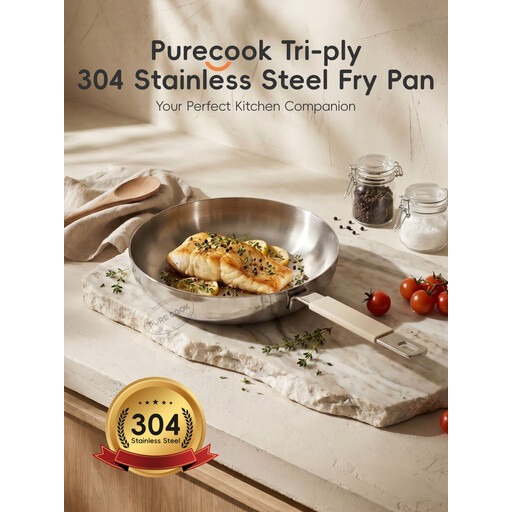
Why it suits this profile: The 22 cm diameter is ideal for smaller households, quick breakfasts and portions for one or two people. According to the product information, the pan is suitable for induction, gas and other common heat sources.
The specifications state that it has a three-layer 304 stainless steel construction, rather than making only a general claim about the material. This makes it easier to assess how the heat will build up.
22 cm, 304 stainless steel, three-layer construction and a heat-insulating silicone sleeve around the handle.
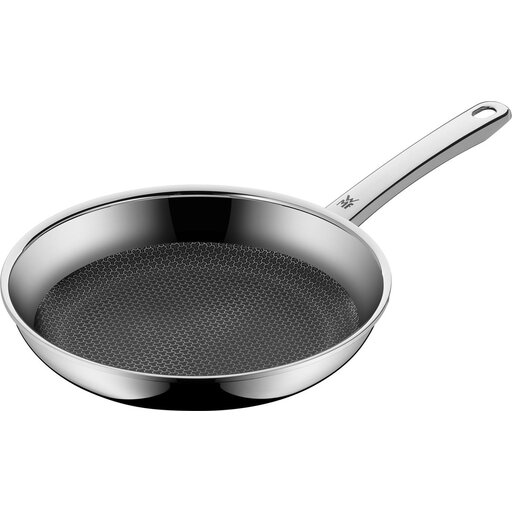
Why it suits this profile: This pan is designed for people who fry food often and want a combination of stainless steel and a non-stick coating. Its size gives you plenty of room for family portions.
The product information specifies the aluminium core, stainless steel interior, chrome exterior and PermaDur coating separately. It also recommends hand-washing.
28 cm, three-layer material, suitable for induction and oven-safe up to 260 °C according to the specifications.
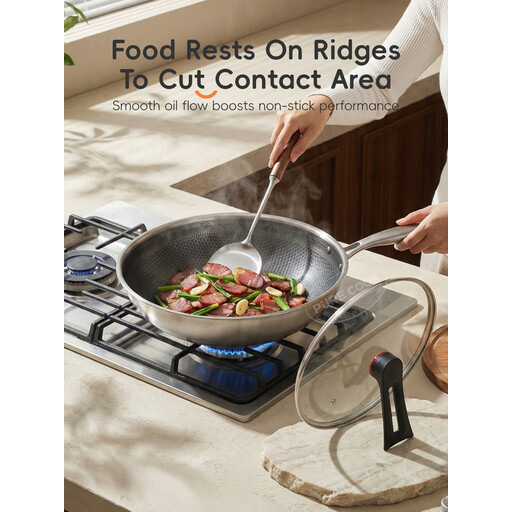
Why it suits this profile: This spacious wok is designed for stir-frying, frying, braising and stewing. The glass lid is handy for larger meals and dishes that need to retain moisture.
The product specifications state the diameter, three-layer construction, glass lid and compatibility with gas, induction and ceramic hobs.
32 cm, 304 stainless steel, three-layer construction and a transparent lid. Hand-washing is recommended according to the product information.
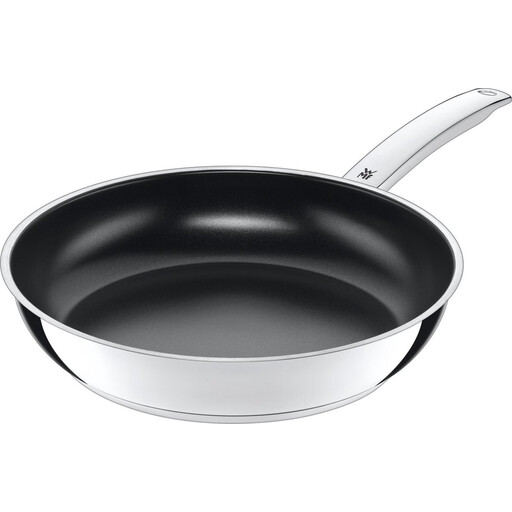
Why it suits this profile: If you’re looking for a stainless steel pan with a ceramic coating and a PFAS-free claim, this model is worth comparing for everyday cooking.
According to the product information, the ceramic coating is PFAS-free. It also states that the pan needs to be hand-washed, so you won’t assume it can go in the dishwasher.
24 cm, ceramic coating, PFAS-free claim according to WMF product information and suitable for induction.
We’ve put together a complete, up-to-date list of products that meet these strict selection criteria and the applicable European safety regulations.
It can be, as long as it has a flat, magnetic base. Check the product page to see whether the pan is specifically listed as suitable for induction. You should also match the base diameter to the hob ring.
Preheat the pan gently, then add oil. Leave the food to cook briefly before turning it over. Excessively high temperatures make food more likely to stick. If you have a model with a non-stick coating, follow the manufacturer’s specific instructions.
Its lifespan depends on the construction, how you use it and how you care for it. A pan without a coating has no non-stick layer that can wear away, but it may discolour or get scratched. For coated models, it’s important to use gentle cleaning products, suitable temperatures and the right utensils. Always check the warranty and care conditions for the product you choose.
