
Vandaag of morgen in huis

Kwaliteit gegarandeerd

Welkomstaanbiedingen ontgrendelen: GRATIS bezorging | Tot 80% korting | Gratis 30 dagen JoyPlus-proefperiode
Download de app
A stainless steel food storage container set may seem easy to choose at first glance. However, food storage containers vary considerably in their materials, lid construction and possible uses. A set may appear leakproof on paper, yet prove impractical for soup, too large for a standard fridge shelf or unsuitable for reheating.
For Dutch households, meal preppers, students and working people, three pitfalls are particularly important:
A loose silicone seal without a proper fit
A sealing ring only helps if the lid fits evenly around the rim. Check whether the ring can be removed and whether the closure applies pressure all the way around. A container with just a loose lid is not automatically one of the leakproof food storage containers.
The wrong combination of materials
Stainless steel is not suitable for microwave use. A glass lid may sometimes withstand heat, but that does not automatically mean the complete container can go in the oven or microwave. Always check the manufacturer's instructions and look out for warnings about sudden changes in temperature.
Not paying enough attention to capacity and shape
A large container is useful for a salad or family-sized dish, but less practical for a single lunch. For meal prep, several sizes are often more useful than one large container. Stackable food containers also save space in the fridge, cupboard or kitchen drawer.
When choosing stainless steel food storage containers, you will often come across 304 stainless steel. This is a specific material designation for the container. According to PURECOOK's product information, the inner container in the 3-piece set is made from food-grade 304 stainless steel, without a coating.
According to the product description, an uncoated interior does not introduce a coating layer into everyday use. However, always check the full product specifications, particularly when storing acidic, salty or heavily spiced dishes. The quality of the lid, welds and sealing ring remains at least as important as the type of stainless steel.
A good closure usually consists of a well-fitting lid and a flexible silicone sealing ring. With food containers with glass lids, the advantage is that you can see the contents without opening the container. Pay attention to these points:
Always read the term ‘leakproof’ together with the instructions for use. Do not fill a container to the brim and check that the ring is positioned correctly. When carrying soup or sauce, it is sensible to keep the container upright, even with a well-fitting lid.
A 3-piece food storage container set with different capacities can be suitable for a range of portion sizes. According to the product specifications, the PURECOOK set contains containers of 1000 ml, 1800 ml and 3000 ml. This provides room for individual meals, leftovers and larger preparations.
Also check whether the containers fit inside one another or can be stacked. A deep shape can offer plenty of capacity, but it also takes up more vertical space. Measure the available space in your fridge before ordering.
Pay particular attention to conflicting information. Part of the PURECOOK product description states that the lunchbox is microwave- and oven-safe. However, the safety warning says that the product must not be used in the microwave or over an open flame. In this situation, follow the most restrictive safety instruction: do not use the stainless steel container in the microwave and do not place it directly on a heat source. Also avoid sudden changes in temperature with the glass lid.
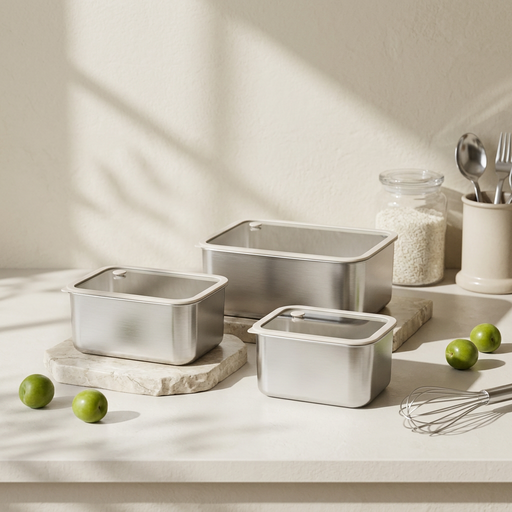
Why it suits this profile: The three sizes of 1000 ml, 1800 ml and 3000 ml are practical for anyone looking for one set for lunches, leftovers and larger portions.
The set clearly states the material, capacities and silicone sealing ring. Use the container according to the safety warning and not in the microwave.
304 stainless steel, borosilicate glass, three capacities and a stackable design according to the product description.
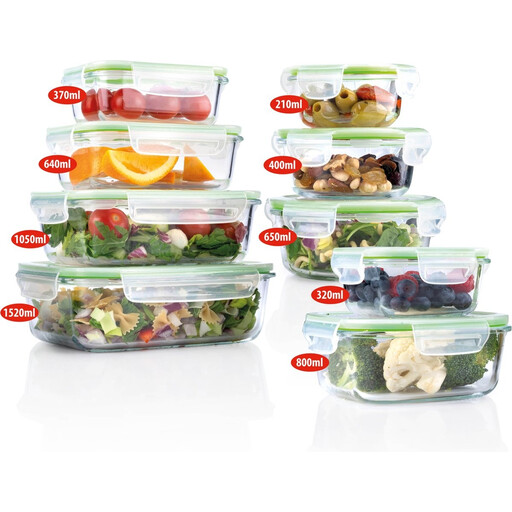
Why it suits this profile: Anyone mainly using containers for fridge storage, meal prep and reheating may benefit from several glass sizes in one set.
The set contains borosilicate glass containers with clip-on lids. Please note: according to the product information, they are not suitable for use in the oven.
The set contains nine sizes and, according to the description, is stackable, dishwasher-safe, microwave-safe and suitable for the freezer.
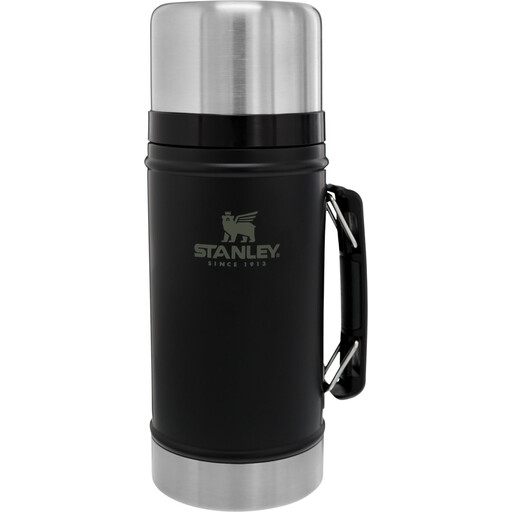
Why it suits this profile: This insulated stainless steel lunchbox is designed for anyone who wants to take meals on the go, for example to the office, lectures, sports activities or a picnic.
The wide opening, leakproof closure and double-wall vacuum insulation are clearly described. It is not a set with glass lids, making it particularly suitable for one portion on the go.
Capacity of 0,94 litres, 18/8 stainless steel, dishwasher-safe according to the product information and fitted with a folding carry handle.
Even dishwasher-safe containers require regular care. Remove the silicone ring from the lid whenever the manufacturer permits this, and allow all parts to dry completely before closing them. This helps prevent moisture and food residue from collecting in the rim.
Use a soft sponge and mild washing-up liquid. Abrasive products can damage stainless steel and glass. Ideally, store containers with the lids loose when they are not being used. Check the ring regularly for cracks, deformation or a persistent food smell.
For a stainless steel lunchbox or meal prep containers, it is also sensible to note the contents and date. Follow the usual guidelines for chilled storage and do not leave prepared meals out of the fridge for longer than necessary.
We have put together a complete, up-to-date list of products that fully meet these strict selection criteria and the applicable European safety regulations.
No. Stainless steel is not suitable for microwave use. Transfer the food to a suitable plate or glass container first. Also check the instructions for the lid: a glass lid does not automatically make a stainless steel container microwave-safe.
That depends on the fit between the rim, lid and silicone ring. A sealing ring and suitable closure reduce the risk of leaks, but do not overfill the container and carry liquid dishes upright. Before buying, check the exact product description and safety instructions.
For a single lunch, around 700 to 1200 ml is often practical, depending on the dish. Larger sizes are suitable for salads, leftovers or multiple portions. A set with different sizes, such as 1000 ml, 1800 ml and 3000 ml, offers greater flexibility than three identical containers.
