
Vandaag of morgen in huis

Kwaliteit gegarandeerd

Welkomstaanbiedingen ontgrendelen: GRATIS bezorging | Tot 80% korting | Gratis 30 dagen JoyPlus-proefperiode
Download de app
A cutting board may seem like a simple kitchen tool, but your choice has a direct impact on hygiene and efficiency. Many home cooks struggle with plastic boards that accumulate scratches and grooves over time, which can become a breeding ground for bacteria. Wooden boards require special maintenance and aren't always ideal for raw meat. A stainless steel cutting board offers a practical solution to these problems, especially for those who prioritise hygiene and durability.
This article will help you understand the features of a stainless steel cutting board and provide concrete recommendations based on product specifications.
A good cutting board is an investment in your kitchen. Here are the key criteria for making an informed decision, based on objective product features.
A fully stainless steel surface is extremely hygienic. Stainless steel is a non-porous material, meaning juices, odours, and bacteria cannot penetrate it. This makes it an excellent choice for cutting raw meat, poultry, and fish.
Many modern boards combine stainless steel with another material, such as polypropylene (PP) or wheat straw plastic. This offers the best of both worlds:
A dual-sided cutting board is one of the most effective ways to prevent cross-contamination. By creating a clear separation between different food types—for example, the stainless steel side for meat and the other side for vegetables—you significantly reduce the risk of bacterial transfer. This makes it a practical cutting board for meat and vegetables.
For busy families and anyone who values kitchen efficiency, a dishwasher-safe cutting board is a major advantage. Always check the manufacturer's specifications. Stainless steel is naturally resistant to high temperatures and most cleaning agents. A quick rinse under the tap is often sufficient, but the option for a thorough cleaning in the dishwasher provides extra peace of mind.
Consider your countertop space and the tasks you perform most often. A larger board provides more workspace for cutting a whole chicken or large quantities of vegetables. A smaller, more compact model is useful for quick jobs and easier to store. Extra features like a juice groove or non-slip feet can further enhance usability.
Based on the criteria above, we have selected products with clear and functional specifications.
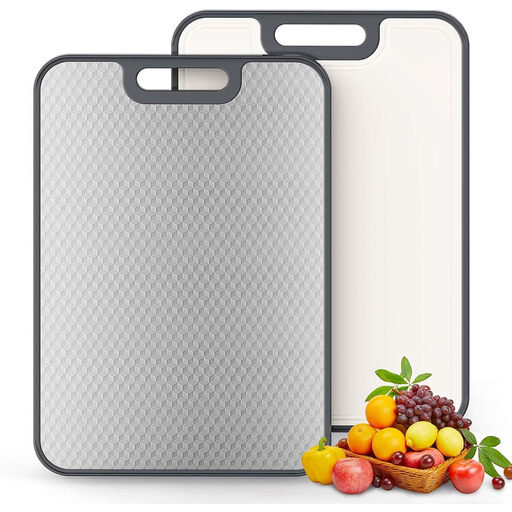
Why this product? This cutting board from INZOO combines a stainless steel surface with a wheat straw PP plastic side. Measuring 43 x 30.5 cm (17 x 12 inches), it offers a spacious work surface for various cutting tasks. The design is specifically focused on separating food categories.
Pros:
Who is this for? This model is ideal for home cooks and families looking for a large, multifunctional, and hygienic cutting board. The clear separation between the two sides makes it a practical choice for anyone conscious about food safety.
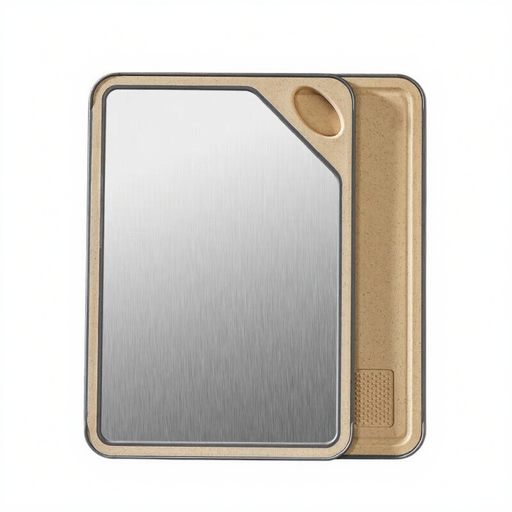
Why this product? The Maxcook cutting board is slightly more compact at 25 x 36 cm and uses 304 stainless steel, a common alloy in the food industry known for its durability and corrosion resistance. The brand describes the product as an antibacterial cutting board, referring to the properties of the materials used.
Pros:
Who is this for? This board is a great option for those looking for a more compact yet highly functional stainless steel cutting board. It is suitable for smaller households or as a supplement to an existing set of cutting boards for specific preparations.
The recommended cutting boards use a combination of stainless steel and wheat straw-based materials. If you are interested in other durable and functional kitchen products, you might also find our selection of wheat cereal products interesting.
1. Is a stainless steel cutting board bad for your knives? A pure, smooth stainless steel surface can indeed dull knives faster over time than a wooden or plastic board. That's why many modern stainless steel cutting boards, like the models mentioned above, are dual-sided. They offer a softer plastic or wheat straw side specifically intended for heavy chopping and slicing, while the stainless steel side is ideal for tasks where hygiene is paramount and less force is used, such as filleting fish.
2. What is the best way to clean a stainless steel cutting board? Stainless steel is very easy to clean. For daily use, rinsing with hot water and a little dish soap is sufficient. The non-porous surface prevents food residue and bacteria from adhering. For a thorough disinfection, or simply for convenience, many stainless steel cutting boards can be placed in the dishwasher. Always check the product instructions to ensure your model is dishwasher-safe.
3. Why use a dual-sided cutting board? The main advantage of a dual-sided cutting board is preventing cross-contamination. By exclusively reserving one side for raw meat, poultry, or fish and the other side for vegetables, fruits, and bread, you keep potentially harmful bacteria separate from food that will not be cooked. This is a simple and effective method to enhance food safety in your kitchen.
Written by: Joybuy Product Recommendation Officer
