
Vandaag of morgen in huis

Kwaliteit gegarandeerd

Welkomstaanbiedingen ontgrendelen: GRATIS bezorging | Tot 80% korting | Gratis 30 dagen JoyPlus-proefperiode
Download de app
Choosing a new pan may seem straightforward at first. Yet many purchases go wrong because of vague material claims, the wrong size or insufficient checks on hob compatibility. If you cook every day on induction, gas, ceramic or electric hobs, you mainly need clear specifications and a practical selection of pans.
With this buying guide to stainless steel cookware, you’ll see what to look out for and which solutions suit different households.
A pan can be made entirely from stainless steel and still heat less evenly if the base is thin or single-layered. Tri-ply cookware generally consists of stainless steel, a heat-conducting aluminium core and another layer of stainless steel. This can help distribute heat more quickly and evenly.
So don’t just check whether it says “stainless steel”. Also look at the following:
On some pans, the ceramic coating is only on the outside. The inside is then made from stainless steel and has no chemical non-stick coating. This is different from a pan with a ceramic cooking surface on the inside.
If you’re looking for PFAS-free cookware, read the product description carefully. “PFAS-free” refers to the coating and does not automatically apply to every part of the pan. Also check whether the claim is made by the brand itself and whether a complete materials overview is available. According to the product information provided by the brands concerned, certain ceramic models are PFAS-, PFOA- and PTFE-free; this is a manufacturer’s product claim, not a general feature of all ceramic pans.
A complete cookware set is convenient, but check the sizes and contents. A 5-litre pan is practical for soup or pasta for several people, while a 1.5-litre saucepan is better suited to sauces, porridge or small portions. A steamer or steamer insert can save space, but only if you’ll actually use those functions.
Also pay attention to the lids. A pan with a lid is more versatile for simmering and boiling. A frying pan without a lid is often lighter and quicker to use for frying.
304 stainless steel is widely used for everyday cookware. It is used on the inside of various PURECOOK pans and cookware sets. According to the product descriptions, the material is corrosion-resistant and suitable for contact with food.
316 stainless steel has a different composition and is associated in the product information with greater corrosion resistance. This may be useful for intensive use or when preparing dishes with acidic ingredients. It doesn’t automatically mean that a 316 stainless steel pan is the best choice for every kitchen: the base construction, size, handle and care requirements remain important too.
A three-layer base or wall can improve heat distribution compared with a simple, thin steel construction. The aluminium core conducts heat, while the stainless steel layers provide strength and a cooking surface.
A stainless steel frying pan with a tri-ply construction does require a different cooking style from a traditional non-stick pan. Preheat the pan gradually, use enough fat for the recipe and avoid overheating. For surfaces with a ceramic coating, use wooden or silicone utensils instead.
Use this practical guide:
With induction, also check that the diameter of the pan base matches the cooking zone. A wide pan on a small zone may heat less evenly.
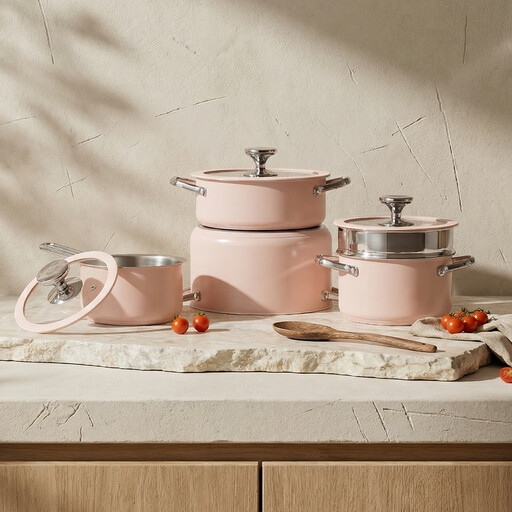
Why it suits this profile: The set includes a 1.5-litre milk pan, a soup pot with steamer insert, a hotpot and a 5-litre pan. This gives you several everyday functions in a single purchase.
The contents and sizes are clearly stated, and according to the product information, the set is suitable for gas, electric, ceramic and induction hobs.
304 stainless steel on the inside, glass lids and a steamer insert included. The exterior has a ceramic coating.
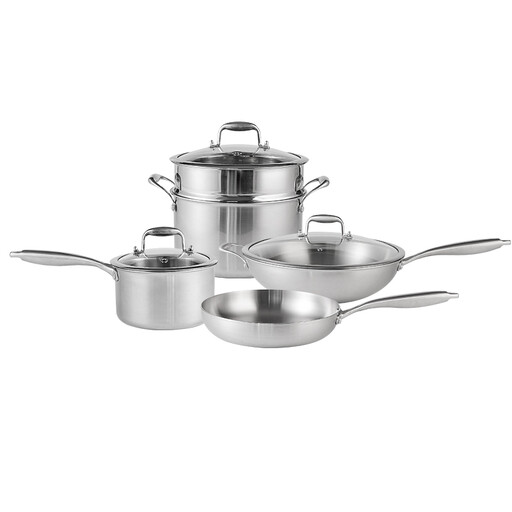
Why it suits this profile: This combination is designed for anyone who uses a range of cooking techniques: wok cooking, making sauces, steaming, frying and boiling.
The tri-ply construction and separately listed materials make the design easy to verify. The set also includes lids and a steamer insert.
The set combines a 34 cm wok made from 316 stainless steel with 304 stainless steel pans, a milk pan, frying pan, lids and a steamer.
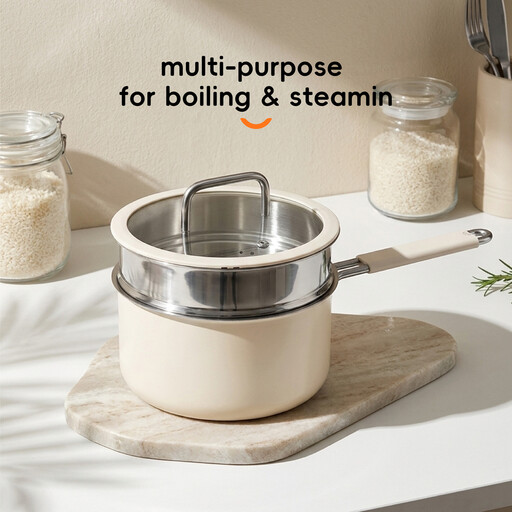
Why it suits this profile: The 16 cm pan is designed for milk, sauces, porridge and small portions. The steamer insert adds a second cooking option.
The diameter, functions and included components are clearly specified. This means you won’t buy a large set when you mainly need a compact pan.
316 stainless steel on the inside, a glass lid, silicone-wrapped handle and compatibility with gas, induction, ceramic and electric hobs.
We’ve put together a complete, up-to-date list of products that fully meet these strict selection criteria and the applicable European safety regulations.
Stainless steel is practical, but it isn’t maintenance-free. After use, allow a pan to cool down before washing it. Use a soft sponge and mild washing-up liquid. Abrasive cleaners and metal scourers can damage a polished surface, ceramic exterior or silicone component.
Stainless steel can become discoloured through high temperatures or salt added too early to cold water. This is usually a cosmetic issue. Always follow the manufacturer’s specific instructions, particularly when a pan is described as dishwasher-safe. With ceramic coatings, hand washing can help preserve the surface for longer.
That depends on the base. Look for an explicit statement such as suitable for all hobs, or check whether induction is mentioned separately. Place the pan centrally on the cooking zone and pay attention to the base diameter.
A stainless steel interior does not automatically have a PFAS coating, but that doesn’t mean every pan can be labelled PFAS-free. Check the complete product description. For the PURECOOK models mentioned, the interior is described as stainless steel without a chemical coating. For other ceramic pans, the PFAS-free claim is made by the brand itself.
The service life depends on the material, base construction, heat use and care. A pan with a sturdy tri-ply construction may be suitable for frequent use, but handles, lids and coatings still require careful handling. Avoid heating an empty pan for extended periods and regularly check that the handles are securely attached.
