
Vandaag of morgen in huis

Kwaliteit gegarandeerd

Welkomstaanbiedingen ontgrendelen: GRATIS bezorging | Tot 80% korting | Gratis 30 dagen JoyPlus-proefperiode
Download de app
A stain remover may seem straightforward to choose, but the wrong product can cause discolouration, damage or extra cleaning work. A spray for clothes is not automatically suitable for carpets, leather or kitchen worktops. Even a product that works quickly often requires a colourfastness test and careful application.
The Joybuy Product Recommendation Officer sets out the key points to consider. This helps you compare products based on their intended use, contents, instructions and safety information, rather than relying solely on eye-catching marketing claims.
A clothes stain remover is designed for textiles and is used before washing. A kitchen cleaner or degreasing spray, on the other hand, is intended for hard surfaces and grease. If you use a degreaser on wool, silk or coloured fabric, it may damage the fibres or affect the colour.
Therefore, always check:
Brands may make claims about how a product works or how quickly it acts. According to Ariel’s product description, for example, the Gold spray starts working after just 30 seconds. However, the instructions state that the spray may be left to work for a maximum of five minutes before the garment is washed. This is not a guarantee for every stain or fabric.
Vanish also states in its own product description that it delivers results in 30 seconds and is suitable, among other things, for dried-on oil and grease stains. Treat this information as a product claim, not a certainty. The age of the stain, the material and the washing temperature all affect the result.
Many sprays and powders contain surfactants, enzymes, oxygen-based bleaching agents or other active ingredients. Check the hazard statements before buying. Some sprays list risks including skin irritation, serious eye damage or harm to aquatic life.
Wear gloves or eye protection if instructed, ventilate the room and never mix cleaning products. Keep stain removers out of the reach of children and always follow the instructions on the packaging.
Start with the material, not the stain. For removing stains from clothes, pre-treatment sprays, gels or washing powders are suitable. For carpets and upholstery, a carpet stain remover, textile cleaner or portable spot cleaner is a more logical choice. For grease on a hob, oven or extractor hood, look for a degreasing spray or kitchen cleaner.
Also consider the type of textile. G’woon Oxi Stain Remover, for example, states that the product is not suitable for wool, silk or leather. For delicate fabrics, a bleach-free option such as Ariel Delicate & Wool may be more suitable for the intended use. According to the product description, this spray is designed for silk, wool and baby clothes, among other items, and contains no bleach.
A spray is convenient for treating a small area and makes dosing relatively straightforward. A gel with a rubbing head can be suitable when you want to treat a small area precisely. Powder is often more practical for larger quantities of washing or for soaking, but it requires the correct dosage and temperature.
Check the quantity:
More product does not automatically mean lower usage costs. Look at the recommended dosage and how often you expect to use the product.
Always test a liquid stain remover on an inconspicuous area first. Ideally, treat a stain as soon as possible, but follow the maximum contact time stated on the label. For clothes, the care label determines the permitted temperature. Powders containing oxygen-based bleach may come with additional restrictions for coloured fabrics, metal fastenings and flame-retardant textiles.
Do not scrub delicate fabrics forcefully. Dab or rub gently from the outside of the stain towards the centre to limit spreading.
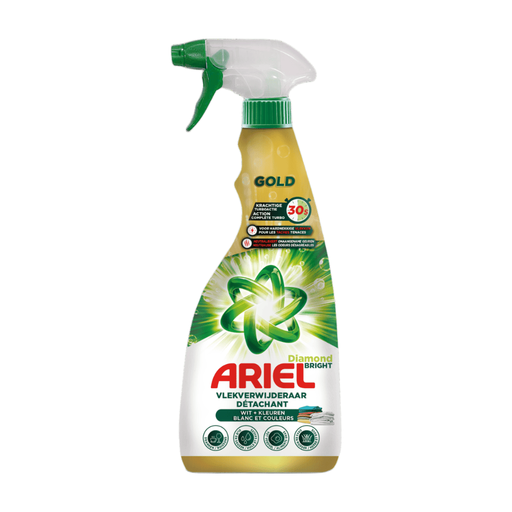
Why it suits this profile: The spray format is easy to use every day on white and coloured clothes. With 750 ml, you have a generous amount for pre-treating garments before washing.
The instructions specify a maximum contact time of five minutes, followed by washing after treatment. This makes it clearer how to avoid leaving the product on for too long.
750 ml contents, a spray for spot treatment and suitable for white and coloured clothes according to the product description.
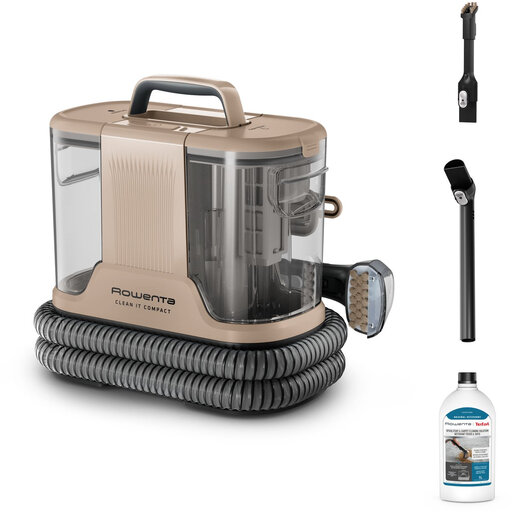
Why it suits this profile: For households that regularly clean sofas, mattresses, carpets or car interiors, an appliance offers more control than a spray alone.
This is not a universal liquid for every material, but a spot cleaner with separate clean- and dirty-water tanks. This makes it specifically suited to textiles and upholstery.
400 W of power, a 1.5-litre clean-water tank, a 0.85-litre dirty-water tank and multiple brushes according to the product specifications.
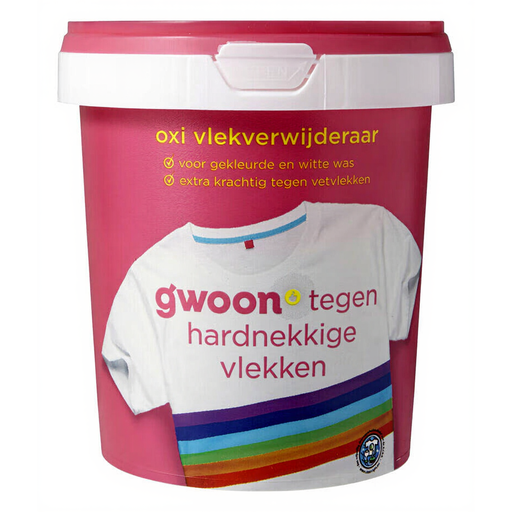
Why it suits this profile: A household with lots of laundry or stubborn stains may benefit from a powder with several dosing options for pre-washing, soaking and direct treatment.
The instructions warn against using it on wool, silk and leather and recommend a colourfastness test. This makes it clear that it is not suitable for every textile.
750 grams of product, 30% or more oxygen-based bleaching agents according to the product information, and suitable for use as a pre-wash, soaking or direct-treatment product.
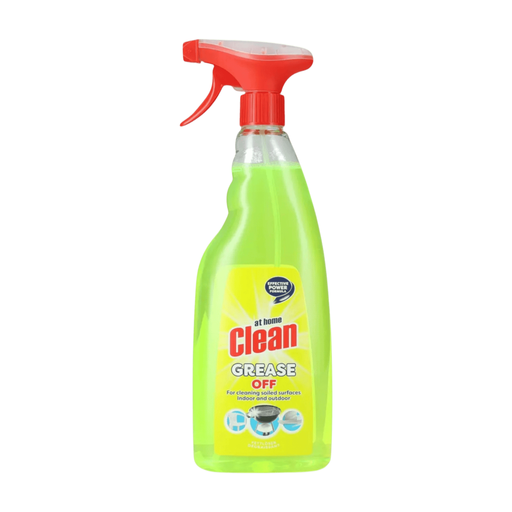
Why it suits this profile: This degreasing spray is designed for kitchen appliances, metal surfaces and other areas where grease builds up.
Its intended use is clearly limited to hard, greasy surfaces. Do not use it as a textile cleaner unless the label specifically says that it is suitable for this purpose.
750 ml contents, spray format and suitable for indoor and outdoor use according to the product description.
We have put together a complete, up-to-date list of products that fully meet these strict selection criteria and the applicable European safety regulations.
Choose a product that is explicitly intended for textiles and your particular type of fabric. For ordinary, washable clothes, a stain-removing spray can be practical. For wool and silk, a bleach-free option or a product specifically designed for delicate textiles is a more logical choice. Always check colourfastness and the care label.
Treat the stain as soon as possible, dab away excess dirt and apply the product according to the instructions on the packaging. Do not leave it to work for longer than permitted. Then wash at the highest temperature allowed according to the garment’s care label. An old or dried-in stain may need to be treated more than once; do not immediately use a harsher product without first checking that it is suitable for the material.
Not always. A carpet or upholstery cleaner is formulated for larger, absorbent surfaces and may be intended for use with a brush or spot cleaner. Test it on an inconspicuous area first and avoid making the material too wet. For regular cleaning of sofas, mattresses and carpets, a portable textile cleaner may be more practical than a liquid spray alone.
