
Vandaag of morgen in huis

Kwaliteit gegarandeerd

Welkomstaanbiedingen ontgrendelen: GRATIS bezorging | Tot 80% korting | Gratis 30 dagen JoyPlus-proefperiode
Download de app
A stain on children’s clothing, a coffee mark on a blouse or grease on work trousers doesn’t always call for the same product. A stain remover for clothes can come as a powder, spray or gel, but the wrong choice can damage the fabric, dull colours or even push the stain deeper into the textile.
So don’t just look at words like “powerful” or “fast results”. Instead, check what the product is actually designed for, how to dose it and whether it’s suitable for the fabric. Below are the key points to consider, along with a few product choices for different households.
Not every fabric can handle the same treatment. Wool, silk, leather, water-repellent materials and clothing with special coatings can react badly to bleaches, enzymes or prolonged soaking. A product that works well on cotton could therefore be unsuitable for a delicate blouse.
Always check the care label and follow the instructions on the packaging. If in doubt, test the stain remover on an inconspicuous area first.
Brands often use phrases like “removes all stains” or “results in seconds”. Such claims depend on factors including the age of the stain, the type of fibre, the temperature and the amount of product used.
According to the product description, Vanish Oxi ACTION Tough Stain Remover Spray is intended as a pre-treatment for stains such as chocolate, soy sauce, red fruit and baby food. That doesn’t mean every stain on every fabric will disappear in the same way. So use the listed product features as selection information, not as a guarantee.
A larger dose isn’t automatically better. Too much powder or spray can leave residue, put unnecessary strain on the fabric and increase the cost per wash. With sprays, it’s also important to respect the maximum dwell time. A product that states it should be left on for a maximum of five minutes shouldn’t be left for hours.
The form mainly determines how precisely you can work:
Check whether the product is suitable for whites, colours or both, according to the product information. For coloured clothing, colour retention is often an important criterion. For wool, silk and baby clothes, a bleach-free formula or one specifically designed for these fabrics makes more sense than a universal product.
According to its product description, the Ariel stain remover delicate & wool spray is recommended for silk, wool and baby clothes and is bleach-free. Even with this product, always follow the care label and usage instructions.
Check before you buy:
A clear dosage makes it easier to estimate usage and the cost per treatment.
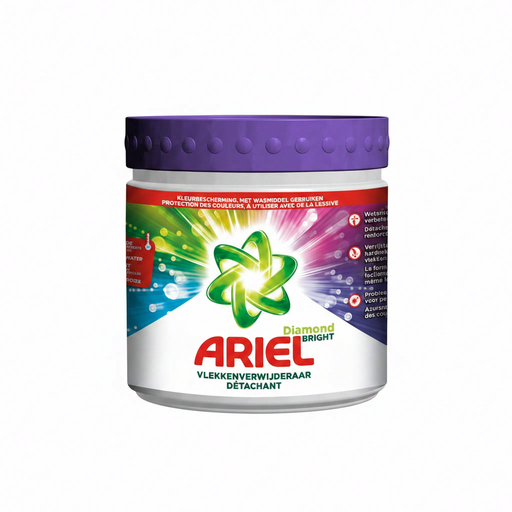
Why this fits the profile: According to the product description, this powder can be added to your regular detergent or mixed with water for direct treatment. That gives you two uses in one pack.
The dosage and both methods of use are stated in the product information. Do check the packaging for the latest instructions and test coloured fabrics beforehand.
Powder form; can be added to the wash or used for direct stain treatment; described as suitable for coloured laundry.
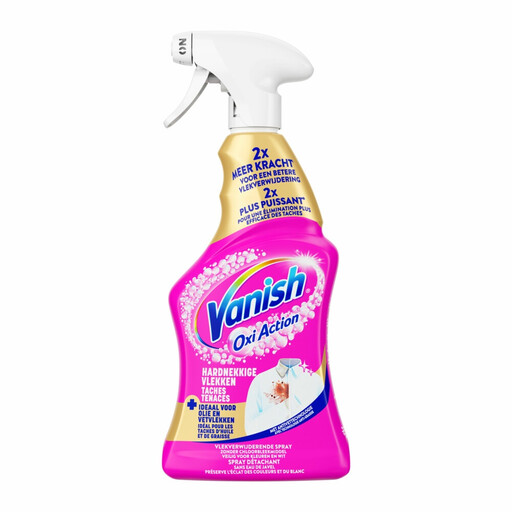
Why this fits the profile: This stain remover spray is designed for pre-treating clothes and textiles. That suits households that want to tackle different types of fresh and dried-on stains locally.
The instructions say to treat, rub gently, wait a maximum of five minutes and then wash. This helps you avoid an unnecessarily long dwell time.
500 ml spray; suitable for white and coloured clothing; designed as a pre-treatment according to the product description.
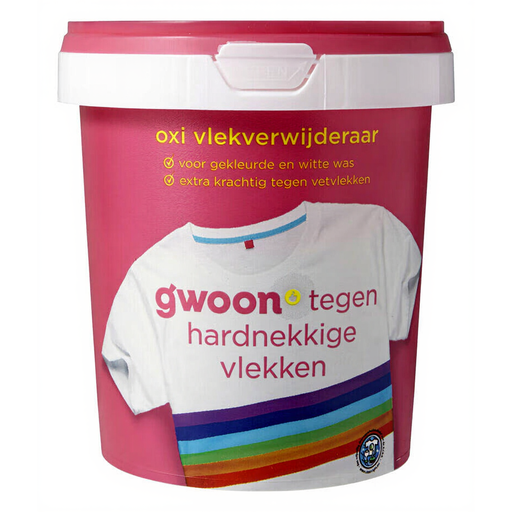
Why this fits the profile: The product information lists multiple dosages for the wash, soaking and direct treatment. That’s practical for a household that regularly deals with stubborn stains.
The instructions warn against using it on wool, silk and leather, and recommend a colourfastness test. This makes it clear when you shouldn’t use this powder.
750 grams; applications for washing, soaking and direct treatment; listed ingredients include oxygen-based bleaches, surfactants and enzymes.
We’ve put together a full, up-to-date list of products that fully meet these strict selection criteria and comply with current European safety regulations.
Pay attention to safety information on sprays. Some products are flammable, can cause skin irritation or cause serious eye damage. Keep them out of reach of children, use protection when the label advises it, and if contact with the eyes occurs, rinse with water as directed on the packaging.
That varies by product. Some product descriptions state that the product can be used at low temperatures or on short cycles. Always check the label and the care label. A low temperature doesn’t automatically protect every fabric from discolouration or damage.
The relevant shelf-life information is on the packaging. Look for any expiry date, best-before date or period after opening. Store the product in a cool, dry place and close the packaging tightly after use. Don’t keep a diluted solution unless the manufacturer specifically says you can.
The cost depends on the purchase price, the dosage and the number of treatments per pack. So don’t just compare the weight or volume, but also the recommended amount for normal and stubborn stains. A concentrated product can be more economical per treatment, but only if you stick to the recommended dosage.
