
Cautious headboard cleaner
Wants to check the care instructions first to avoid damage from moisture or cleaning products, and only then choose a machine.


First, check whether the headboard’s care instructions allow wet cleaning; a stain cleaner won’t make unsuitable fabric suitable. Then choose a machine with an upholstery tool that fits the job, enough reach and parts that can be cleaned after shared use in line with the instructions. A larger tank can be useful for cleaning more fabric, but remember to consider how much storage space you have.
Wants to check the care instructions first to avoid damage from moisture or cleaning products, and only then choose a machine.
Needs a machine that’s easy to store and can be left clean for the next person to use.
Wants to clean along the bed and reach seams or corners, so pays attention to hose reach and the tools supplied.
Start with the headboard’s care instructions: a spot cleaner is only an option if wet cleaning is allowed. Then compare the storage space you have, how the machine is cleaned after use and the reach you need.
| What to consider | What should you check? | Who is this important for? |
|---|---|---|
| Fabric suitability | Read the headboard’s care instructions. If wet cleaning is allowed, first test a hidden area to check the fabric is colourfast. | I want to make sure moisture and cleaning products are suitable for the fabric before treating the headboard. Around 31% of consumers put fabric suitability first. |
| Storage and leaving it clean for the next person | Check how much space the machine and all its parts need; see how to clean the tank and hose according to the instructions. | In a shared cleaning cupboard, I want to store the machine neatly and leave it clean for the next person. Around 25% of consumers prioritise shared storage and maintenance. |
| Reach and precision | Measure the distance from where the machine will stand to the headboard, and check the hose length and tools supplied with the exact model. | If parts of the headboard are difficult to reach, I want to know whether the hose and tool are suitable. Around 25% of consumers prioritise reach and precision. |
| Other suitable fabrics | Check the care instructions for each surface and compare the tank capacity and tools supplied. | I may also want to use the machine on other suitable fabric surfaces, without overlooking the instructions for each one. Around 19% of consumers prioritise versatility across different fabrics. |
A machine being suitable for upholstery doesn’t tell you whether your headboard’s fabric can be wet-cleaned.
Check the headboard manufacturer’s instructions first. If wet cleaning is allowed, test a hidden area to check the fabric is colourfast.
The hose, tools and tanks also take up space and need to be stored after use.
Measure the space available for the complete set, and check how the parts should be dried and stored according to the instructions.
A similar product name doesn’t necessarily mean it’s the same model or comes with the same items.
Before buying, compare the full model number and check which parts are actually included with the version on offer.
The Clean It Compact IN3010F0 is worth considering if cupboard space is limited and you need to clean the machine after shared use.
The SpotClean C5 is worth comparing if hose reach and cleaning the hose are important to you.
The SE 3 Compact Home N1 is worth considering if you also need the machine for other suitable fabric surfaces or hard-to-reach seams.
These product picks are portable stain cleaners for spot-cleaning upholstery and other fabrics. Only use them on a headboard if its own care instructions allow wet cleaning.
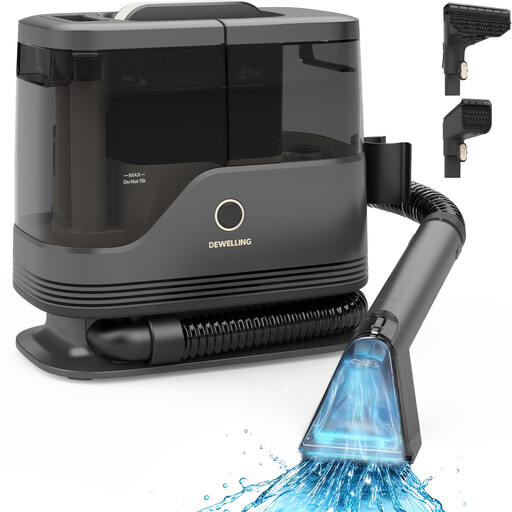 No image available
The product description mentions spray-and-extraction cleaning for fabrics and furniture; only use it on a headboard if wet cleaning is allowed.
The description lists separate tanks, a hose self-cleaning button, two tools, a 1,15 m hose and a 5 m power cord.
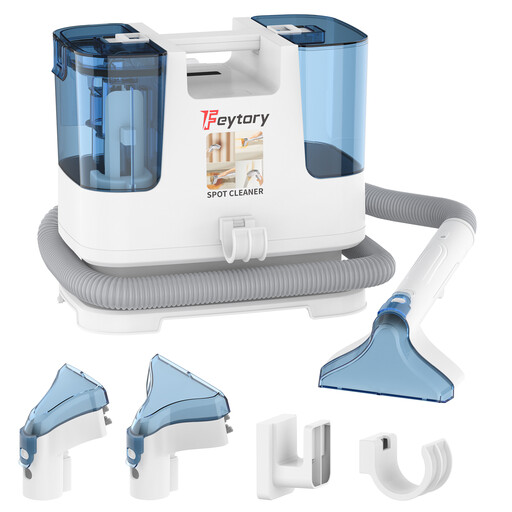 No image available
The product description mentions use on upholstery and sofas; always check your headboard’s own care instructions before using it.
The title lists 0,6 and 1,5 litre tanks. The description mentions removable tanks, a large and a small cleaning head, a flexible hose and a long power cord.
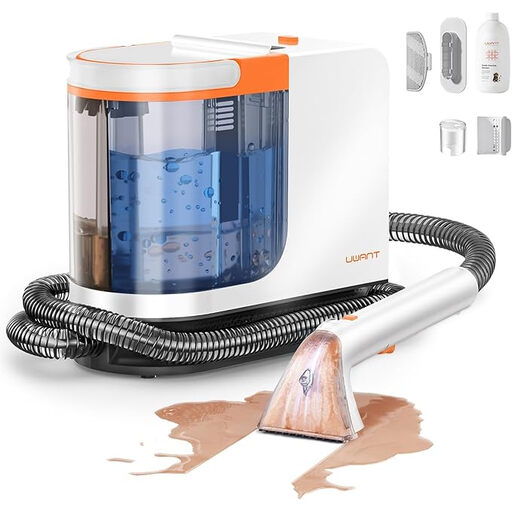 No image available
The product description mentions cleaning upholstery and sofas; only clean a headboard if its care instructions say the fabric is suitable.
The product name mentions a portable design and self-cleaning. The description lists a wide brush head, accessories and a cleaning solution.
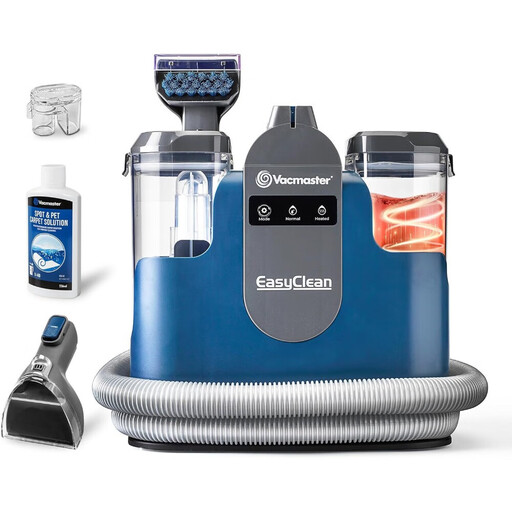 No image available
The description mentions spray-and-extraction cleaning for upholstery. Before using it on a headboard, check whether its own care instructions allow wet cleaning.
The product name lists 1,6 and 0,95 litre tanks and a 1,8 m self-cleaning hose. The description mentions standard and heated cleaning modes.
 No image available
This compact cleaner is designed for carpets and upholstery, including sofas. Check the care instructions before using it on a fabric headboard.
The product name lists 1,6 and 0,95 litre tanks and a 1,8 m hose. The description mentions separately removable tanks.
No. Follow the care instructions for your specific headboard. For the wet cleaning of furniture described here, BISSELL recommends checking the manufacturer’s code and, if wet cleaning is allowed, first testing a hidden area to make sure the fabric is colourfast. If the instructions are missing, ask the headboard manufacturer for advice.
Empty the dirty water tank and clean the tank, tool and hose in line with the instructions for your chosen model. Rowenta, BISSELL and Kärcher each list a feature for post-cleaning on the models discussed here; this doesn’t replace the instructions for the specific model.
Check the packaging for the exact model and the manufacturer’s information. Rowenta lists a 250 ml bottle with the Clean It Compact IN3010F0, and BISSELL lists a 236 ml bottle with the SpotClean C5. BISSELL advises buying genuine replacement parts from authorised retailers.
No. According to the Dutch government, the Netherlands has no fixed statutory guarantee period; what you can reasonably expect from a product is also taken into account. If a product is faulty, contact the seller. A manufacturer’s guarantee is separate.
The Dutch government states that electrical products in the EU must carry a CE mark and that the instructions must include safety warnings. Check the marking, instructions and details for the exact model; the product title alone doesn’t confirm this.