
Vandaag of morgen in huis

Kwaliteit gegarandeerd

Welkomstaanbiedingen ontgrendelen: GRATIS bezorging | Tot 80% korting | Gratis 30 dagen JoyPlus-proefperiode
Download de app
An overhead marker may seem like a simple stationery item, until the ink isn’t visible enough, the nib turns out to be too thick or the marker dries out after a few lessons. If you use transparencies for a presentation, lesson, study assignment or work session, clear lines and reliable colour choices are what matter most.
The STABILO OHPen universal fine overhead marker, pack of 4 is designed for writing and drawing on transparencies and overhead projector sheets. However, not all overhead markers are the same. So check the type of ink, the nib size and how you plan to use the transparency.
A standard felt-tip pen or ballpoint pen isn’t automatically suitable for smooth surfaces. Paper absorbs ink, whereas a transparency holds the ink on its surface for longer. As a result, the wrong marker can smudge, write unevenly or take a long time to dry.
So check that the product information explicitly says the pen is suitable for overhead projection, plastic or transparencies.
A permanent overhead marker is useful when you need your notes to stay put. For a lesson, brainstorm or temporary marking, a water-soluble or erasable overhead marker may be more practical. Don’t rely on words such as “universal” or “multi-surface” alone; check the type of ink.
According to the product description, the fine version of the STABILO OHPen in the recommended set is a soluble marker. This makes it suitable for temporary use, but always check beforehand that the transparency and your preferred cleaning method are compatible.
Four colours sound appealing, but the nib determines how legible your writing will be. A broad nib is suitable for headings and highlighting, while a fine nib is better for small diagrams, labels and handwritten explanations. Contrast with the background also matters in a classroom or meeting room.
The F designation, meaning fine nib, is relevant if you want to put plenty of text on a transparency. The STABILO OHPen universal soluble fine comes in a set of four. The product information lists the colours as black, blue, green and red.
A fine nib is useful for:
The exact line width isn’t included in the product information provided. If you need a specific measurement in millimetres, check the product page or packaging before buying.
An erasable overhead marker is not the same as a permanent overhead marker. Water-soluble ink is generally easier to remove, but the result depends on the type of transparency and the cloth you use. So test the pen on a corner or spare transparency first.
For long-lasting markings, the STABILO OHPen universal Permanent Superfine (S) is another option. This set also contains black, blue, green and red, but is designed for permanent ink and has a superfine nib. It’s a sensible choice for labels or documents that must not be erased.
The product description recommends closing the cap securely after use and storing the pens in a cool, dry place. Direct sunlight can affect the colour. So don’t leave your overhead marker uncapped on a desk or in a hot car.
To get an even start:
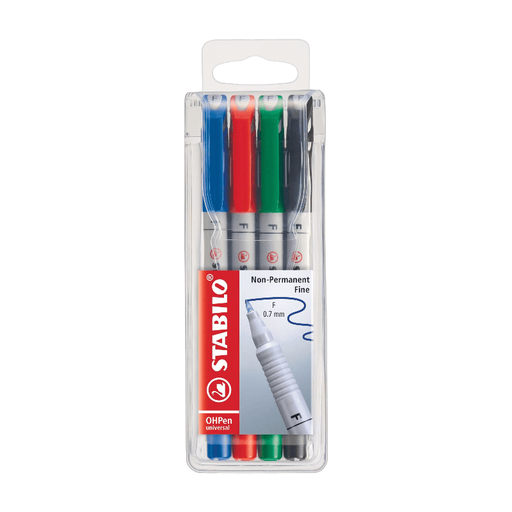
Why it suits this profile: This set offers four popular colours and a fine nib for lessons, homework, presentations and simple markings on transparencies.
The product description lists overhead projection and transparencies as suitable uses. The fine F nib means you won’t need a broad marker for small text.
Four colours: black, blue, green and red; water-soluble ink; round barrel for children and adults.
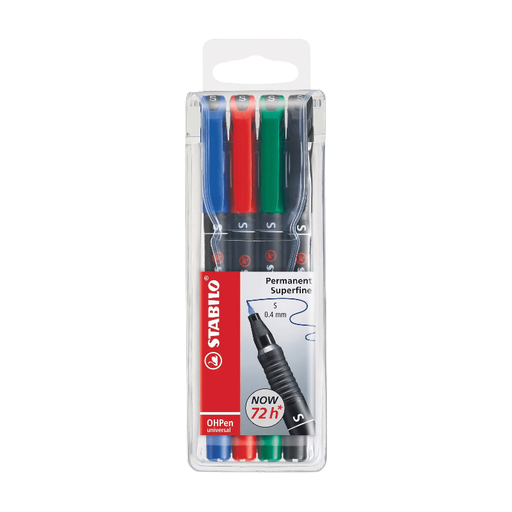
Why it suits this profile: This version is a good fit for office professionals and teachers who want to write on smooth surfaces and keep their markings in place.
The product information explicitly specifies permanent ink and use on smooth surfaces. This makes it easier to distinguish from an erasable overhead marker.
Permanent ink; superfine nib; grip zone and clip; four colours: black, blue, red and green.
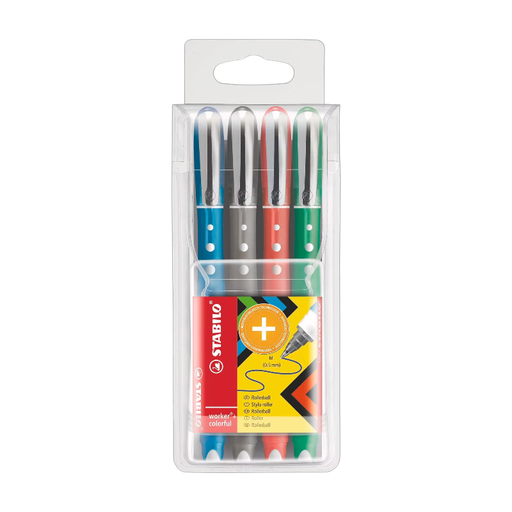
Why it suits this profile: If you also write on paper every day as well as using overhead markers, this set offers four rollerball pens for studying and office use.
The product information describes these pens as being for paper. That way, you won’t mistake an ordinary rollerball for a marker suitable for transparencies.
Four colours; 0.5 mm line width; non-slip material; suitable for left- and right-handed users, according to the product description.
The lifespan of an overhead marker depends largely on how it’s stored and used. Replace the cap straight after use and keep the set somewhere dry, out of direct sunlight and away from extreme temperatures. Don’t press hard on the nib; a fine nib is designed for controlled writing, not for colouring in large areas.
When cleaning transparencies, use only a method that’s suitable for the material. Permanent ink can be difficult or impossible to remove. So keep important originals safe before you start.
We’ve put together a complete, up-to-date list of products that meet these strict selection criteria and the current European safety regulations.
The product description lists transparencies and overhead projection as suitable uses. However, transparencies can vary in their coating and surface. So test the pen on an inconspicuous corner first.
Replace the cap straight away, make sure it’s fully closed and store the pen in a cool, dry place. Direct sunlight and leaving the pen uncapped for a long time can affect the ink and colour.
An F nib is fine and suitable for text, diagrams and markings. An S nib is even finer and better for very small notes or precise lines. Also check whether the ink is soluble or permanent, as this determines how easily you can remove the markings later.
