
Designers with a full project drive
You store lots of large projects and want to work out how much capacity you need without taking up more desk space than necessary.


Choose a compact external SSD if you often move large design files or work directly from the drive. A portable HDD is a better fit if you need more capacity and can put the drive away after use. A desktop HDD is best for a large archive kept in one place with access to a mains socket. Always keep a separate backup of important work.
You store lots of large projects and want to work out how much capacity you need without taking up more desk space than necessary.
You want to keep files outside your computer, but have very little room for a drive enclosure, extra cables or a power adapter.
You regularly transfer large files or work from external storage. Your computer’s connection also determines whether a fast SSD is worthwhile.
| What to consider | What should you check? | Who is this most relevant to? |
|---|---|---|
| Capacity for projects | Add up your current files and allow for growth and a separate backup. Compare the exact model: Seagate lists a 5 TB portable HDD and an 8 TB desktop HDD; the compact SSDs reviewed offer up to 4 TB. | As my project archive grows, I want enough space without unnecessarily needing a second drive. Around 31% of consumers prioritise having enough capacity. |
| Limited desk space | Measure the available space, including room for cables. Also check whether you have a mains socket available and what’s included with the exact model. | If I want to put the drive away after use, every device and cable takes up space. Around 31% of consumers give top priority to compact storage and easy connection. |
| Access to active files | Check the USB connection on your computer, drive and cable. Consider whether you mainly archive files or regularly work from the external drive. | If I often open and transfer large projects, I want to know whether my computer can make the most of the drive I choose. Around 25% of consumers prioritise quick access to active files. |
| A separate backup | Decide whether the external drive will be used for working storage, archiving or as a backup. Check that important work is also stored elsewhere and can be restored. | When files are difficult to replace, I don’t want to rely on a single copy on one drive. Around 13% of consumers prioritise keeping a separate copy. |
More capacity can mean a larger enclosure and a separate power supply. The 8 TB Seagate Expansion Desktop reviewed measures 178,75 × 41,90 × 125,0 mm and comes with an 18 W power adapter.
Before buying, measure the space available, including room for cables, and decide whether the drive will stay in one place or need to be put away.
The stated speed also depends on the connection and cable. For the XS2000, Kingston links optimal speeds to USB 3.2 Gen 2x2 and says the advertised speed cannot be achieved on a Mac.
Check your computer’s port and the cable you need before choosing a drive based on its stated MB/s.
If important files are stored only on the new drive, there isn’t a separate copy. A problem with the drive could then affect your only copy too.
Keep working storage and backups separate, and regularly check that you can restore your files. VeiligInternetten recommends backing up regularly, for example to an external drive or the cloud.
Formatting can erase files on the drive. Apple Support warns that formatting deletes all files on the drive.
First check which file format suits your devices, then copy any existing files elsewhere before formatting.
The Expansion Portable and Expansion Desktop illustrate the difference between a portable HDD and a desktop model designed to stay in one place.
The Portable SSD T7 Shield 4TB is a compact SSD option for projects you also work on while out and about.
According to Crucial, the X9 Pro 4TB has a small enclosure for design files you carry between devices.
The XS2000 4TB is worth considering if you’re looking for a small SSD and your computer has a compatible high-speed USB connection.
The My Passport 5TB is a portable HDD option for anyone who wants plenty of capacity without a permanent desktop setup.
This selection includes portable external HDDs from 4 to 6 TB and compact SSDs from 1 to 2 TB for storing or actively working with design files.
 No image available
A portable HDD option for a large collection of projects you want to put away after use.
5 TB storage, 2,5-inch format and 240 g. The description lists USB-C and USB 3.2 Gen 1.
 No image available
A portable option for a large project collection you want to store externally.
6 TB storage, 2,5-inch format and 210 g; the stated dimensions are 10,7 × 7,5 × 2,06 cm. The description mentions USB 3.0, 256-bit AES hardware encryption and backup software.
 No image available
A portable HDD option if you need external storage for projects and are short on space.
4 TB storage and 2,5-inch format. The description lists USB-powered operation, Micro-USB B, USB 2.0/3.2 Gen 1 and dimensions of 109 × 78 × 19,5 mm; it weighs 217,5 g.
 No image available
A compact SSD option for active project files that you transfer regularly.
2 TB storage and USB 3.2 Gen 2. The product description lists sequential speeds of up to 1.050 MB/s read and 1.000 MB/s write, plus USB-C to USB-C and USB-C to USB-A cables.
 No image available
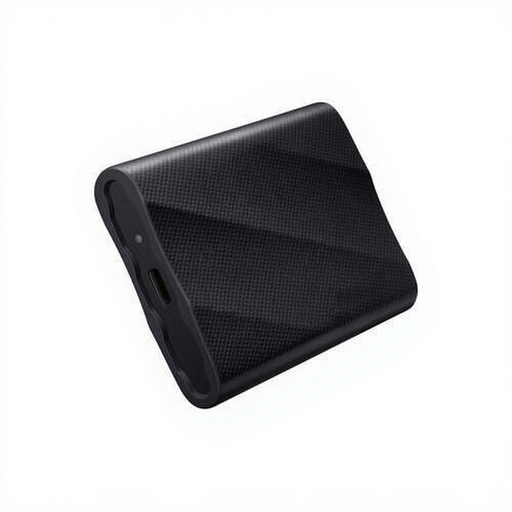
A compact SSD option for active files you regularly transfer, if 1 TB is enough for your projects.
The description lists model MU-PG1T0B, USB 3.2 Gen 2x2, speeds of up to 2.000 MB/s, a weight of 122 g and two USB cables included. Check that your computer’s connection suits the way you plan to use it.
Yes, as long as the file format and connections work with both computers. Apple Support describes exFAT as a Windows-compatible format you can use on a Mac for an external drive. Formatting erases existing files, so copy them elsewhere first and check the drive’s ports and cable too.
Speed also depends on the connection and cable. For the XS2000, Kingston says USB 3.2 Gen 2x2 is required for optimal performance and that the advertised speed cannot be achieved on a Mac. So check your computer’s port before relying on the stated speed.
Not if that drive contains the only copy. VeiligInternetten recommends backing up regularly, for example to an external drive or the cloud. So keep important work in a separate location too, and check that you can restore your files.
A compact external SSD is a good fit for active use if you regularly open or transfer large files and its capacity suits your projects. Check the USB connection on your computer and the drive. If you mainly archive files, a portable HDD may be more suitable when capacity and storage space matter more than working directly from the drive.
The Dutch guidelines cited do not set a general requirement to buy an SSD or HDD for this purpose. If your organisation processes personal data, the Dutch Data Protection Authority says you should determine appropriate security measures based on the risks. Backups and encryption are possible measures, not a standard product specification for every user.