
Vandaag of morgen in huis

Kwaliteit gegarandeerd

Welkomstaanbiedingen ontgrendelen: GRATIS bezorging | Tot 80% korting | Gratis 30 dagen JoyPlus-proefperiode
Download de app
A square table may seem straightforward to choose, but small differences in size, material and storage can make all the difference to how well it works for you day to day. A table may look spacious in an online shop, yet take up a lot of walking space in a small living room. A lightweight camping table may seem appealing, but a small tabletop might not be suitable for cooking equipment or several plates.
Accessories can be easy to get wrong, too. A compact desk organiser may be described as multifunctional, but still not have enough room for scissors, rulers and marker pens. So don’t just focus on its appearance: check the product specifications you can verify.
With a folding camping table, the folded dimensions are just as important as the tabletop. A 50 × 40 cm table may be suitable for a picnic or fishing gear, but that doesn’t mean it will fit in every bike bag or car boot. Check both sets of dimensions:
A stated weight capacity isn’t an invitation to load the table to its limit. Check whether it refers to a static load, and spread the weight across the tabletop. A camping table with a stated weight capacity of 100 kg isn’t automatically suitable as a seat, workbench or step stool. Only use the table for its intended purpose and follow the product instructions.
A black table with a metal frame may be practical, but steel, aluminium, MDF and plastic all need different care. Carbon steel, for example, may be susceptible to prolonged damp conditions. A wooden or MDF table is generally intended for indoor use and should be wiped dry. Also check whether it has foot caps if you want to reduce the risk of scratching your floor.
For a square coffee table, it’s not just about the width. Measure the distance to your sofa, doors and walkways, too. An 80 × 80 cm table gives you room for drinks, books and decorations without taking up as much floor space as a large rectangular model. A 100 × 100 cm model offers more tabletop space, but also needs a more spacious living room.
Pay attention to the height as well. A low coffee table will usually work well with a sofa, while a camping table around 40 to 50 cm high is mainly suited to sitting low, cooking or eating outdoors.
A folding camping table with separate parts may take up little space, but it needs assembling each time you use it. Check that the legs lock fully into place and that the tabletop sits flat. Non-slip or nylon foot caps are useful on hard surfaces outdoors.
For care, a soft, slightly damp cloth is usually a safe choice. Don’t use abrasive cleaners on painted surfaces. If the table comes with a storage bag, make sure it’s completely dry before putting it away to prevent moisture building up.
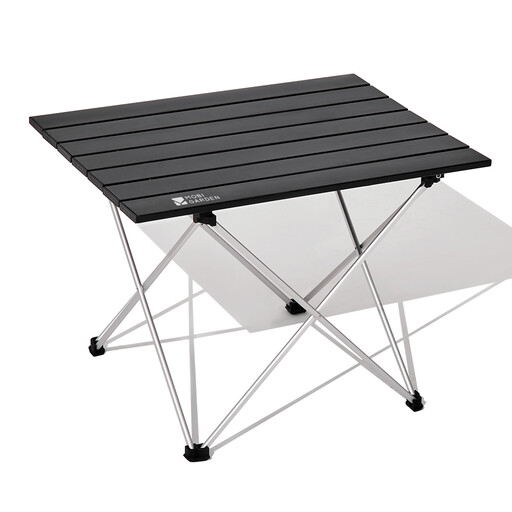
Why it suits this type of user: This compact table is designed for hiking, camping and fishing. Weighing around 1.25 kg, it’s aimed at people who value portability.
The stated open dimensions of 50 × 40 × 40 cm are shown alongside the packed dimensions of 16 × 8 × 57 cm, so you can work out how much storage space you’ll need in advance.
Aluminium frame and tabletop, nylon foot caps, black design and a stated static load capacity of around 20 kg.
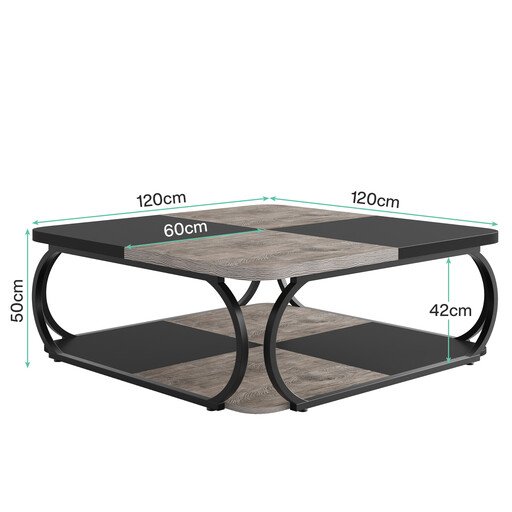
Why it suits this type of user: Measuring 100 × 100 × 50 cm, this model is designed for living rooms where a large tabletop and extra storage are welcome.
The two-tier design shows where you can store books, magazines and accessories, rather than offering only a large, empty tabletop.
Two tiers, a metal frame, a smooth surface and a black and rustic grey finish.
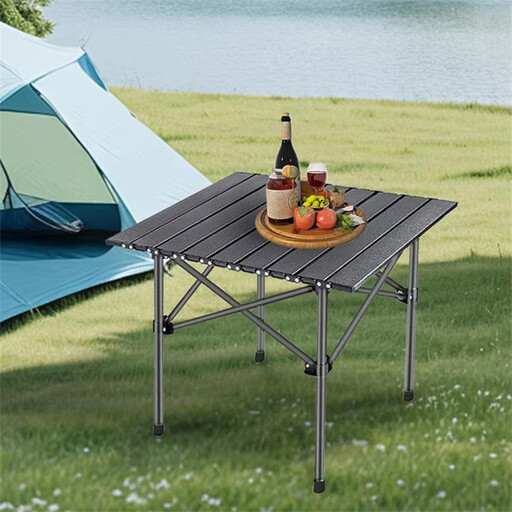
Why it suits this type of user: For barbecues, camping or outdoor activities, its higher stated weight capacity may be useful, provided you set the table up on a level surface and follow the instructions for use.
The specifications list both the dimensions of 53 × 51 × 50 cm and the folded dimensions of 11 × 15 × 53 cm. This helps you compare portability with usable surface area.
Carbon steel construction, a weight of around 2.2 kg, a storage bag included and a stated weight capacity of 100 kg.
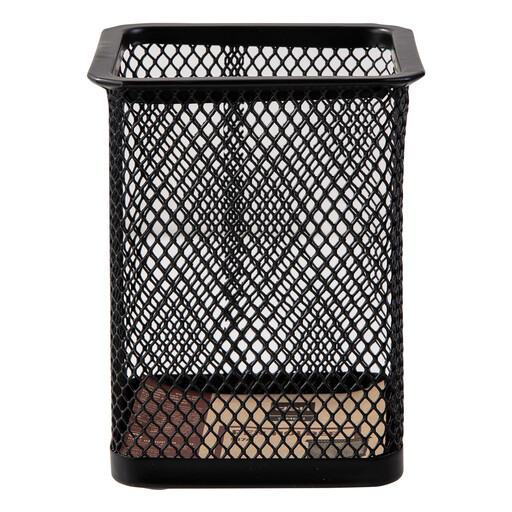
Why it suits this type of user: This square desk organiser is designed to hold pens, pencils, markers, scissors and rulers in your workspace or study area.
The open top keeps everything within easy reach. Its compact, square design takes up little desk space.
Black finish, one compartment, no assembly required and made from plastic or metal, depending on the model.
We’ve put together a complete, up-to-date list of products that meet these strict selection criteria and current European safety regulations.
First, measure the available space between your sofa, cabinet and walkway. An 80 × 80 cm table can be a practical middle ground, while a 100 × 100 cm table gives you more tabletop space but needs a larger clear area to walk around. Also consider the height of your sofa and the position of any plug sockets or cables.
That depends on the material, construction and stated weight capacity. Don’t just look at a marketing claim: check the specified load, the weight and how the table is assembled. A model with a stated weight capacity of 20 kg and one rated for 100 kg aren’t directly comparable. Don’t put sharp objects on the tabletop, and don’t use an outdoor table as a seat unless the instructions say it’s suitable.
Wipe away dust and marks with a soft, dry or slightly damp cloth. For plastic, you can use mild soap if needed, then dry the surface thoroughly. Avoid abrasive cleaners, as they can damage the finish. It’s best to store a metal camping table somewhere dry, particularly if the product information advises against prolonged exposure to moisture.
