
A traveller looking for a little sweet treat
You’re after a classic, crisp biscuit for the journey. Taste and a portion that’s easy to take with you matter more to you than the fibre content.


Choose a classic spritz biscuit if you’re after a crisp, sweet treat. If wholemeal flour and fibre matter more to you, compare a plain digestive with a spritz biscuit: the digestives we looked at list more fibre per 100 g than Verkade Nobo Sprits Original. For your train journey, consider the portion size and packaging too, and always check the label on the exact product if you have dietary requirements.
You’re after a classic, crisp biscuit for the journey. Taste and a portion that’s easy to take with you matter more to you than the fibre content.
You want to compare spritz and digestive biscuits for factors such as fibre, sugars, fats and portion size, rather than relying on the product name alone.
Your choice depends on the ingredients and allergen information on the specific pack. The words ‘spritz’ and ‘digestive’ don’t tell you enough.
Start by deciding whether you’d like a classic spritz or a digestive. Then compare the exact product for its nutritional values and allergens, and think about how you’ll carry the pack on your journey.
| What to consider | What to check before buying | Who it matters to |
|---|---|---|
| Portion size and carrying | Check the portion size per biscuit and choose packaging you can reseal or store neatly while you’re out. | I want to take a little treat without being left with an open pack or loose rubbish. Around 33% of consumers prioritise convenience when travelling and portioning. |
| Fibre and nutritional value | Compare fibre, sugars, saturated fat and salt per 100 g, then check the amount per biscuit or chosen portion. | If fibre is the deciding factor for me, I want to compare the nutritional information for spritz and digestive biscuits side by side. Around 25% of consumers prioritise this comparison. |
| Allergens and gluten-free options | Read the allergen information and any warnings on the current packaging; check the gluten-free claim for each specific product. | If I have a dietary requirement, I need to check whether this particular biscuit meets it. For around 25% of consumers, this is their top priority. |
| Classic or chocolate | Compare the plain and chocolate versions separately for ingredients, sugars per 100 g and allergens. | I’m mainly choosing based on taste and want to know what else changes with the chocolate version. Taste is the main consideration for around 17% of consumers. |
Verkade’s product specifications list 1.1 g of fibre per 100 g for Nobo Sprits Original. Product listings from Jumbo give 3.7 g per 100 g for McVitie’s Digestives Original and 3.1 g per 100 g for Jumbo Krokante Digestive. These figures reflect differences between these specific products, not a characteristic of every spritz or digestive. The Netherlands Nutrition Centre recommends comparing products per 100 g; the value per biscuit can then help you choose a portion.
Digestive is a product name, not proof that a biscuit helps digestion. The product listing for McVitie’s To Go Digestive Original says its ingredients do not contain substances that aid digestion.
Use the name to identify the type of biscuit, then compare the ingredients and nutritional information to help you choose.
The chocolate versions we looked at have a different sugar and allergen profile. According to product listings from Verkade and Jumbo, Nobo Sprits Melk and McVitie’s Digestives Milk Chocolate contain 29.3 g and 28.5 g of sugars per 100 g, respectively.
Check the nutritional values and ingredients for the exact flavour, especially if milk or soya matters to you.
Jumbo Lekker Vrij van Gluten Digestives Melkchocolade also lists milk, oats and soya, and warns that the product may contain nuts.
As well as checking the gluten-free claim, read the full allergen information and warnings on the packaging.
With a crisp biscuit, an open pack can be awkward on the go: you’ll need somewhere to put the remaining biscuits and the packaging.
Take a resealable pack with you and put your rubbish in the bin, following NS rules.
Nobo Sprits Original and Nobo Sprits Melk are specific examples to consider when comparing a classic spritz with a chocolate version.
Digestives Original is a plain digestive you can compare with a spritz for wholemeal flour and fibre; there’s also a milk chocolate version.
Jumbo has product listings for a plain own-brand digestive and a gluten-free digestive with milk chocolate.
The product pages for AH Spritsen and AH Digestive offer a starting point for comparing own-brand options.
These products include plain digestives and chocolate digestives. Choose the flavour you prefer, compare the nutritional information and check the packaging if you want to portion the biscuits for your train journey.
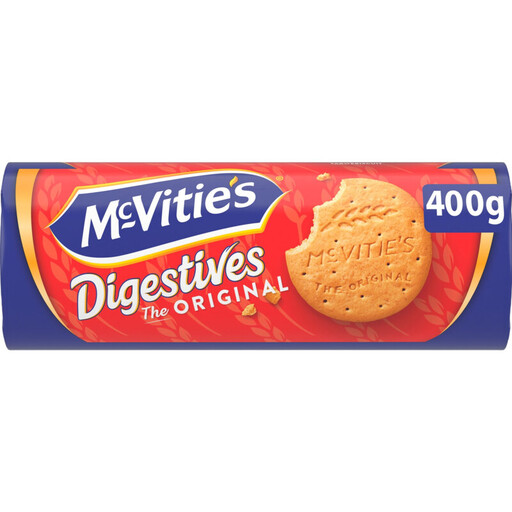 Image unavailable
A plain digestive for anyone who wants to take wholemeal flour and fibre into account. The product information lists 16% wholemeal wheat flour and 3.7 g of fibre per 100 g; the product contains wheat and may contain milk.
Check whether the pack suits the portion you want to take with you.
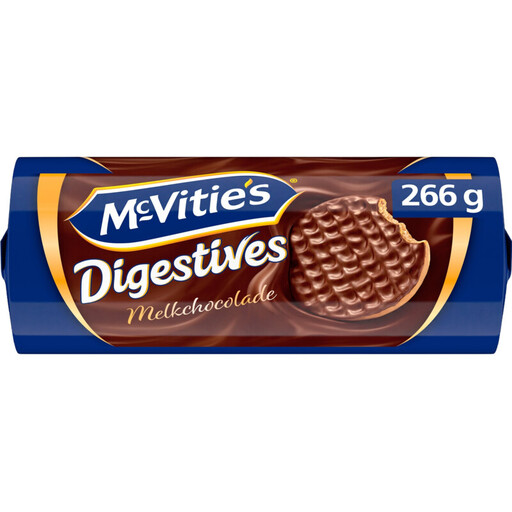 Image unavailable
A digestive with milk chocolate for anyone looking for this particular flavour. The product information lists milk, soya and wheat as allergens; check the current packaging if these matter to you.
Compare the nutritional information with the plain version and consider how you’ll carry the pack on your journey.
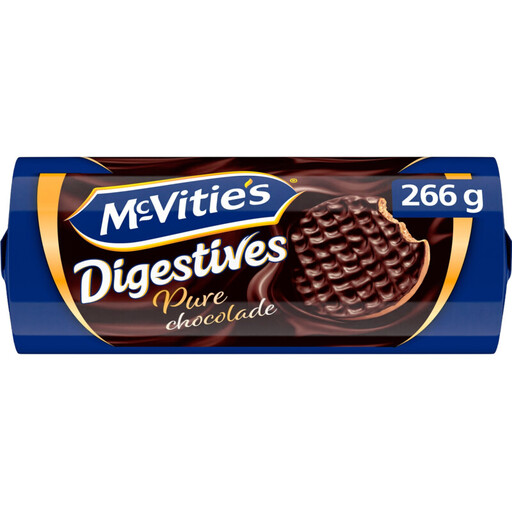 Image unavailable
A digestive with dark chocolate if you prefer this version to the plain or milk chocolate one. The product information lists wheat, milk and soya; if you have a dietary requirement, check the label on the current packaging.
Check the portion size and packaging before choosing this product for your journey.
The name ‘digestive’ doesn’t prove that the biscuit aids digestion. The product information for McVitie’s To Go Digestive Original says its ingredients do not contain substances that aid digestion. Compare spritz and digestive biscuits based on their actual ingredients and nutritional information.
Make sure you can clear away the packaging and crumbs. NS asks passengers to put their rubbish in the bin; a resealable pack is handy if you don’t eat the whole pack.
Check the allergens on the exact packaging, especially wheat and milk, and soya in the chocolate versions we looked at. Jumbo’s gluten-free digestive that we looked at also lists oats and warns that the product may contain nuts. The Netherlands Nutrition Centre stresses the importance of label information for food allergies.
Use the values per 100 g to compare products on a like-for-like basis, then check the value per biscuit or for your planned portion. The Netherlands Nutrition Centre recommends using nutritional information per 100 g when comparing products.