
Parents comparing sugar content
You’re looking for a biscuit for your child’s lunchbox and want to assess the sugars per 100 g and per portion, rather than relying on a term such as ‘sugar-conscious’.


If you specifically want to pack a spritz biscuit, treat it as a sweet extra and check the sugars per 100 g, the portion size and the allergens on the packaging. If reducing sugar matters more to you than choosing a spritz biscuit, you could compare a different type of biscuit; however, a biscuit with maltitol is not a spritz biscuit and may contain different allergens. Check the school or class rules before packing it, too.
You’re looking for a biscuit for your child’s lunchbox and want to assess the sugars per 100 g and per portion, rather than relying on a term such as ‘sugar-conscious’.
You’re looking for a familiar spritz biscuit as an occasional treat and want to know the portion size and allergen information for the pack you choose.
If there’s an allergy or a rule about food brought in from home, check the current packaging and the school or class policy before putting a biscuit in your child’s bag.
A standard spritz biscuit and a biscuit made with a sweetener don’t meet the same need. First decide whether having a spritz biscuit is important, then compare the nutritional information and allergens for the exact product.
When: if you’re specifically looking for a spritz biscuit as an occasional treat.
Consider: regular AH Spritsen and Verkade NoboSprits Original are not confirmed lower-sugar options.
When: if the sugar content matters more to you than choosing a specific type of spritz biscuit.
Consider: the Céréal speculoos biscuit contains maltitol and almonds, and it isn’t a spritz biscuit.
| What to consider | What to check | Who should pay particular attention? |
|---|---|---|
| Sugars | Compare ‘of which sugars’ per 100 g and per portion for the exact biscuit. Also check whether it’s a spritz biscuit or another type. | If my main aim is to reduce sugar, I don’t want to mistake a standard spritz biscuit for a biscuit made with a sweetener. Around 42% of consumers put this sugar comparison first. |
| Spritz biscuits and portions | Check the stated portion size and the sugars per portion; also check how many biscuits you’re packing. | For an occasional treat, I want to choose the spritz biscuit my child has asked for, but decide on the amount in advance. For around 33% of consumers, this combination is the top priority. |
| Allergens and school rules | Read the allergen information on the current packaging and ask what rules the school or class follows. | If an allergy or class rule is involved, I first need to know whether this specific biscuit can be brought in. This check comes first for around 25% of consumers. |
Albert Heijn lists 28 g of sugars per 100 g for AH Spritsen; Verkade lists 24.2 g per 100 g for NoboSprits Original. A supermarket’s separate ‘sugar-conscious’ category doesn’t tell you anything about the ingredients or nutritional content of these spritz biscuits.
Compare the nutritional information for the exact pack. Don’t use the sugar content of a different type of biscuit as a product claim for spritz biscuits.
The Céréal speculoos biscuit described by Jumbo contains maltitol and allergens including almonds, barley, egg, milk, soya and wheat. According to the Voedingscentrum, consuming large amounts of polyols can cause flatulence and diarrhoea.
As well as the nutritional information, read the ingredients and allergen lists, and check the school or class rules.
When deciding whether a product is suitable for someone with an allergy, the information on the pack you’re actually sending in is what matters. The Netherlands Food and Consumer Product Safety Authority highlights the importance of allergen information when making a food-safe choice.
Check the packaging again before packing the biscuit, even if you’ve compared the product online before.
AH Spritsen provide a specific label you can use to assess a standard spritz biscuit.
NoboSprits Original is a standard spritz biscuit, with ingredients and nutritional information published by Verkade.
The almond speculoos biscuit described by Jumbo is a different type of biscuit, not a spritz biscuit.
PLUS describes PLUS Spritsen as butter spritz biscuits.
This Joybuy option is an oat biscuit, not a spritz biscuit. Check the nutritional information and allergens for this specific product before packing it for school.
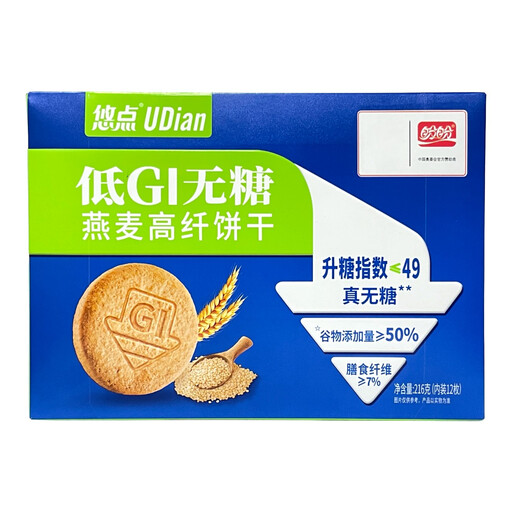 Image unavailable
A different type of biscuit for anyone who wants to compare sugar content without sticking to spritz biscuits.
The original product name suggests that the biscuits are sugar-free, but this product is also listed as containing 11.7 g of sugars per 100 g. So don’t assume they’re sugar-free, and check the nutritional information on the packaging.
Before packing, check the allergen information, including the references to wheat, soya, oats and egg, and check the school or class rules.
No. You need to assess the type of product and its nutritional information separately. Albert Heijn lists 28 g of sugars per 100 g for AH Spritsen, and Verkade lists 24.2 g for NoboSprits Original; the Céréal biscuit with maltitol described by Jumbo is a speculoos biscuit, not a spritz biscuit.
That depends on the specific biscuit, any allergies and the school or class rules. The Céréal biscuit described by Jumbo contains, among other ingredients, almonds, barley, egg, milk, soya and wheat; according to the Voedingscentrum, consuming large amounts of polyols can cause flatulence and diarrhoea.
Read the allergen information on the biscuit’s current packaging, and also check the school or class rules. The Netherlands Food and Consumer Product Safety Authority highlights the importance of allergen information when making a food-safe choice.
No, the sugar content alone doesn’t determine which snack to choose. For children aged 4 to 12, the Voedingscentrum recommends options such as vegetables, fruit and wholemeal bread for between-meal snacks; you can think of a biscuit as an occasional extra instead.