What should you look for when choosing?
First, choose between a crisp spritz biscuit and a crunchy digestive. Then compare the exact varieties by their ingredients, nutritional information and how much of an opened pack you’re likely to use.
| What to consider |
What should you check? |
Who is it important to? |
| Flavour and texture |
Choose between a buttery, crisp spritz biscuit and a crunchy digestive; also consider plain or chocolate. |
If you have a particular type of biscuit in mind for your morning coffee, prioritise flavour and texture. Around 31% of consumers give this preference top priority. |
| Ingredients and allergens |
Read the ingredients and ‘contains’ and ‘may contain’ statements for each variety; if avoiding gluten, look for an explicit gluten-free claim. |
If you need to avoid an ingredient, the label will determine which biscuits are suitable. For around 31% of consumers, this ingredient requirement is the deciding factor. |
| Nutritional values |
Compare fibre, sugars, saturated fat and salt per 100 g, and check the stated serving size. |
If you enjoy a biscuit with coffee regularly, you may want to know how the nutritional composition differs from one biscuit to another. Around 23% of consumers prioritise nutritional values. |
| Packaging and storage |
Check the pack size and number of servings, and follow the storage instructions once opened. |
If you only have a biscuit now and then, you’ll want a pack that suits the way you use it. Packaging and storage matter most to around 15% of consumers. |
Spritz biscuits to enjoy with coffee on Joybuy
This milk chocolate variety is a good choice if you’re looking for a chocolate spritz biscuit to enjoy with coffee, but not if you specifically want a plain spritz biscuit or a digestive.
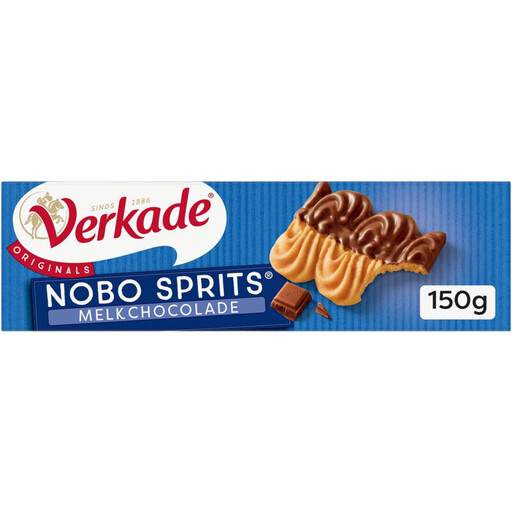 Image unavailable
Verkade Nobo Spritzed Milk Chocolate 150 g
For anyone looking for a spritz biscuit with milk chocolate to enjoy with coffee. The pack contains 150 g. This variety contains wheat, milk and soya; if you have allergies, also check the current packaging for any mention of nuts and sesame.
View on Joybuy
Frequently asked questions
Does the name ‘digestive’ tell you anything about the nutritional value?
No, the name alone doesn’t indicate the nutritional value. Compare the nutritional information for the exact varieties per 100 g and per serving. Albert Heijn lists 6 g of fibre per 100 g for AH Digestive wholemeal; Verkade lists 1,1 g of fibre per 100 g for Nobo Sprits Original.
Which of these biscuits are labelled lactose-free or vegan?
Albert Heijn labels AH Digestive as lactose-free and vegan. AH Spritsen and Verkade Nobo Sprits Original contain milk. Check the claims again on the packaging of the variety you buy.
Are plain spritz biscuits and digestives gluten-free?
The classic spritz biscuits and plain digestives mentioned contain wheat. If you need to avoid gluten, check that the specific variety is explicitly labelled gluten-free, and read the other allergen statements too.
How should I store biscuits once opened?
Follow the storage advice on the packaging and seal the pack properly after opening. This is especially useful with a larger pack if you plan to enjoy the biscuits over several coffee breaks.
What should I check on a pack of pre-packaged biscuits?
Check the ingredients, highlighted allergens, pack size, best-before date, any storage instructions and the nutritional information. The Netherlands Food and Consumer Product Safety Authority points out that allergens must be clearly listed on the label.


