
Property manager with fabric-sensitive stools
You want to check first whether the upholstery can be cleaned with water. A suitable tool does not make a fabric that cannot be wet-cleaned suitable for the job.


First, check whether the furniture manufacturer allows wet cleaning; a spot cleaner is not automatically suitable for every fabric. For individual stains, choose a machine with a suitable upholstery tool, and if you have several stools, compare tank capacities and how easy the machine is to maintain. The models mentioned are examples for comparing features, not a blanket endorsement for every stool.
You want to check first whether the upholstery can be cleaned with water. A suitable tool does not make a fabric that cannot be wet-cleaned suitable for the job.
You deal with localised spills and want to be able to empty, clean and put the machine away after use.
You compare tank capacities, reach and upholstery tools because you want to clean several seats one after another.
Start with the stool’s care instructions, then compare how the machine works and how it is maintained against your cleaning routine.
| What to consider | What should you check? | Who is this important for? |
|---|---|---|
| Upholstery suitability | Check the care label and the stool manufacturer’s instructions. BISSELL lists W and WS for its water-based upholstery cleaning; this is not blanket permission to clean every fabric. | If I want to avoid damage, I check first whether my stools can be wet-cleaned. Around 33% of consumers give fabric suitability top priority. |
| Individual stains between stays | Look at the upholstery tool and check how to empty the tanks and clean the machine after use. Kärcher lists a rinse function for the SE 3 Compact Home N1. | When I’m cleaning a single stain between guest stays, I want to be able to put the machine away quickly afterwards. Around 27% of consumers prioritise practical use between stays. |
| Several stools in one go | Compare the capacities of both the clean- and dirty-water tanks on the exact model. Rowenta lists a 1.5-litre clean-water tank and a 0.85-litre dirty-water tank for the Clean It Compact IN3020F0. | If I’m cleaning several suitable seats one after another, I want to know how often I’ll need to refill and empty the tanks. Around 20% of consumers prioritise being able to keep going when cleaning several stools. |
| Maintenance and terms | Check which accessories and cleaning products are included, and follow the care instructions. Rowenta lists an Autoclean accessory for the IN3020F0; Kärcher lists a rinse function for the SE 3 Compact Home N1. | When I use the machine regularly, I want to know in advance how much maintenance it needs and which terms apply to my purchase. Around 20% of consumers make maintenance and terms of use their top priority. |
A machine designed for upholstery does not tell you which cleaning method a particular furniture fabric can withstand. Using it on a seat that is not suitable for wet cleaning may cause damage.
Check the care label and the stool manufacturer’s instructions before use.
Clean- and dirty-water tanks vary in capacity from model to model. For the Rowenta Clean It Compact IN3020F0, Rowenta lists capacities of 1.5 and 0.85 litres respectively.
Compare both tanks on the exact model with the number of stools and the type of cleaning job.
A smaller dirty-water tank may mean you need to stop more often to empty it when cleaning several stools in a row.
A rinse function or maintenance accessory does not replace emptying and cleaning the tanks as described in the manual.
Check which accessories and cleaning products are included, and what maintenance steps the manufacturer recommends.
You’ll still need to spend time maintaining the machine and tanks after use.
The Clean It Compact IN3020F0 is worth comparing for individual stains and limited storage space. The IN5020F0 is a separate model with different tank capacities.
The SpotClean Pro 1558N and SpotClean ProHeat are separate models. Check the specifications for the exact model before comparing them.
The SE 3 Compact Home N1 is worth considering if upholstery and crevice tools, as well as machine maintenance, are relevant to your cleaning routine.
These Joybuy products are designed for spot cleaning upholstery with water. Only use a machine if the care instructions for the stool in question allow wet cleaning.
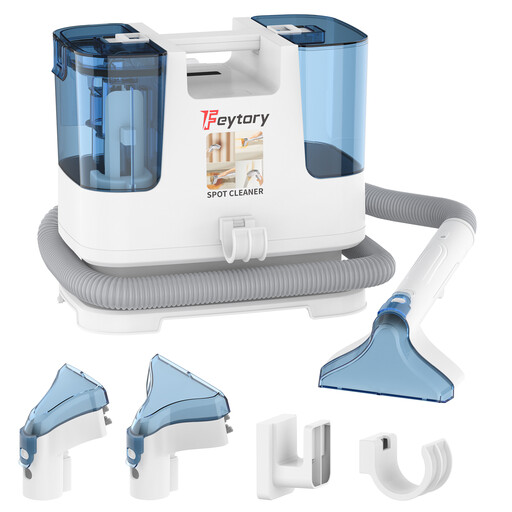 No image available
For spot cleaning upholstery that can be wet-cleaned according to its care instructions.
The product name specifies a handheld model, 15 kPa and 0.6- and 1.5-litre tanks.
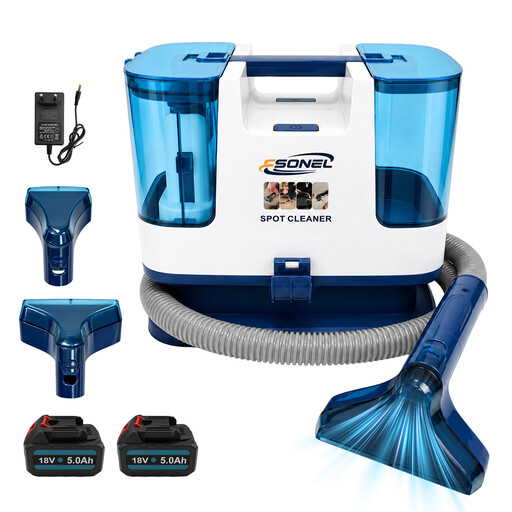 No image available
The product name mentions sofas and car seats; for stools, first check whether their upholstery can be wet-cleaned.
The product name specifies 400 W, 17 kPa and a handheld model with 2 batteries.
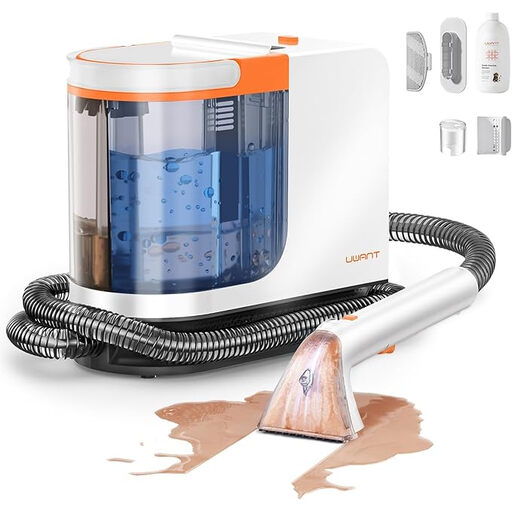 No image available
An option to compare for spot cleaning upholstery that can be wet-cleaned.
The product name specifies 18 kPa, portable use and a self-cleaning function.
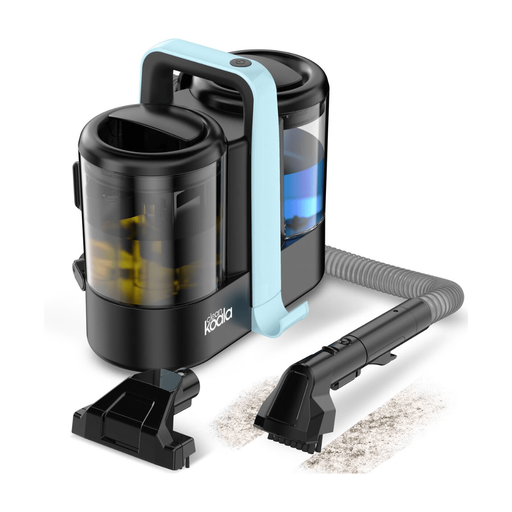 No image available
The product name mentions carpets and upholstery; check the stool’s care instructions before wet-cleaning it.
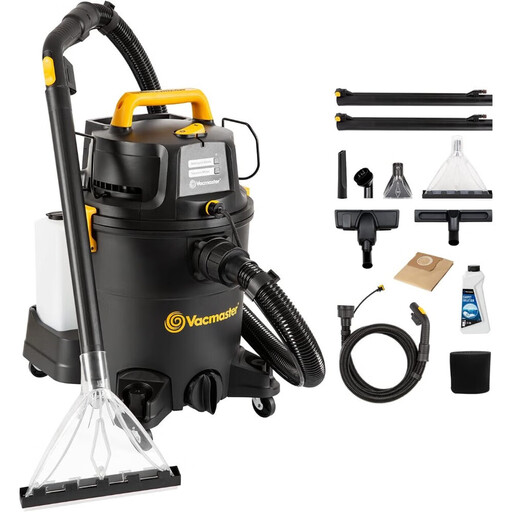 No image available
The product name mentions upholstery; compare this model if you’re cleaning several suitable seats one after another.
The product name specifies 1300 W, a 23-litre tank and a 6-litre cleaning solution tank. Check the manual for its intended use and the correct maintenance steps.
No, follow the stool’s care instructions. BISSELL lists W and WS as suitable codes for its water-based upholstery cleaning; these codes do not give blanket permission to wet-clean every stool.
First check the fabric and care label, then follow the instructions for both the furniture and the machine. A suitable upholstery tool can help you clean a specific area, but it does not replace checking the fabric.
Empty and clean the tanks according to the manual for your chosen model. Rowenta lists an Autoclean accessory for the IN3020F0, and Kärcher lists a rinse function for the SE 3 Compact Home N1; these features do not remove the need to follow the manual’s maintenance instructions.
The ACM describes the statutory guarantee for products sold to consumers. Whether it applies to your purchase also depends on the capacity in which you buy. If you’re buying for business use, confirm which sales and warranty terms apply; a manufacturer’s warranty is not the same as the statutory consumer guarantee.
For electrical equipment placed on the market in the Netherlands, Business.gov.nl outlines the relevant safety requirements, CE marking and an EU declaration of conformity. Check the product documentation for the exact model.