
Person in charge of a shared cleaning cupboard
You want to store the hose, nozzles and tanks neatly and hygienically after use, so the next person can find them.


First, check whether the stool upholstery can be cleaned with water. A spray-extraction cleaner isn’t suitable for fabrics that should only be dry-cleaned or vacuumed. If wet cleaning is allowed, compare the space available in your cupboard and the cleaner’s reach with how you’ll clean the tanks, nozzle and hose after shared use. Only consider steam if the furniture care instructions allow it.
You want to store the hose, nozzles and tanks neatly and hygienically after use, so the next person can find them.
You want to treat stains using a method that suits the care instructions for your particular upholstery. Beliani Netherlands’ furniture care guide highlights that recommended cleaning methods can vary from one fabric to another.
You regularly clean several suitable stools and want to match the reach, brush width and tank capacity to the job, as well as to the space available in your cupboard.
Start with the upholstery care instructions. Then compare the storage space, reach and work involved in cleaning the appliance before putting it away after use.
| What to consider | What to look for when buying | Who is this important for? |
|---|---|---|
| Upholstery suitability | Read the care label and furniture instructions; assess steam separately from water cleaning. | I want to check first whether my stool can be cleaned with water; I’ll assess steam separately. Around 29% of consumers say upholstery suitability is their top priority. |
| Storage in a shared cupboard | Measure the cupboard and check where the hose, cord, nozzles and tanks can be stored. | If several people use the cupboard, I want to be able to put all the parts back clean and complete. Around 29% of consumers put shared storage at the top of their list. |
| Reach and working pace | Compare the hose length, included nozzle and capacities of both tanks for the exact model. | When cleaning several stools, I want enough reach and capacity without using up unnecessary cupboard space. Reach and working pace are the main buying concerns for around 24% of consumers. |
| Cleaning after use | Check how to clean and dry the dirty-water tank, nozzle and hose. | After use, I want to be able to empty and rinse the appliance, then hand it over clean to the next person. Around 18% of consumers put after-use maintenance first. |
The right cleaning method depends on the specific fabric. A general statement about an appliance’s uses doesn’t replace the furniture care instructions.
Check the care label and assess water cleaning and steam separately before you start.
Using an unsuitable method could damage the upholstery.
The hose, cord, nozzles and tanks also need to fit in the shared cupboard. Loose parts can easily get lost, too.
Measure the space available for the complete appliance and check whether accessories can be stored on the appliance.
Remember to allow space for parts to dry after use.
A rinse function or hose-cleaning accessory doesn’t automatically take care of emptying and cleaning the tanks.
If the appliance is shared, agree who will empty the tanks and clean the nozzle and hose before it’s put away.
After use, you’ll need time to empty and rinse the appliance and let the parts dry.
The SE 3 Compact Home 1.081-530.0 is worth a look if storage for accessories and a rinse function are important to you.
The Clean It Compact IN3010F0 and Clean It IN5011F0 have different tank capacities, making them worth comparing if you’re choosing a model for one or several seats.
The SpotClean range includes portable upholstery cleaners with a variety of features. The SpotClean HydroSteam 3689N is only relevant if the upholstery can be cleaned with steam.
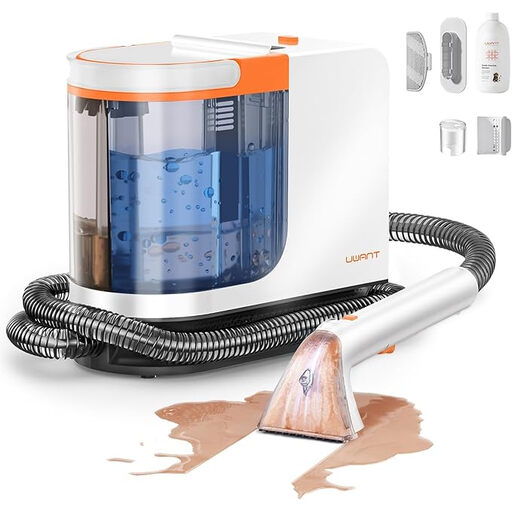
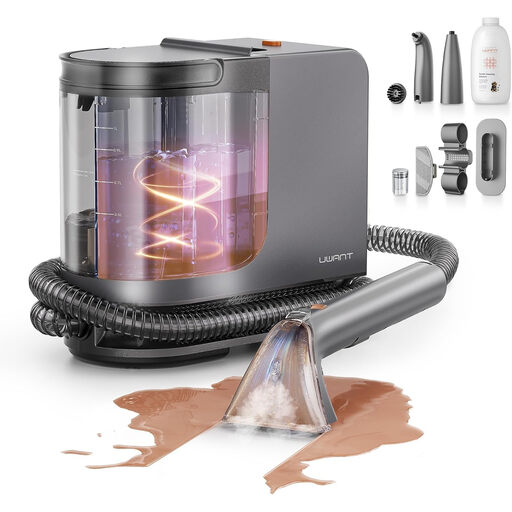
These Joybuy products are designed for spot-cleaning upholstery. Check whether wet cleaning is allowed for each stool; only use the steam function on the UWANT B400 if the furniture care instructions permit it.
 No image available
Only consider this for stools with upholstery that can be cleaned with water.
The product name lists 18 kPa and a self-cleaning function; this alone doesn’t tell you whether the method is suitable for your fabric.
 No image available
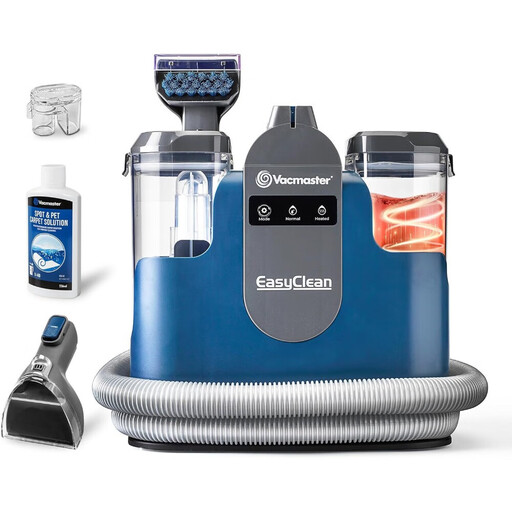
Worth comparing if you want to pay particular attention to the hose and storage of the parts after use.
Listed specifications: 500 W, 1.6- and 0.95-litre tanks, a 1.8 m hose and a self-cleaning hose. Check that the complete appliance and its parts will fit in your cupboard.
 No image available
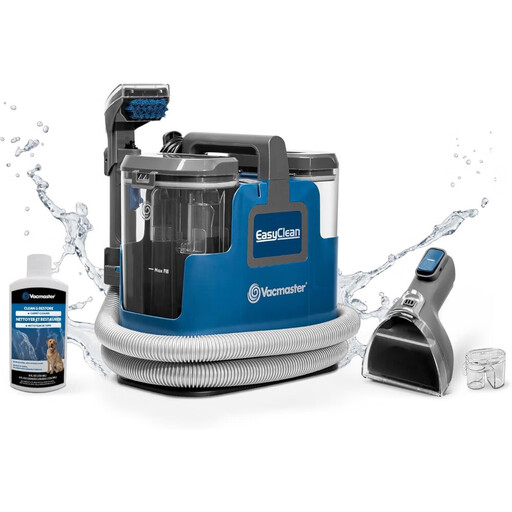
Worth comparing for stools with upholstery that can be cleaned with water.
Listed specifications: 500 W, 1.6- and 0.95-litre tanks and a 1.8 m hose. Also measure the space needed for the hose and accessories in the shared cupboard.
 No image available
Only consider this for a stool if the care instructions allow both the chosen cleaning method and, if used, steam.
The product name lists 600 W and a steam function. Only use steam if the instructions for the specific upholstery allow it.
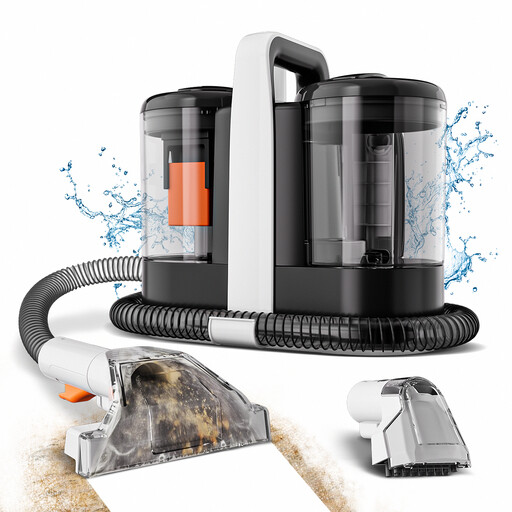 No image available
Only consider this for upholstery that can be cleaned with water; follow the stool’s care instructions before use.
Listed specifications: 600 W and 15 kPa. Check which parts need to be emptied, cleaned and dried after use.
No. Follow the care instructions for the specific stool. Beliani Netherlands’ furniture care guide distinguishes between approved cleaning methods. Just because a fabric can be cleaned with water doesn’t automatically mean it’s suitable for steam as well.
Empty and clean the dirty-water tank, clean the nozzle and use any rinse function as directed in the instructions for the exact model. Let the parts dry as instructed before putting them away.
According to the Netherlands Food and Consumer Product Safety Authority, CE marking is mandatory for the relevant electrical consumer products. For a mains-powered spot cleaner, check the marking and product identification. A product listing alone doesn’t prove that a specific item meets the requirement.
When used normally for personal purposes, a product must do what you can reasonably expect of it. ACM ConsuWijzer explains that the seller must put a faulty product right free of charge, for example by repairing or replacing it, or refunding your money. There is no fixed statutory guarantee period in the Netherlands. This consumer guidance doesn’t necessarily apply to a purchase made by a business or organisation.