
Cautious pouffe owner
You want to check whether your pouffe’s upholstery can be wet-cleaned first. Follow the furniture manufacturer’s care instructions.


First, check whether your pouffe’s care instructions allow wet cleaning. Spray extraction applies water and cleaning solution to the fabric, then vacuums it back up, as Kärcher Netherlands explains. If this method is suitable, compare the upholstery nozzle, the dimensions of the machine and its accessories, and how you clean the tanks and hose after use. A larger tank can be handy for cleaning more fabric, but it doesn’t necessarily mean you’ll need less cupboard space.
You want to check whether your pouffe’s upholstery can be wet-cleaned first. Follow the furniture manufacturer’s care instructions.
You’re looking for a machine that fits in the available cupboard space along with its hose, power cord and loose attachments. The product specifications from BISSELL Netherlands, Kärcher Netherlands and Rowenta show that dimensions and accessories vary between models.
You want to look after the tanks and hose as instructed after use, before someone else picks up the machine. Kärcher Netherlands lists a rinse function for the SE 3 Compact Home; BISSELL Netherlands lists a HydroRinse tool for the SpotClean C5.
First, check whether the care instructions allow your pouffe to be wet-cleaned. Then measure the available cupboard space and consider how you’ll put the machine away clean and dry after use.
| What to consider | What to look for when buying | Who is this important for? |
|---|---|---|
| Suitability of the upholstery | Check the care label or ask the furniture manufacturer. If wet cleaning is allowed, test it on an inconspicuous area first. | I want to make sure my pouffe can be wet-cleaned before choosing a machine. Around 31% of consumers put upholstery suitability first. |
| Fitting it in the shared cupboard | Measure the available space and compare it with the machine’s stated dimensions, allowing room for the hose and accessories. | I want to be able to store the machine and all its loose parts together in the shared cupboard after use. Around 31% of consumers prioritise cupboard space. |
| Putting it away clean | Check which tanks and parts need emptying or cleaning, and what the manual says about rinsing and storage. | I want to put the shared machine away clean so the next person can use it. Around 19% of consumers are most concerned about cleaning the machine after use. |
| Treating small stains precisely | Compare the upholstery nozzle’s width and the hose length with the areas you want to reach. | I mainly want to spot-clean small stains on a pouffe that’s suitable for this treatment. Around 19% of consumers prioritise targeted cleaning of small stains. |
Spray extraction applies water and cleaning solution to the fabric. Your pouffe’s care instructions determine whether this method is suitable.
Check the care label or ask the furniture manufacturer. If wet cleaning is allowed, test it on an inconspicuous area first.
The hose, power cord and loose attachments also need to fit in the shared cupboard.
Measure the available space and decide where you’ll store all the parts after use.
The tanks and hose need to be looked after according to the instructions for your chosen model. The pouffe also needs to dry with plenty of ventilation.
Agree who will clean the machine after use and when the pouffe can be used again.
Allow time to clean the tanks and hose, and for the fabric to dry.
BISSELL Netherlands describes the SpotClean C5 as a compact, portable cleaner for upholstery and spot stains.
Kärcher says the SE 3 Compact Home is designed for upholstery and other suitable fabric surfaces.
Rowenta describes the Clean It IN5011F0 as a spot cleaner for upholstery and other uses.
Philips describes the 3000 Series as a spot cleaner for soft surfaces; the Dutch model listed is the refurbished XW3193/11R1.
This selection features portable spot cleaners whose product names or descriptions say they’re designed for upholstery, sofas or spot cleaning. For each pouffe, check that the recommended cleaning method is suitable for use with the machine.
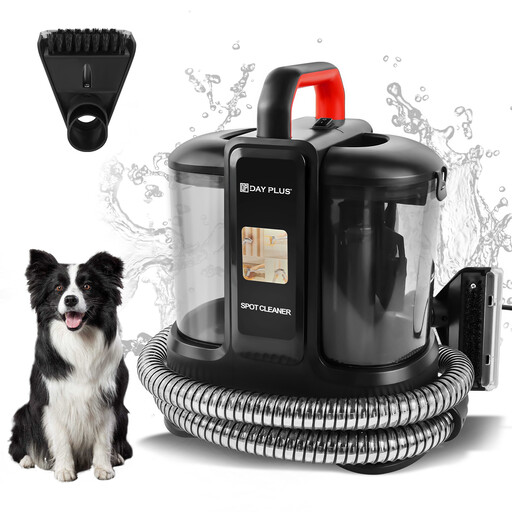 No image available
The product name says it can be used on upholstery and sofas. First check whether wet cleaning is suitable for your pouffe.
Power cord: 4,25 m. Water tanks: 0,6 l + 1,2 l.
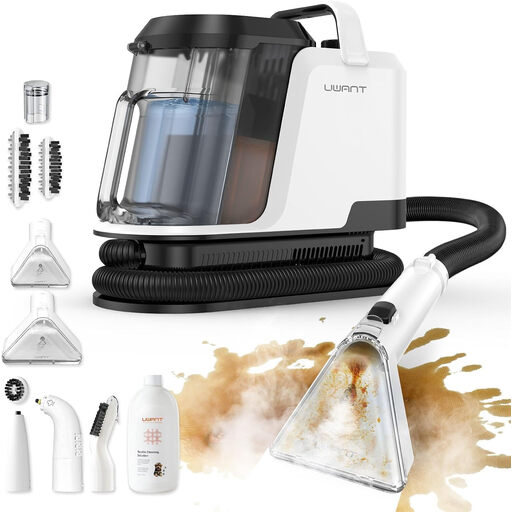 No image available
The product description lists sofas as a cleaning surface. Check specifically whether your pouffe’s care instructions allow the recommended cleaning method.
The product name mentions separate clean and dirty water tanks, one-touch self-cleaning and 3-in-1 functionality.
The product description lists steam, hot water and cold water settings.
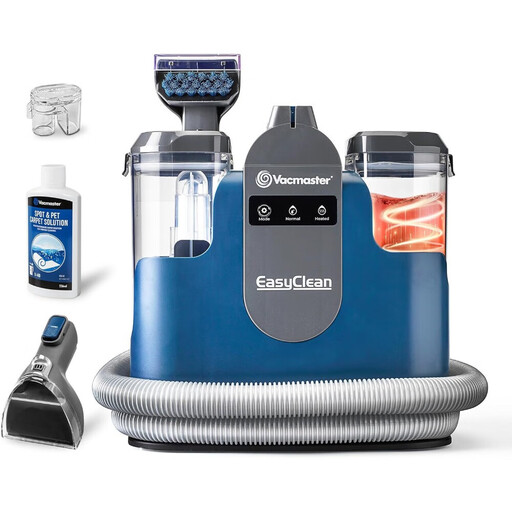 No image available
The product name mentions carpets and upholstery. Check whether the cleaning method is suitable for your pouffe.
Power: 500 W. Tanks: 1,6 l and 0,95 l. Hose: 1,8 m.
The product name mentions a self-cleaning hose.
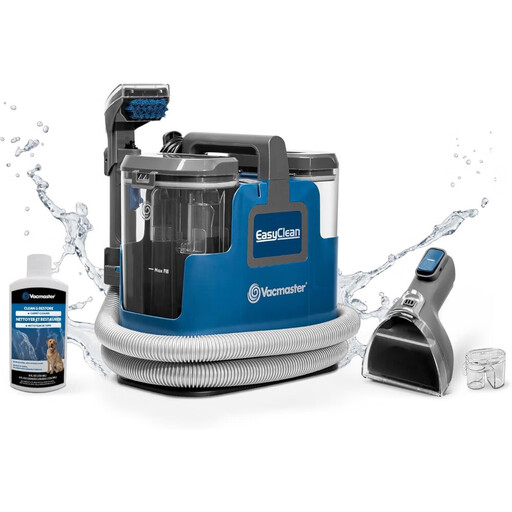 No image available
The product name mentions upholstery and sofas. Check whether the cleaning method is suitable for your pouffe.
Power: 500 W. Tanks: 1,6 l and 0,95 l. Hose: 1,8 m.
The product description lists dimensions of 34 × 22,5 × 36 cm and removable tanks.
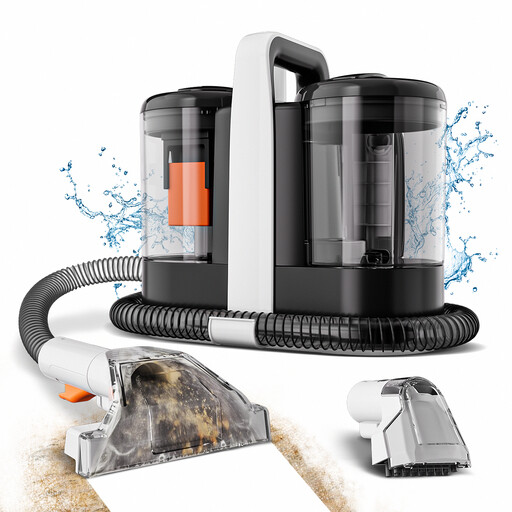 No image available
The product description mentions sofas and mattresses. Check whether the stated cleaning method is suitable for your pouffe.
Power: 600 W. The product description mentions two brush heads, hose and cord organisers, and a self-cleaning function.
No. Follow the pouffe manufacturer’s care instructions. BISSELL recommends upholstery codes W or WS for wet cleaning with its machines, and advises against it for code S or X. Test an approved treatment on an inconspicuous area first. If the instructions aren’t clear, ask the furniture manufacturer for advice.
Follow the washing instructions for that specific cover, and don’t automatically treat the rest of the pouffe in the same way. Instructions for a removable cover don’t necessarily apply to other pouffes or to the base.
Follow the manual for your chosen model when dealing with the tanks, hose, cleaning solution and rinsing. Use any supplied cleaning tool or rinse function only as instructed, and let the pouffe dry thoroughly with good ventilation before using it again.
According to the Dutch Government, you should contact the seller about your statutory guarantee. The Netherlands has no fixed statutory guarantee period: what you can reasonably expect from a product depends, among other things, on the product, its price and the information provided. A manufacturer’s guarantee may be available in addition.
According to the Dutch Government, when you buy a similar appliance, you can have your old one taken away free of charge, including when buying online. You can also take it to an appropriate collection point or your local council; collection arrangements may vary between councils.