
Cautious pouffe owner
You want to tackle stains without wetting delicate or unfamiliar upholstery. The care instructions determine which cleaning methods are suitable.


A spot cleaner is only suitable for your fabric pouffe if its care instructions allow wet cleaning, so check them first. Then choose based on storage space, reach and attachments, and consider how much tank capacity you need and how you’ll clean the machine after use.
You want to tackle stains without wetting delicate or unfamiliar upholstery. The care instructions determine which cleaning methods are suitable.
You mainly clean one pouffe or small patches, and want to store the machine, hose and attachments together.
You also want to clean other suitable fabric furniture, so you pay extra attention to tank capacity, reach and how easy the machine is to clean.
First, check whether wet cleaning is allowed for your pouffe. Then compare storage requirements, working reach and maintenance with the size and frequency of your cleaning jobs.
| Consideration | What to look for when buying | Who is this important for? |
|---|---|---|
| Suitability for the pouffe fabric | Check your pouffe’s care label or product information, along with the cleaning solution instructions. Don’t rely solely on a general claim that a machine is suitable for upholstery. | If I want to avoid wet-cleaning upholstery when it isn’t allowed, I first check the instructions for my pouffe. Around 36% of consumers put fabric suitability first. |
| Storage in a small flat | Measure the available space and compare it with the machine’s dimensions. Remember to allow room for the hose and attachments, too. | If storage space is limited, I want to be able to put the machine and loose parts away without taking up an entire cupboard shelf. Around 29% of consumers give storage top priority. |
| Targeted cleaning and drying | Check whether it comes with an upholstery attachment and look at the hose and power-cord lengths. Make sure you have somewhere for the pouffe to dry after cleaning. | If I want to clean all around a pouffe, I look for an attachment and sufficient reach, as well as space to let the upholstery dry. Around 21% of consumers focus mainly on targeted cleaning and drying. |
| Machine maintenance | Check how to clean the tanks and hose, which solutions are suitable according to the manual, and which parts are included. | If I want to keep the machine easy to maintain even after a small cleaning job, I check how to clean the tanks and hose, and which solutions are permitted. Around 14% of consumers prioritise maintenance and ongoing running costs. |
A machine designed for upholstery doesn’t make a fabric suitable for wet cleaning if its care instructions say otherwise.
Check your pouffe’s care instructions first and follow them when choosing a cleaning method.
The hose and attachments also need to fit in your available storage space.
Measure your storage space and compare it with the machine’s dimensions and the space its parts will take up.
If necessary, set aside a separate spot for the hose, attachments and cleaning solution, too.
Tank capacity and stated machine specifications alone don’t tell you how a machine will perform on your pouffe’s fabric and stain.
Choose tank capacity based on the size and frequency of your cleaning jobs. Assess performance claims separately and follow the upholstery care instructions.
The SpotClean range includes compact machines for spot-cleaning suitable upholstery. The C5 is a specific model you can compare for its dimensions, attachment and reach.
The Clean It Compact IN3020F0 is designed for easy storage. The IN5011F0 has larger stated tank capacities for those who clean several suitable surfaces more often.
The SE 3 Compact Home N1 is a spray extraction cleaner with attachments for upholstered furniture and hard-to-reach areas.
According to Philips, the 3000 Series has a 3-in-1 attachment for soft surfaces. The Dutch product page mentioned is specifically for the refurbished XW3193/11R1.
These product options are portable wet cleaners for spot-cleaning upholstery. For each model, check whether the attachment, size and maintenance requirements suit your pouffe and storage space.
 No image available
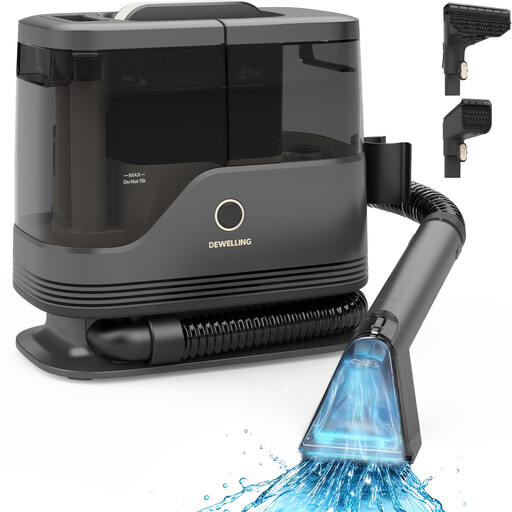
May be suitable for spot-cleaning upholstery with water if your pouffe’s care instructions allow it.
The product name lists 400 W, 13 kPa, clean and dirty water tanks, and a self-cleaning function on the handle.
 No image available
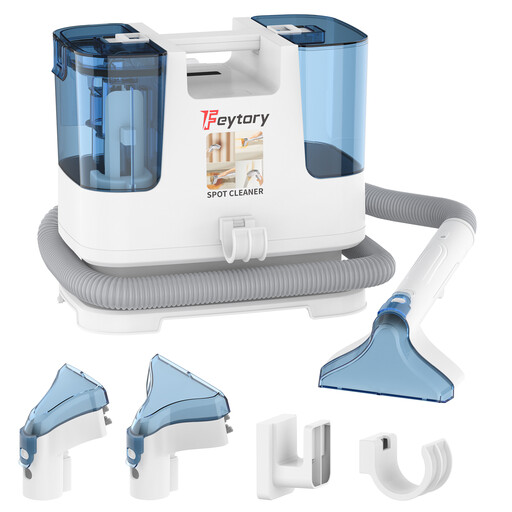
The product name lists sofas as a suitable use; check whether the machine and cleaning method are right for your pouffe’s fabric.
The stated specifications are 15 kPa and two water tanks of 0,6 l and 1,5 l.
 No image available
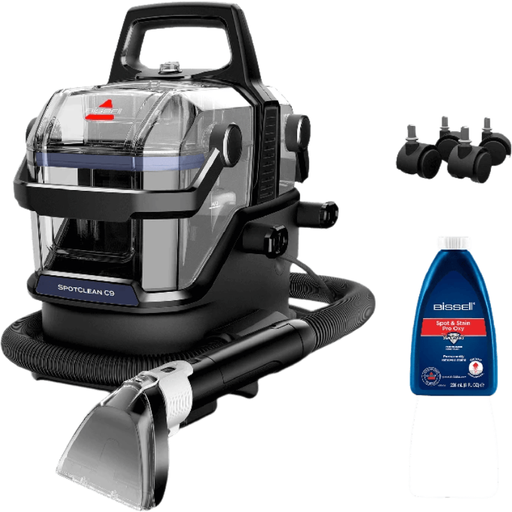
The product information mentions upholstery cleaning; only use the machine on your pouffe if wet cleaning is permitted for that fabric.
The description lists two cleaning modes, a 10 cm tool and a HydroRinse tool.
 No image available
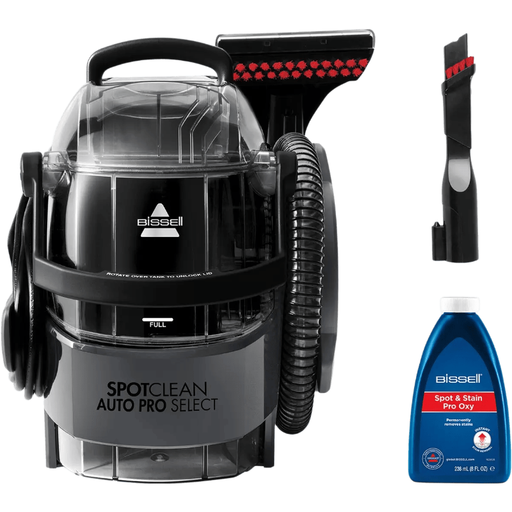
The product information mentions use on upholstery. Compare its size with your available storage space before choosing this model for a small flat.
The stated dimensions are 39 × 28 × 35,5 cm and the weight is 5,8 kg. The description lists two tanks, a 15 cm tool and an 8 cm brush.
 No image available
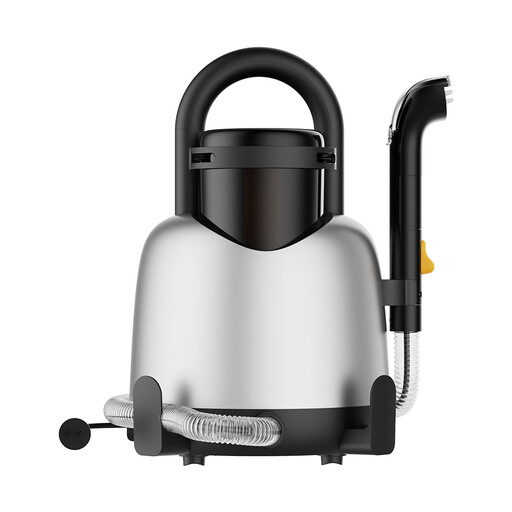
The product information mentions use on fabrics and various surfaces. Check whether one of the included brushes is suitable for your pouffe’s upholstery.
The stated tank capacities are 1,7 l for clean water and 1,4 l for dirty water. The description lists five brushes and three temperature settings.
No. Follow the care instructions for your specific pouffe. BISSELL lists the codes W and WS for its water-based upholstery cleaning; in its guidance, S means solvent-based cleaning. Don’t attempt wet cleaning if you can’t confirm which method is permitted for your pouffe.
Empty the dirty water and follow the manual instructions for cleaning the tanks and hose. The BISSELL C5 comes with a HydroRinse tool; according to Kärcher, the SE 3 Compact Home N1 has an integrated rinse function. Let the cleaned pouffe dry before using it again.
A paid extended warranty is separate from your statutory rights. According to the Dutch government, there is no fixed statutory warranty period in the Netherlands; if a product is faulty, the seller is your point of contact. If you’re considering an extended warranty, check exactly what extra cover it provides.