
Cautious fabric headboard owner
Wants to tackle a visible mark before handover without risking water marks, discolouration or damage to the upholstery or filling.


Only use a spot cleaner on a fabric headboard if the care instructions for both the fabric and the filling allow wet cleaning; a machine can’t make an unsuitable material suitable. A compact upholstery nozzle may be useful for a small, accessible stain, while reach and water recovery may matter more for a larger headboard. Always allow enough time for it to dry completely before handover.
Wants to tackle a visible mark before handover without risking water marks, discolouration or damage to the upholstery or filling.
Has a localised stain on a headboard that is confirmed as suitable for wet cleaning and is looking for a handy upholstery nozzle.
Wants to check before handover that the cleaned headboard is actually dry and presentable.
Suitable when: the care instructions allow wet cleaning and you’re treating a small, accessible area.
Trade-off: a smaller tank may need filling and emptying more often when cleaning a larger area; a nozzle doesn’t guarantee that a particular stain will come out.
Suitable when: a headboard that is approved for cleaning is wide, its edges are difficult to reach, or you also want to clean other suitable upholstery.
Trade-off: larger tanks and extra accessories take up space; the headboard still needs to dry completely.
Suitable when: the instructions rule out water, or you can’t establish whether the fabric and filling can withstand moisture.
Trade-off: vacuuming or a fabric-specific approach may remove surface dirt, but ingrained stains may remain; a suitable removable cover is only available for certain beds.
Also check the CE marking on the exact electrical model: according to the Dutch government, electronic devices sold in the EU must carry a CE marking.
| What to consider | What should you check? | Who is it relevant for? |
|---|---|---|
| Fabric suitability | Check the care instructions for both the fabric and the filling, and test an approved treatment in an inconspicuous area. BISSELL specifies W or WS codes for the stated use of water-based cleaners on furniture. | If I want to avoid damaging an unfamiliar fabric or filling, I first check whether wet cleaning is allowed; around 36% of consumers prioritise preserving the fabric. |
| Stain and nozzle reach | Compare the nozzle width and hose length of the exact model with the area, seams and edges you want to reach. | For a localised stain by a seam, I want a nozzle that’s practical for the job; around 29% of consumers give targeted stain removal top priority. |
| Residual moisture and planning | Check whether the machine extracts dirty water. A drying-time claim for one machine or setting doesn’t guarantee how quickly your headboard will dry. | If I want to check that the headboard is dry before handover, I allow time for it to dry and check it; around 21% of consumers prioritise drying time. |
| Occasional use and maintenance | Check which accessories are included with the model and how to clean the tanks and hose after use; compare this with another approved approach for the job. | If I may only need the machine for this one job, I also consider storage space and cleaning it after use; around 14% of consumers prioritise the balance between buying and maintenance. |
The cleaner’s manufacturer won’t know the care instructions for your specific fabric and filling. Wet cleaning that isn’t approved can cause water marks, discolouration or damage.
Check the care instructions for the upholstery and filling first. Only use wet extraction if that treatment is allowed.
A drying-time claim for a particular machine and setting doesn’t tell you how long each fabric, filling or room will take to dry.
Start well before handover and assess the test area and the final result only once they’re completely dry.
A small difference in the model name or specification may mean it’s a different machine or comes with different accessories.
Before buying, compare the full model code and product details, not just the general product title.
BISSELL describes the SpotClean C5 as a compact upholstery cleaner with a 1,7 m hose and a 10 cm stain nozzle.
Kärcher describes the SE 3 Compact Home N1 as a spray-extraction cleaner for upholstery and other uses, with an upholstery and crevice nozzle.
Rowenta describes the Clean It IN5011F0 as spraying, brushing and extracting, and lists 8 cm and 15 cm brushes and a crevice tool.
The Dutch product page for the refurbished 3000 Series XW3193/11R1 describes a 3-in-1 nozzle for soft surfaces, including upholstery.
These product options are portable spray-extraction cleaners for upholstery. Only use them on a fabric headboard if the care instructions for both the fabric and filling allow wet cleaning.
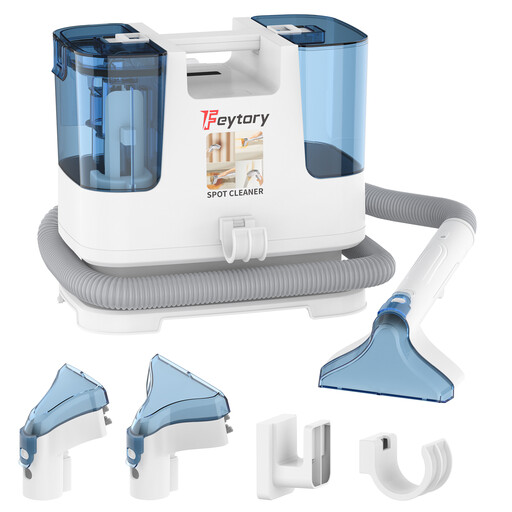 No image available
A handheld model to consider for approved wet cleaning of a localised stain on upholstery.
The product name lists 15 kPa and 0,6 l and 1,5 l water tanks.
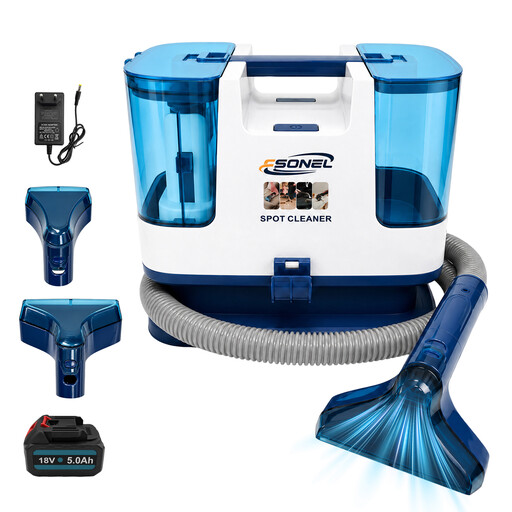 No image available
A handheld cleaner to consider for a localised stain on upholstery that the care instructions allow you to wet clean.
The product name lists 400 W, 17 kPa and the 1-battery model.
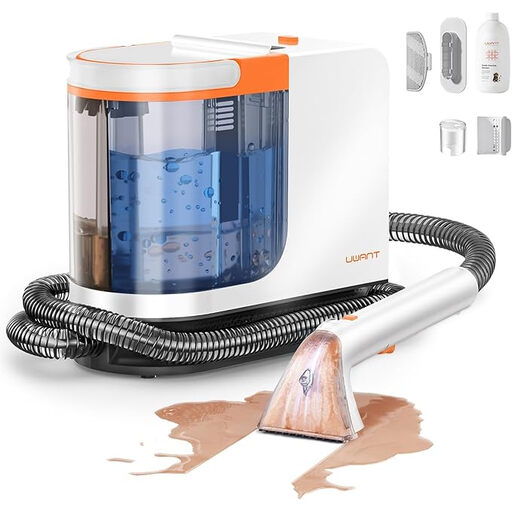 No image available
An option to consider for approved wet cleaning of upholstery; check whether the brush is suitable for the area and edges of your headboard.
The product name lists 18 kPa and a self-cleaning function.
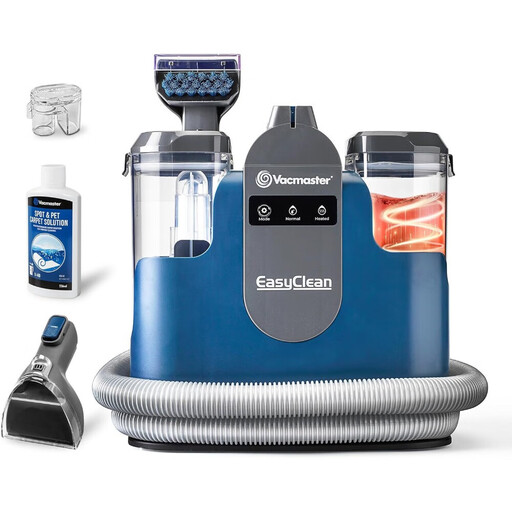 No image available
An upholstery model to consider if the care instructions for your headboard allow wet cleaning.
The product name lists 500 W, 1,6 l and 0,95 l tanks, and a 1,8 m self-cleaning hose.
 No image available
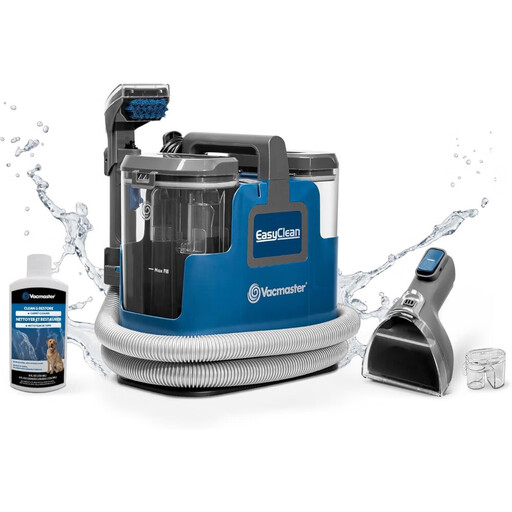
A compact model to consider for approved wet cleaning of upholstery, if the hose has enough reach for the area.
The product name lists 500 W, 1,6 l and 0,95 l tanks, and a 1,8 m hose.
No, not without checking the care instructions for your headboard, including any guidance on the filling. BISSELL limits the stated use of its water-based cleaners on furniture to upholstery marked W or WS; don’t assume it’s suitable if that guidance is missing.
First remove any loose dirt and test an approved treatment in an inconspicuous area. Let the test area dry completely before assessing the result; afterwards, clean the tanks and hose according to the machine’s instructions.
According to ACM ConsuWijzer, the retailer is responsible for the statutory guarantee. This is separate from any manufacturer’s guarantee; under the applicable conditions, the retailer must put a faulty product right free of charge, for example by repairing or replacing it.
According to the Dutch government, electronic devices sold in the EU must carry a CE marking. Check the marking on the exact model being offered; a product listing on a Dutch website alone doesn’t prove that it has one.
No. Don’t use a product containing sodium hypochlorite, such as bleach, on a surface that already has an acidic cleaning product or ammonia on it, or vice versa. Also follow the label on the product you choose and the machine’s instructions.