
Footstool owner with limited cupboard space
You want to clean individual stains without leaving a large machine in the hallway or cupboard. So compare the machine’s full dimensions and think about where you’ll store the hose and tools too.


Only choose a spot cleaner if your footstool’s care instructions allow wet cleaning. BISSELL describes W and WS codes as suitable for water-based cleaning, while S and X codes do not permit this method. Then compare the machine’s dimensions, hose and upholstery tool with your cupboard and workspace. A larger tank or extra features are most relevant if you’re cleaning several surfaces in one go.
You want to clean individual stains without leaving a large machine in the hallway or cupboard. So compare the machine’s full dimensions and think about where you’ll store the hose and tools too.
Your footstool may be awkwardly positioned or have seams where reach and a suitably narrow tool matter more than tank capacity alone.
You want to clean different types of upholstery one after another, provided each item’s care instructions allow the chosen method. Tank capacity and after-use maintenance then become important too.
Start with your footstool’s care instructions. Then measure your workspace and storage space, and compare them with the dimensions, hose and tools of the exact model.
| What to consider | What should you check? | Who is this important for? |
|---|---|---|
| Fabric suitability | Follow the care instructions for your specific footstool and check that the chosen wet-cleaning method and cleaning solution are permitted. | I want to check first whether my footstool can be wet-cleaned; around 36% of consumers prioritise fabric suitability. |
| Storage and positioning | Measure the cupboard opening, shelf depth and available workspace. Compare these with the dimensions of the exact model. | In a small home, I want to be able to use and store the machine without blocking the way; around 29% of consumers prioritise suitable storage space. |
| Reach around edges and seams | Check the hose length, the upholstery or crevice tools included and the distance to the plug socket. | If my footstool is awkward to reach, I want to be able to get to its edges and seams; around 21% of consumers prioritise reach. |
| Refilling and maintenance | Compare the clean- and dirty-water tanks separately and check which hose-rinsing function is included with the model. | For several cleaning jobs, I want to factor in interruptions and the clean-up afterwards; around 14% of consumers prioritise convenience when cleaning repeatedly. |
A machine’s general description of what it can clean doesn’t determine which cleaning method is safe for your footstool’s fabric.
Check the care instructions first. Test any permitted method on an inconspicuous area, and ask the furniture manufacturer for advice if the instructions are missing.
The models differ in their stated dimensions and reach. You’ll need space for the machine while using it and afterwards, as well as for the hose and accessories.
Measure your cupboard and workspace, then compare them with the dimensions of the exact model, its hose and the tools included.
A name that resembles another model’s doesn’t confirm that it’s the same version or comes with the same accessories.
Before buying, check the full model code, key specifications and what’s included in the box.
The SpotClean C5 is designed for spot-cleaning upholstery; the SpotClean ProHeat is a different model.
The SE 3 Compact Home is designed for upholstery and small rugs, and comes with an upholstery tool and crevice tool.
The 3000 Series XW3193/11 is worth comparing if you want to clean other suitable fabric surfaces as well as footstools.
The Wet&Dry HS5 HS530 011 is designed for anyone who also wants to clean other surfaces listed by Hoover.
These product picks are portable cleaners for upholstery and spot cleaning. Use them only if your footstool’s care instructions allow the chosen wet-cleaning method.
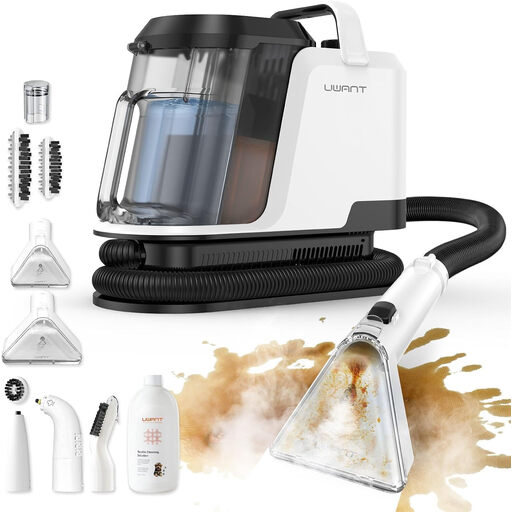 No image available
Worth comparing if your footstool can be wet-cleaned and you also want to factor in maintenance after use.
The product name lists 18 kPa, 600 W, 3-in-1, one-touch self-cleaning and separate clean- and dirty-water tanks.
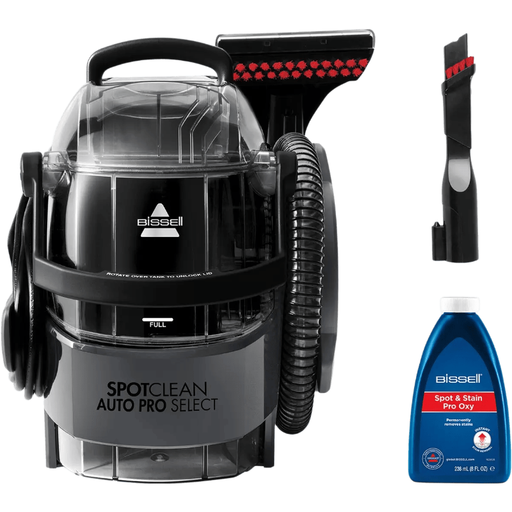 No image available
Worth comparing if your footstool can be wet-cleaned and you need tools for upholstery and tight spaces.
The product description lists separate clean- and dirty-water tanks, an upholstery tool and an XL crevice tool.
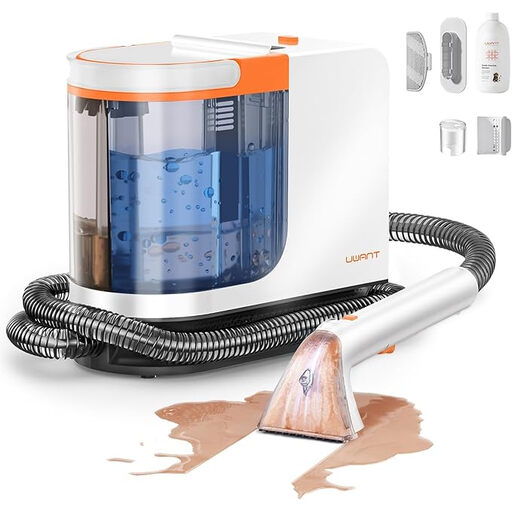 No image available
Worth comparing if your footstool’s care instructions allow wet cleaning and cleaning the machine after use is important to you.
The product name lists 18Kpa and a portable, self-cleaning machine. The product description lists two brush heads.
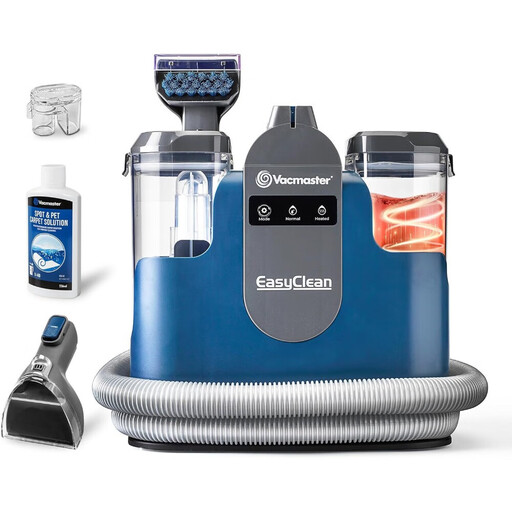 No image available
Worth comparing if your footstool can be wet-cleaned and hose length and after-use maintenance matter to you.
The product name lists 500 W, two tanks with capacities of 1,6 l and 0,95 l, and a 1,8 m self-cleaning hose. The description lists standard and heated settings.
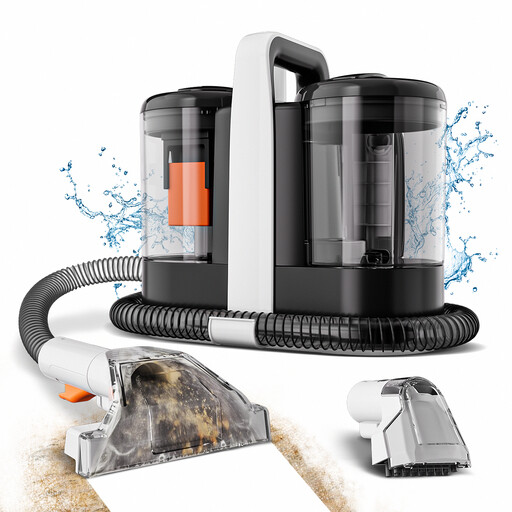 No image available
Worth comparing if your footstool can be wet-cleaned and you want to factor in the space needed for the machine, hose and cable.
The product name lists 600W and 15Kpa. The product description lists separate clean- and dirty-water tanks with capacities of 1,5 l and 0,8 l, and two brush heads.
No, follow the care instructions for your footstool. BISSELL describes W and WS codes as suitable for water-based cleaning, while S and X codes do not permit this wet-cleaning method. Test any permitted method on an inconspicuous area first; general guidance is no guarantee that it’s suitable for a specific footstool.
Let the footstool dry in accordance with its care instructions before using it again. Empty and maintain the machine according to the manual for your chosen model; Kärcher lists a rinsing function for the SE 3 Compact Home, while Philips lists Auto Clean for the hose on the XW3193/11.
No, you don’t need to pay for an add-on to have statutory protection if a product doesn’t conform to the contract. The Dutch government states that the Netherlands has no fixed statutory two-year guarantee period, so compare what an additional guarantee actually covers.
Usually: ACM ConsuWijzer states that for a product bought online, the statutory cooling-off period lasts up to 14 days after delivery, subject to legal exceptions. Check the applicable terms before using the product extensively; the cooling-off period and your guarantee are separate rights.