
Housemate dealing with recurring small stains
Wants to clean a patch by the entrance without having to wash the whole mat each time. A hand tool could be a good fit, provided the mat’s care instructions allow wet cleaning.


First, choose a cleaning method that suits the doormat’s care label and construction: ‘washable’ doesn’t automatically mean every part can be cleaned with water or heat. A compact spray-extraction cleaner can be handy for recurring small stains on a suitable mat. If stains are rare and the cover can be machine-washed according to its care label, you may not need a machine at all. Then weigh up storage space and reach against the need to empty and clean the tanks, hose and brush after shared use.
Wants to clean a patch by the entrance without having to wash the whole mat each time. A hand tool could be a good fit, provided the mat’s care instructions allow wet cleaning.
Wants to know what the cover, backing and any other parts can withstand. For example, Ruggable states that the rubber base of the mat system described is not machine-washable. This guidance does not automatically apply to other mats.
Want a machine that’s easy to empty, clean and put away after use. If it will also be used on other suitable textiles, reach and ease of maintenance matter too.
First, check the mat’s washing and cleaning instructions. Then decide whether a machine is useful given how often stains occur and how you’ll manage shared maintenance.
| What to consider | What to look for | Who is it most relevant to? |
|---|---|---|
| Spot-cleaning small stains | Check that the mat can be wet-cleaned and that the tool is suitable for treating a small area. Compare this with washing the mat according to its care label. | If I want to deal with small stains regularly without washing the whole mat each time, spot-cleaning by hand appeals to me. Around 36% of consumers say this is their main buying concern. |
| Protecting the mat and backing | Check the instructions for every part, the cleaning solution and any heat before using water, a brush or steam. | If I’m unsure about the cover, backing or underlay, I want to know what treatment each part can withstand first. Around 29% of consumers prioritise protecting the mat and backing. |
| Leaving it clean after shared use | Check whether the tanks are removable and whether the manual describes a rinse function or rinse accessory. You’ll still need to empty the tanks and clean the parts as instructed in the manual. | If several housemates use the machine, I want to make sure the next person doesn’t start with a full tank or dirty hose. Around 21% of consumers prioritise easy shared maintenance. |
| Storage and reach | Check the machine’s dimensions and the length of the hose and power cord for the area where the mat is placed. A larger machine also needs more storage space. | If cupboard space is limited or the socket isn’t nearby, I want to know whether I can store and use the machine without having to move the mat each time. Around 14% of consumers prioritise storage and reach. |
Instructions can differ for a cover and a separate rubber base. Textile layers can also react differently to moisture.
Read the instructions for your own mat and treat the parts separately where necessary. Don’t use another brand’s guidance as a substitute.
Using an unsuitable cleaning method could damage a part or mean it takes longer to dry.
A larger tank isn’t necessarily needed for spot cleaning, and the machine may take up more space to store and maintain.
First, find out whether your housemates also want to clean other suitable textiles. Then compare the tank capacity and machine size with the storage space available.
A larger machine can take up more room and mean extra cleaning work.
A bottle of cleaning solution and a spot cleaner are different types of product, so a search result showing a relevant brand won’t necessarily be the machine you’re looking for.
Before buying, check the full product name, product type and which parts, if any, are included.
The Dutch SpotClean range includes compact spot cleaners and separate steam models. The SpotClean C5 is one example of a model for spot cleaning.
The Clean It range includes the Compact IN3020F0 and the IN5020F0, which has larger tanks.
Kärcher describes the SE 3 Compact Home N1 as a spray-extraction cleaner for items including runners, small rugs and upholstery.
The Dutch product information for the 3000 Series describes spot cleaning of soft surfaces with a 3-in-1 tool.
These products are spray-extraction cleaners for spot-cleaning carpets and other textile surfaces. Use them on a doormat only if the care instructions for that specific mat allow this type of treatment.
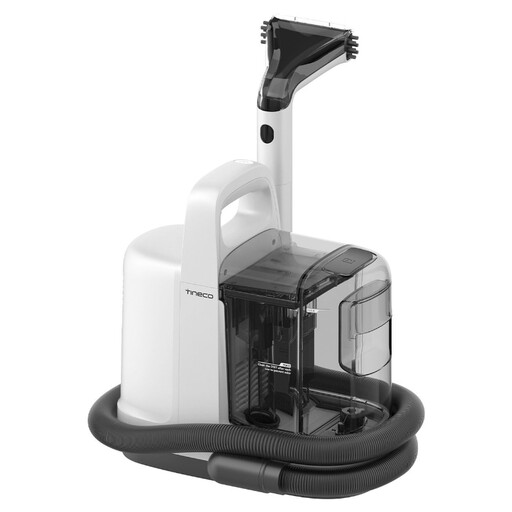 No image available
Worth considering if you’re looking for a portable spot cleaner for different surfaces and want to be able to empty the tanks after shared use.
Power: 400 W. The product name describes a portable design for use on multiple surfaces.
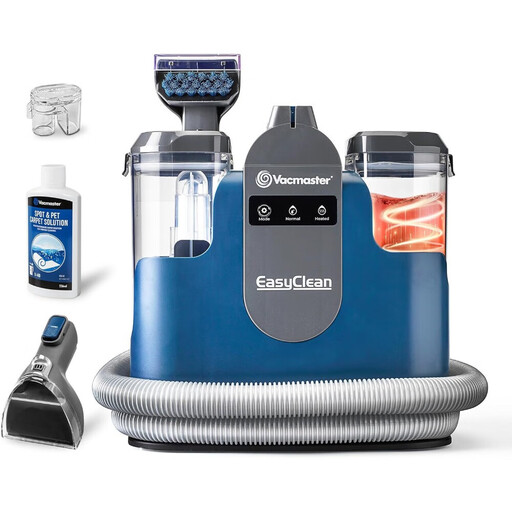 No image available
Could be a good fit if you want to factor in hose maintenance after shared use as well as spot cleaning.
Power: 500 W. The product name lists 1.6 l and 0.95 l tanks, plus a 1.8 m self-cleaning hose. It also describes a heated model; before use, check that the mat is suitable for the treatment you intend to use.
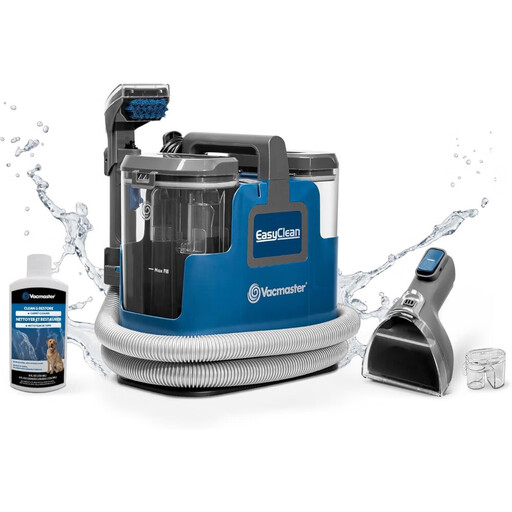 No image available
A compact option to consider if storage and spot-cleaning carpets or upholstery are priorities.
Power: 500 W. The product name lists 1.6 l and 0.95 l tanks, plus a 1.8 m hose.
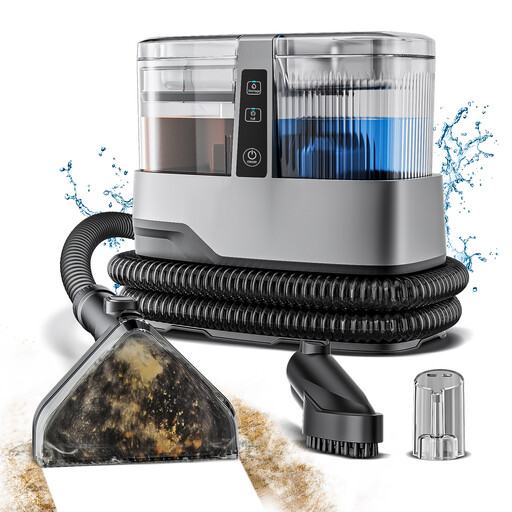 No image available
A handheld option to consider if you’re looking for a machine to spot-clean textile surfaces.
Power: 600 W. The product name lists suction power of 17 kPa. Use tank water at a maximum temperature of 40 °C; do not use boiling water.
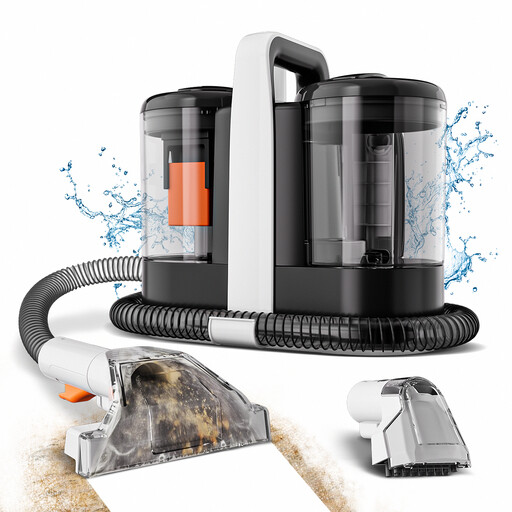 No image available
A handheld option to include in your comparison if you’re looking for a spot cleaner for carpets or upholstery.
Power: 600 W. The product name lists suction power of 15 kPa and a corded design.
No. Don’t assume a mat is suitable for wet cleaning or steam treatment just because it’s described as ‘washable’. Check the instructions for the specific mat and each separate layer. For example, Ruggable says that the cover of the mat system described is machine-washable, but the rubber base is not.
Empty and clean the parts according to the manual for the exact model, then let them dry before putting the machine away. Follow the mat’s drying instructions too.
Contact the seller. According to the Dutch government, there is no fixed statutory warranty period in the Netherlands; what you can expect from a product also depends on the product itself. Any manufacturer’s warranty is in addition to this.
No. According to the Dutch government, when you buy online from a business, you can often change your mind within 14 days, but there are exceptions. For example, the rules mentioned for distance selling don’t apply in the same way when you buy from a private individual.
No. Ordinary stain removal is not the same as proven disinfection. If you want to use a biocide in the Netherlands, you must follow the relevant authorisation and labelling requirements and check that the product is intended for your purpose.