
Vandaag of morgen in huis

Kwaliteit gegarandeerd

Welkomstaanbiedingen ontgrendelen: GRATIS bezorging | Tot 80% korting | Gratis 30 dagen JoyPlus-proefperiode
Download de app
A red wine stain on the carpet, mud on the car seat or a pet accident on the sofa: a regular vacuum cleaner will remove visible dirt, but it won’t always lift moisture and grime from deeper in the fibres. A spot cleaner usually combines spraying, brushing and suction, making it suitable for carpets, stairs, upholstery and car interiors.
However, a carpet cleaner isn’t necessarily the right purchase for every household. Look out for these common pitfalls.
A higher wattage doesn’t, on its own, tell you how much moisture a machine can extract from fabric. Also check the stated suction pressure, the design of the nozzle and the capacity of the dirty water tank. A model with 17 kPa of suction power might look appealing, but how well it works in practice also depends on airflow, the hose and the seal.
A steam cleaner uses hot steam and is mainly intended for surfaces and dirt that can be loosened with heat. A spray extraction cleaner applies water, with cleaning solution if needed, then sucks up the dirty water. For a fabric sofa, carpet or car seat, the latter is usually more suitable.
Always check that the fabric is water-resistant. Test on an inconspicuous area first and follow the care instructions from the manufacturer or furniture maker.
A dirty water tank that remains closed and damp after use can cause unpleasant smells. Hoses, filters and nozzles need looking after too. A machine with removable tanks or a self-cleaning hose is therefore more practical if you clean regularly.
Three functions are useful for tackling stubborn stains:
Bear in mind that manufacturers may state suction power in kPa, Pa or sometimes only as motor power. These figures aren’t directly comparable. Use them as a guide, and also check the nozzle width, hose length and tank design.
A system with two separate tanks keeps clean water apart from the dirty water it collects. This is more hygienic and makes filling and emptying more straightforward. A compact tank is fine for a small stain. If you want to clean several seats, stairs or a whole sofa, a larger capacity is more useful.
Also check whether the tanks are removable. This makes them easier to empty, rinse and dry.
A portable carpet cleaner should be easy to handle on stairs, in a car or around a sofa. Look at:
A wet and dry cleaner for fabric isn’t automatically suitable for hard floors or liquids such as fuel. Only use the machine for its intended purpose and follow the safety instructions.

Why it suits this profile: This model has a 500W motor, a 1.8-metre hose and separate tanks. It’s suitable for occasional stains on carpets, sofas, stairs and car seats.
The product description covers more than just motor power: it also gives details about the tank design, hose length and included cleaning solution. This lets you compare several relevant features side by side.
500W power, two removable tanks and a compact size of around 34 x 22.5 x 36 cm.
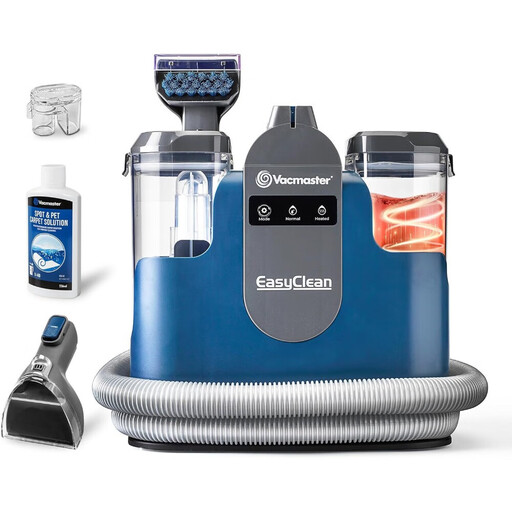
Why it suits this profile: This is a sensible choice for households that regularly clean sofas, carpets, stairs and car seats, and want to pay extra attention to maintenance.
As well as two tanks, the product information lists standard and heated cleaning modes. The self-cleaning hose helps with maintenance after use.
500W power, a 1.6-litre clean water tank, a 0.95-litre dirty water tank and a 1.8-metre hose.
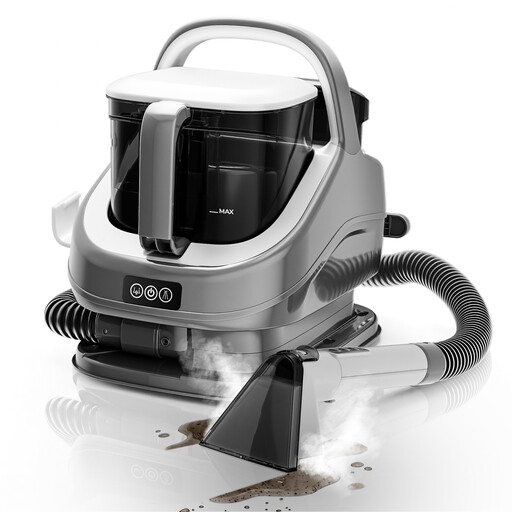
Why it suits this profile: With several cleaning modes, a larger water capacity and suitability for pets, sofas and car interiors, this model is a good fit for frequent use.
The product information lists cold water, warm water and steam as separate modes. Before use, check that your upholstery is suitable for heat and moisture.
1300W power, stated suction power of 13 kPa, a 1400 ml clean water tank and a 1200 ml dirty water tank.
We’ve put together a complete, up-to-date list of products that meet these strict selection criteria and the applicable European safety regulations.
Don’t use boiling water unless the instructions expressly allow it. When using a spot cleaner for pet stains, it’s best to remove any solid matter safely first and choose a cleaning solution that’s suitable for the surface.
That depends on the fabric and its care label. A spray extraction cleaner is designed for water-resistant fabrics, but not all upholstery can withstand moisture. Always test on an inconspicuous area first and use only as much liquid as necessary.
Drying time depends on how much water you apply, suction power, ventilation, temperature and the material. Vacuuming first and moving slowly with the extraction nozzle can help leave less moisture behind. Open the windows or use ventilation, but only put furniture back once the carpet feels dry.
As well as the purchase price, cleaning solution, electricity and any replacement filters are the main costs. A model with reusable tanks and accessories that are easy to find may be more practical in the long run. Always follow the recommended dosage; using more solution won’t necessarily give you a cleaner result.
