
Vandaag of morgen in huis

Kwaliteit gegarandeerd

Welkomstaanbiedingen ontgrendelen: GRATIS bezorging | Tot 80% korting | Gratis 30 dagen JoyPlus-proefperiode
Download de app
A coffee spill, muddy paw prints from the dog or a stain on the car seat can happen in an instant. The right spot cleaner can help you treat textiles locally without immediately having to use a large appliance. However, many models and sprays look similar, while the differences in how they are used can be considerable.
Pay particular attention to these common pitfalls:
A portable carpet cleaner works differently from a conventional vacuum cleaner. The appliance applies water with a suitable cleaning product, after which the dirty liquid is extracted. Therefore, look for a spray, brush and suction function. Suction power alone, without effective liquid distribution, does not automatically make an appliance suitable for cleaning furniture.
A dual tank is practical: clean and dirty water remain separate. This means you need to stop less often and prevents dirty water from being spread over the upholstery again.
Specifications such as 400 to 750 watts and a stated suction pressure of, for example, 10 to 18 kPa, provide a technical point of comparison. They do not independently predict how quickly a surface will dry. The amount of water used, the width of the brush and how slowly you move the suction nozzle also make a difference.
For a sofa, stairs or car seat, a compact model with a hose is often sufficient. A wider suction nozzle can save time when cleaning larger carpets. Do not use more liquid than necessary and work in overlapping strips to reduce drying time.
Check the capacity of both tanks, not just the largest capacity stated. For example, a 1.5-litre clean-water tank and a 0.8-litre dirty-water tank are different measurements with different practical implications.
Also consider:
A stain remover for clothes is usually a liquid or powder intended for use before or during washing. A carpet and upholstery cleaner is designed for fixed textiles such as rugs, sofas and mattresses. For a car, a narrow nozzle, long hose and sufficient reach are useful. A wet and dry cleaner can extract liquid, but check that the model is actually designed for upholstery and carpets.
Test a product or appliance on an inconspicuous area first. Use lukewarm water if the product manual specifies it, and only treat wool, silk, leather and flame-retardant fabrics in accordance with the care label. Do not mix cleaning products. For powders containing oxygen bleach, such as G'woon Oxi, follow the dosage, contact time and material restrictions stated on the packaging.
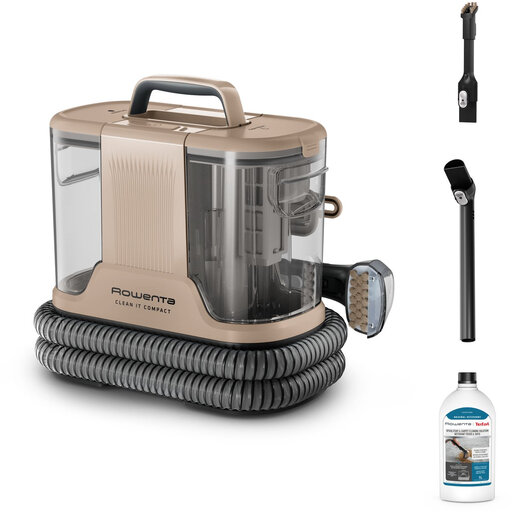
Why it suits this profile: A compact model for households that occasionally treat stains on a sofa, mattress, carpet or inside a car.
The specifications list two tanks, a 175 cm hose and a self-cleaning accessory. This makes maintenance and spot cleaning more straightforward.
400 watts, up to 11.5 kPa according to the product information, a 1.5-litre clean-water tank and a 0.85-litre dirty-water tank.
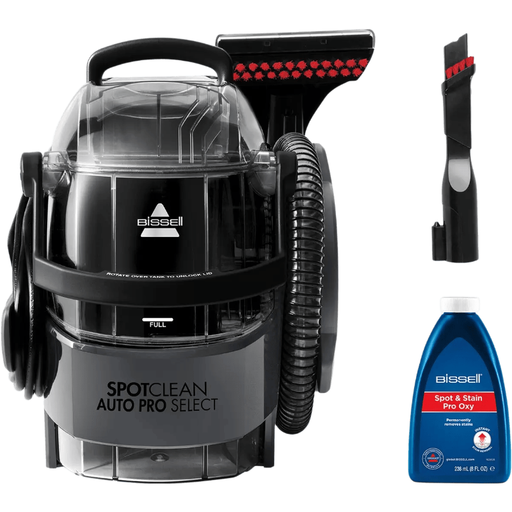
Why it suits this profile: Suitable for anyone who regularly cleans carpets, stairs, fabric furniture and car seats and values having several tools available.
The product information mentions separate water tanks and two brushes. This means the appliance does not rely on one universal nozzle for every job.
750 watts, a capacity of 2.8 litres according to the product specifications, a 15 cm brush and a separate 8 cm brush.
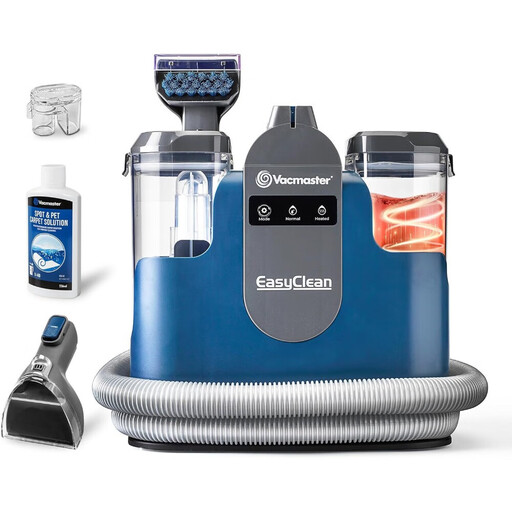
Why it suits this profile: A sensible choice for families, pet owners or motorists who regularly tackle larger or more stubborn dirt.
According to the product description, the machine has a standard and a heated cleaning mode. However, always check whether heat is suitable for the textile in question.
500 watts, a 1.6-litre clean-water tank, a 0.95-litre dirty-water tank and a 180 cm hose.
We have put together a complete, up-to-date list of products that fully meet these strict selection criteria and the applicable European safety regulations.
That depends on the material and the care label. A machine designed for carpets and upholstery may make clothing too wet or put undue strain on the fabric. For clothes, a suitable stain remover for clothes or spray is often more practical. Always test it on an inconspicuous area first.
Drying time depends on the amount of liquid, ventilation, temperature and type of fabric. Use several gentle suction passes without adding extra liquid. Open windows or use ventilation, but do not place delicate fabrics in direct bright sunlight without checking first.
In addition to the purchase price, you pay for water, cleaning product and electricity. An appliance with a larger tank may be more efficient when treating several stains, while a spray may be more economical for occasional small marks. Therefore, do not compare the price alone; also consider tank capacity, maintenance and the surfaces for which the product is suitable.
