
Vandaag of morgen in huis

Kwaliteit gegarandeerd

Welkomstaanbiedingen ontgrendelen: GRATIS bezorging | Tot 80% korting | Gratis 30 dagen JoyPlus-proefperiode
Download de app
A sporty backpack may seem easy to choose at first glance. Yet many shoppers opt for a model that proves less practical after just a few weeks. A zip may be difficult to reach, a laptop compartment may be missing, and a bag that looks spacious can feel awkwardly large in everyday use.
If you are looking for a backpack for school, work, the gym or short trips, it is therefore wise to consider the layout, dimensions and carrying construction first. The logo and colour come afterwards.
A spacious backpack does not automatically keep things organised. If there is only a main compartment, keys, earbuds and chargers can quickly disappear beneath clothes or books. So check whether the bag has a front pocket, inner pocket or side pocket.
A backpack with multiple compartments is particularly useful for commuting and school. You can keep everyday items separate from sportswear or smaller accessories. Do pay attention to the type of fastening: a two-way zip often offers greater flexibility, but additional zips can also mean more components that may wear out.
Marketing copy often describes a comfortable backpack, but does not always explain what makes it comfortable. Look for adjustable shoulder straps, a padded back panel and well-shaped straps. A backpack that fits closely against your body remains more comfortable when you cycle or walk for longer periods.
A padded back panel does not automatically mean that the bag will suit every body shape. Check the dimensions and adjust the straps so that the bag sits close to your back without hanging too low.
A polyester backpack is lightweight and generally easy to clean. Some product descriptions refer to the material as water-resistant or water-repellent. That is not the same as waterproof. In rainy conditions, seams, zips and uncovered openings may still let moisture through.
So if you are carrying a laptop or documents, take a separate protective cover unless the product information clearly states a waterproof rating. This helps prevent a general material claim from creating a false sense of security.
First consider what you need to carry every day. For a school backpack, books, a lunch box and possibly a laptop are key considerations. For a work backpack, you will also need to allow for a charger, documents and a bottle. For the gym, shoes, clothing and a towel are often more important than a separate laptop compartment.
Pay attention to the difference between height, width, depth and capacity in litres. A model of around 20 to 24 litres is often suitable for everyday use, while a larger bag provides more space for sportswear or short trips. However, a larger capacity also means that you can fill the bag too heavily more easily.
Examples from the range:
An everyday bag works better when each item has its own place. Look for a combination of:
The PUMA Academy features two spacious compartments, several pockets, two mesh side pockets and a padded inner compartment. The PUMA Phase models have a main compartment, front pocket and side pocket. Always check the exact product description if a laptop compartment is essential for you; “suitable for a device” does not mean the same as a universal padded laptop compartment.
Polyester, synthetic fabrics and PU-coated materials are common in sporty backpacks. They help keep the weight relatively low and can usually be cleaned with a damp cloth. Follow the brand’s care instructions. For example, the PUMA Phase Backpack II states that cleaning with a damp cloth is recommended and that you should not use detergent.
A durable fabric is useful, but also pay attention to the zips, stitching, base construction and attachment points of the shoulder straps. These components are particularly important with intensive use. According to the product information, the navy Joma Training III has a double base in the inner compartment, which can be practical for training gear.
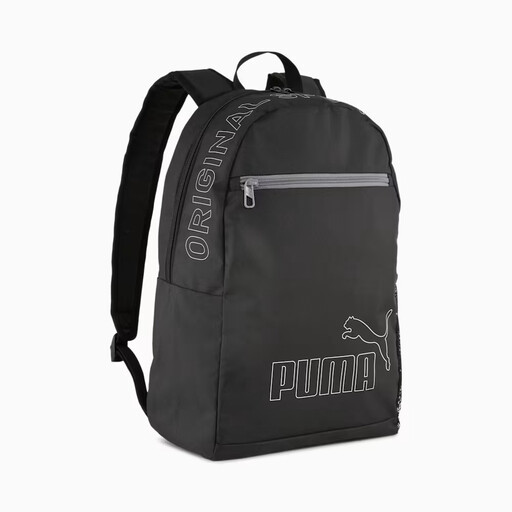
Why it suits this profile: A black unisex backpack with a straightforward layout for school, commuting or everyday use.
The bag has a main compartment with a two-way zip, a front pocket and a side pocket, so small items do not all end up at the bottom.
Approximately 20 litres of capacity, a padded back panel, padded sleeve and at least 90% recycled materials according to the product information.
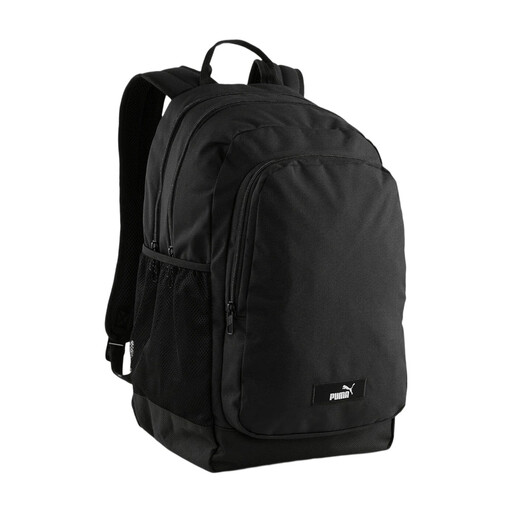
Why it suits this profile: For users who carry plenty with them and value a clear compartment layout.
The two spacious compartments, several pockets and padded inner compartment help keep school, work and sports equipment separate.
Approximately 24 litres of capacity, padded shoulder straps and back panel, two side pockets and space for a device up to 18.7 inches according to PUMA.
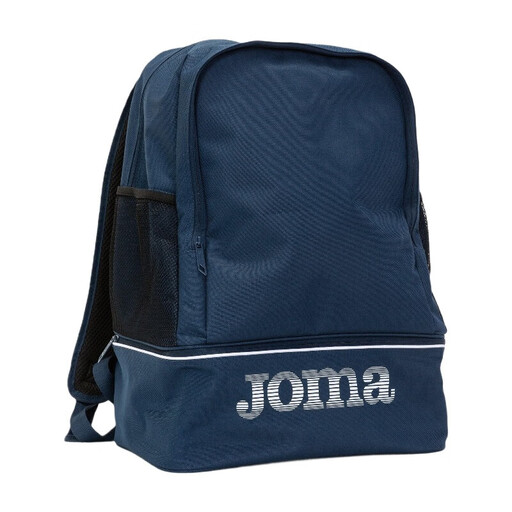
Why it suits this profile: Its capacity and double base are designed for training, sportswear and carrying larger items every day.
The generous capacity, inner compartment and double base make it easier to carry shoes and clothing separately.
24.2-litre capacity, 100% polyester according to the product information, a front pocket and padded shoulder straps.
We have put together a complete, up-to-date list of products that fully meet these strict selection criteria and the applicable European safety regulations.
For everyday use, a capacity of around 20 to 24 litres is often a sensible choice. Choose a larger one if you also need to carry shoes, sportswear or towels. Alongside the capacity in litres, always check the depth: a deep bag can hold more, but may not sit as close to your back.
Its lifespan depends on the load, care and frequency of use. Overfilled compartments put additional strain on zips and shoulder straps. Store the bag somewhere dry, remove wet clothing straight away and clean the material according to the instructions. Also check the statutory guarantee when purchasing. For the Joma models mentioned, a minimum statutory guarantee of two years under EU consumer law is stated.
It can be, provided the compartment layout and dimensions suit what you need to carry. A gym backpack with only one large main compartment is practical for clothing, but less suitable for a laptop or documents. A model with a padded sleeve, front pocket and side pocket is more versatile. So do not compare only the colour or brand, such as a PUMA backpack, Reebok backpack or Joma backpack. Focus instead on the features you use every day.
