
Vandaag of morgen in huis

Kwaliteit gegarandeerd

Welkomstaanbiedingen ontgrendelen: GRATIS bezorging | Tot 80% korting | Gratis 30 dagen JoyPlus-proefperiode
Download de app
A sports bag should suit what you carry and the way you move. Yet people often choose based on colour, brand name or a claim such as “ultra-light”. That can leave you with a bag that becomes impractical after just a few weeks: too little space, a strap that rubs or compartments where your belongings disappear.
When comparing options, pay particular attention to these three common pitfalls:
A gym bag or drawstring bag is suitable when you mainly carry clothes, a towel and small accessories. A lightweight model is easy to store in a locker. A zipped pocket at the back is useful for valuables, but always check the dimensions beforehand.
For short distances, a sports bum bag may sometimes be enough. It can hold a phone, keys, cards and a small snack, for example. If you need to carry more, it is better to look for a running backpack or cycling backpack with several compartments and a close-fitting design that stays close to your body.
A sports backpack offers more space than a bum bag and distributes the weight across both shoulders. For school, work or a short trip, a 20-litre backpack is often a useful mid-sized option. As well as capacity, consider the size of the main compartment, the presence of separate pockets and whether the shoulder straps can be adjusted.
Do not look at litres alone. Check which items will actually fit in the bag:
A larger capacity is not automatically more practical. A half-empty large bag can move around while running or cycling.
Adjustable straps are important for intense activity. With a backpack, it is best to check the stated torso length and waist size. For example, the PELLIOT models specify different sizes based on torso length and waist strap measurements. This makes comparing them easier than simply relying on “one size”.
With a sports bum bag, measure your natural waist circumference. An elasticated strap can provide a comfortable fit, but choosing the right size remains essential for a secure fit.
Polyester and nylon are commonly used for sports bags. Check the product information for:
A bag with water-repellent properties is not automatically waterproof. So do not buy a bag based on a general marketing term if you need protection from rain. Look for specific product information about water resistance and usage limitations.
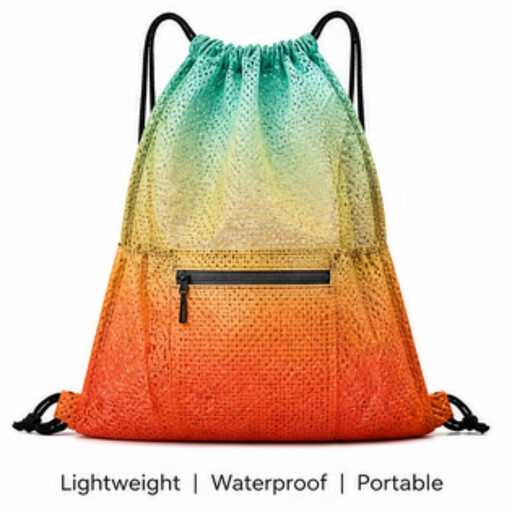
Why it suits this profile: This lightweight drawstring bag is suitable for beginners carrying clothes or accessories to the gym, swimming pool or a short training session.
The product name mentions a zipped pocket at the back, so small items do not have to be left loose in the main compartment.
Mesh construction, drawstring fastening and a separate zipped pocket at the back.
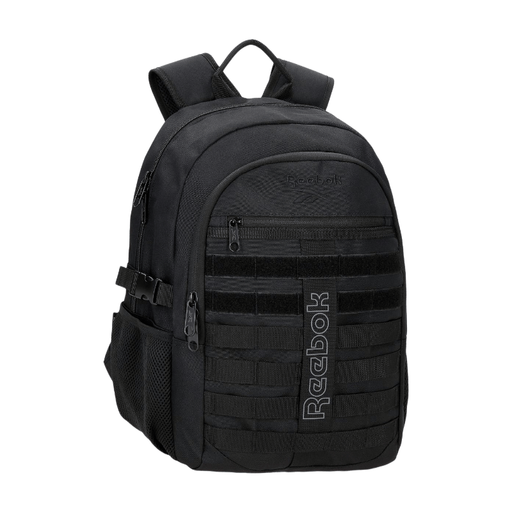
Why it suits this profile: This backpack is designed for anyone who wants one bag for school, work, the gym, travelling and everyday journeys.
The description mentions a spacious main compartment and additional pockets, allowing everyday items to be stored separately.
45 cm length, adjustable shoulder straps and a layout for books, clothes and accessories.
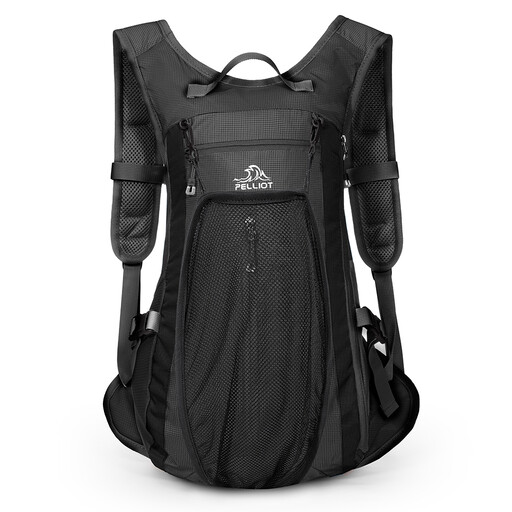
Why it suits this profile: This trail-running backpack is designed for running, cycling and outdoor activities where a stable fit and well-organised compartments are important.
The stated sizing includes torso length and waist strap measurements. Check these details to avoid a cycling backpack that is too loose or too large.
Capacity of 10–15 litres in size S/M or 15–20 litres in size L/XL, with multiple compartments and mesh lining.
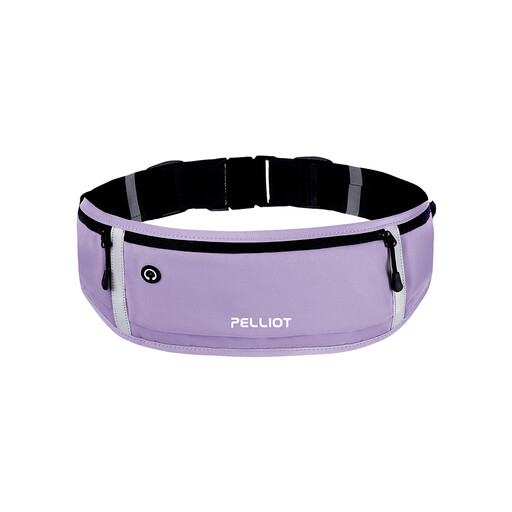
Why it suits this profile: A practical sports bum bag for running, cycling, walking or commuting when you only need to carry the essentials.
The product specification lists an elasticated waist strap, anti-slip material and zips on every compartment. Measure your waist before choosing a size.
Main compartment, easy-access front pocket and concealed pocket; sizes S/M and L/XL with the stated waist ranges.
We have put together a complete, up-to-date list of products that fully meet these strict selection criteria and the applicable European safety regulations.
If you are looking for a compact bag, you could consider an Eastpak bum bag. According to the product information, the Eastpak Waist Bag has a capacity of 2 litres, a main compartment and a separate zipped pocket for cards and cash. The stated adjustable waist range is 50 to 138 cm. This makes the model suitable for small everyday items, but less suitable for a towel, shoes or a complete sports outfit.
For every bag, check whether the product dimensions work for the items you carry. A running bag does not need the same layout as a bag for school or travelling.
For clothes, a towel and small accessories only, a compact gym bag is often sufficient. If you also carry shoes, toiletries or a water bottle, choose a larger model with multiple compartments. Look at the actual dimensions, not just the stated number of litres.
A drawstring bag can work for short trips to and from training, but its simple carrying construction usually offers less stability than a running backpack. For running, a close-fitting backpack or sports bum bag is more practical if you want to minimise movement.
After use, allow a damp bag to air fully, remove wet swimwear or sportswear straight away and follow the manufacturer's care instructions. Some models must not be put in the washing machine or tumble dryer. Store the bag in a dry place and regularly check the zips and seams for signs of wear.
