
Vandaag of morgen in huis

Kwaliteit gegarandeerd

Welkomstaanbiedingen ontgrendelen: GRATIS bezorging | Tot 80% korting | Gratis 30 dagen JoyPlus-proefperiode
Download de app
A bag may look spacious in a product photo, but disappoint in everyday use. A zip that keeps sticking, wet trainers next to a laptop or a rucksack that won’t fit under the plane seat are all common reasons to end up buying another bag. With this guide, you can compare sports and travel bags based on verifiable features such as capacity, compartments, material and dimensions.
Terms such as waterproof, water-resistant and water-repellent aren’t always used consistently. A water-repellent coating can help protect against light rain or splashes, but it doesn’t automatically provide protection during prolonged rainfall or submersion.
So always check the product information. For example, the LI-NING bags are explicitly described as having water-repellent fabric that isn’t fully waterproof. According to the brand’s product description, the water-repellent finish may also wear off over time or with washing.
A large main compartment is handy for clothes, towels or sports equipment. However, without separate compartments, your belongings can quickly get jumbled together. A sports bag with a shoe compartment or a wet compartment keeps shoes and damp clothes away from clean items.
Pay attention to where the compartment is, too. A side shoe compartment is often easier to reach than a small pocket at the bottom of the main compartment.
A bag of around 24 litres may work as a cabin-bag rucksack, but only if its external dimensions meet the airline’s requirements. Measure the bag including handles, external pockets and any expansion. Also check the airline’s current conditions before you travel.
So, a model advertised as a Ryanair rucksack isn’t automatically suitable if you fill it completely or expand it.
Choose a capacity that suits how you’ll use the bag:
A gym bag is usually best with a wide opening, a sturdy handle and a separate compartment for shoes or damp clothes. For a weekend bag, a main compartment that opens fully is often more convenient than one narrow opening.
600D polyester, ripstop nylon and Oxford fabric are commonly used for sports and travel bags. The 600D figure refers to the density of the fibres and doesn’t, on its own, tell you everything about overall durability. Also look for:
A PU coating on the inside can help protect against moisture, but it doesn’t make a bag fully waterproof. If you’re carrying electronics in heavy rain, it’s best to use a separate waterproof cover.
A shoulder strap is useful for a sports bag, while wide, padded shoulder straps are better suited to a rucksack for commuting or walking. A chest strap, hip belt and ventilated back panel can make longer distances more comfortable.
Check the weight of the bag itself, too. A large 100-litre model can carry a lot, but it will be heavy when fully packed. For everyday use, a compact water-repellent rucksack is often more practical than a very spacious outdoor bag.
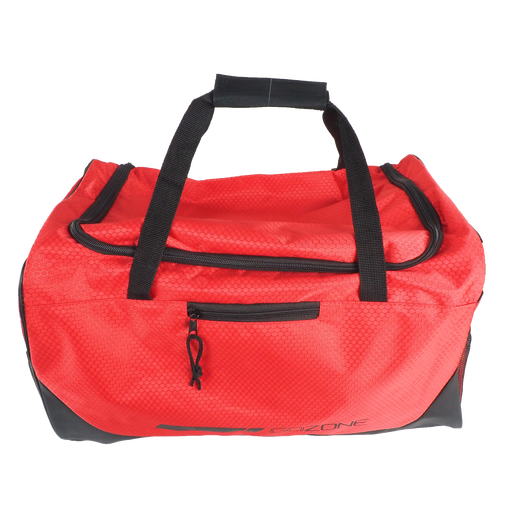
Why it suits this profile: A well-organised gym bag for the gym, sports training or a short overnight stay, without an unnecessarily complicated layout.
The bag has a ventilated side compartment for shoes or damp items, a front zipped pocket and two handles. The product information mentions a water-repellent PU inner layer; this doesn’t guarantee that the bag is fully waterproof.
Around 30–35 litres of capacity, an adjustable, detachable shoulder strap and a side pocket for a water bottle.
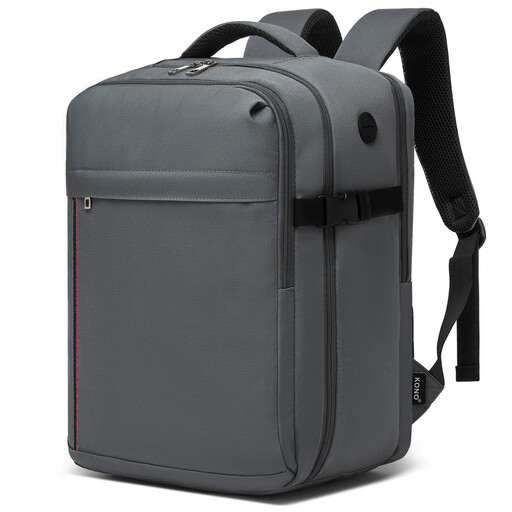
Why it suits this profile: Designed for travellers who want to carry work essentials, clothes and travel documents neatly in one compact rucksack.
Its external dimensions are approximately 40 × 30 × 20 cm, and it has three main compartments. Still check your airline’s requirements before travelling, especially if the bag is fully packed.
Around 24 litres of capacity, a padded laptop compartment for laptops up to 15.6 inches, compression straps and a trolley sleeve.
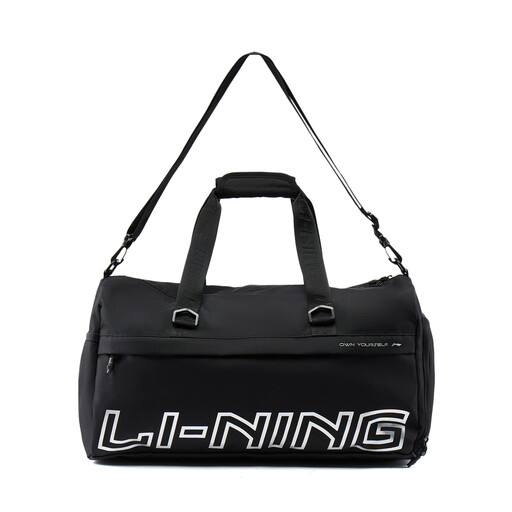
Why it suits this profile: Handy for sportspeople who want to carry clothes, shoes and accessories together in one spacious bag for training or a match.
A separate shoe compartment keeps trainers apart from the main compartment. The product description says the fabric is water-repellent, not fully waterproof.
Around 39 litres of capacity, a separate shoe compartment, side pocket, front zipped pocket and adjustable shoulder strap.
If you only need to carry the essentials, a bum bag or cross-body bag may be more practical than a large sports bag. The LI-NING Waist Pack Nefud has several compartments and an adjustable strap, making it suitable for everyday use, commuting or travel. For walks and cycling, a compact bag with a secure fastening is often all you need.
If you carry more, consider a walking rucksack with a capacity of 10 to 16 litres. Look for a ventilated back panel, adjustable shoulder straps and a chest strap. According to the product information, a 10-litre PELLIOT model has a roll-top closure, adjustable compression straps and a water-repellent coating. It’s designed for light rain and splashes, not prolonged heavy rain.
A wash bag is another easy way to keep toiletries separate in a weekend bag or cabin bag.
We’ve put together a complete, up-to-date list of products that meet these strict selection criteria and the applicable European safety regulations.
For clothes, shoes, a towel and a water bottle, around 30 to 40 litres is often practical. A model with a shoe compartment keeps used shoes away from clean clothes. If you don’t carry much, a 20 to 25-litre bag may be enough.
Not always. Check whether the product information uses terms such as water-repellent, splash-resistant or waterproof. A water-repellent coating is mainly intended for light rain and splashes. If you’re carrying electronics or expect prolonged exposure to rain, a separate waterproof cover is a sensible choice.
Don’t overfill the bag or put too much strain on the zip and seams. Empty damp compartments after use and leave the bag to air thoroughly. Clean it according to the care label or product instructions; some models shouldn’t go in the washing machine or tumble dryer. Store the bag somewhere dry and avoid leaving it in direct sunlight for long periods to help prevent fading and material deterioration.
