
Vandaag of morgen in huis

Kwaliteit gegarandeerd

Welkomstaanbiedingen ontgrendelen: GRATIS bezorging | Tot 80% korting | Gratis 30 dagen JoyPlus-proefperiode
Download de app
A sports sunglasses with UV400 polarisation can be a real asset when you’re cycling, running, golfing or driving. However, a striking lens colour or a term like “HD” doesn’t automatically mean a pair of glasses will suit your needs. The real difference often lies in the fit, lens specifications and how you look after them.
A blue, red or grey lens might look sporty, but the colour alone doesn’t tell you how much light is let through or how the glasses perform in changing weather. Instead, pay attention to technical details like VLT, or Visible Light Transmission. A low VLT lets in less light and is better suited to bright sunshine. A higher VLT can be more practical in cloudy conditions or shade.
Some product descriptions mention impact-resistant lenses. That doesn’t mean a sports pair is suitable for grinding, welding or other high-risk tasks. For example, with the OutdoorMaster Hawk II, it’s stated that the glasses are not unbreakable and are not intended for activities like machining. So use cycling sunglasses for what they’re designed for: protection against sunlight, wind, dust and normal conditions during sport.
A frame can be lightweight and flexible, yet still not fit your face properly. A cycling pair that’s too wide can let light in at the sides; one that’s too narrow can press against your temples. So check whether the product information mentions face shapes, size, nose pads and anti-slip features.
UV400 refers to protection against ultraviolet light up to a wavelength of 400 nanometres. Make sure this specification is clearly stated in the product information. The sports glasses featured in this article are offered with UV400 protection according to their product descriptions. This is a product specification, not a medical promise or guarantee that the glasses are suitable for looking directly at the sun or a solar eclipse.
A polarised sports sunglasses is designed to reduce annoying reflections from surfaces like tarmac, water or wet cycle paths. This can be practical for road cycling, fishing, driving and golf. However, polarisation doesn’t automatically make a pair suitable for every time of day. In low light, a dark lens can actually be less comfortable.
Also note the difference between lens materials:
A TR90 sports glasses uses a thermoplastic frame that can be lightweight and flexible. Look beyond the material to the weight and fit. A model weighing around 30 grams can be suitable for longer rides, but comfort still depends on your face shape.
For intensive cycling, practical details include a rubber nose pad, anti-slip temple tips and a streamlined design. These can help prevent the glasses from shifting in wind, sweat or on bumpy roads. No frame is guaranteed to stay perfectly in place under all conditions.

Why this fits the profile: This model combines a TR90 frame with polarised TAC lenses and is offered as cycling glasses for cycling, running and driving.
The product information mentions UV400, polarisation and a protective EVA case, so you’re not relying solely on the lens colour.
TR90 frame, TAC lens, UV400 specification, microfibre cloth, cord and EVA case included.
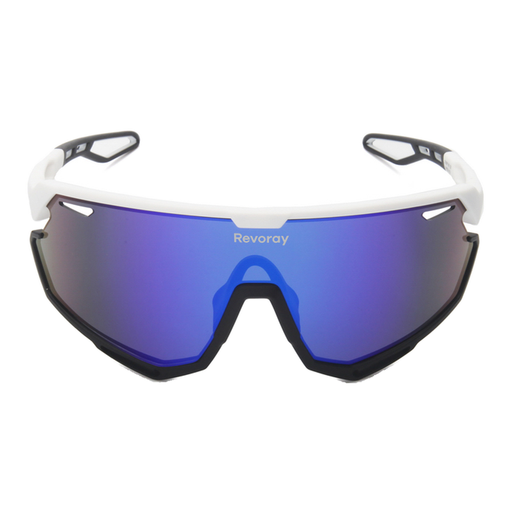
Why this fits the profile: A choice for road cyclists and mountain bikers who value a wide integrated lens, low weight and a stable fit.
The product description states approximately 30 grams, a rubber nose pad and anti-slip parts. That gives more concrete information than just “sporty design”.
One-piece PC lens, TR90 frame, UV400 according to the product information and aerodynamic design.
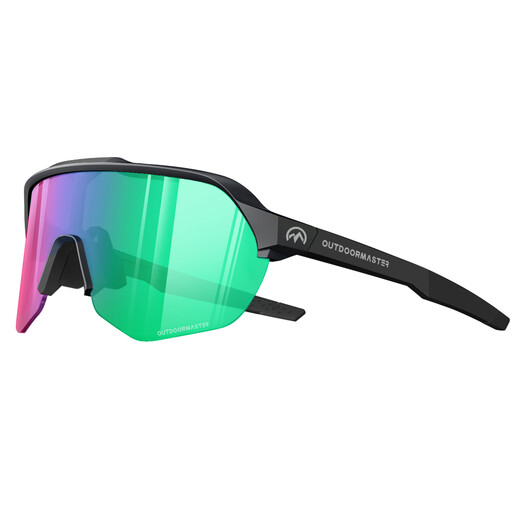
Why this fits the profile: This model is aimed at users who want one pair of glasses for cycling, golf, fishing, boating and other activities in changing light conditions.
The set includes a clear interchangeable lens. This means the glasses aren’t reliant on a dark lens in cloudy or less bright weather.
Polarised HD lens, TR90 frame, UV400 according to the product description and a clear replacement lens.
Rinse off dust and sand with clean water first before wiping the lens. Then use a soft microfibre cloth. Store the glasses in the supplied case and don’t leave them for long on a warm windowsill or in a hot car. Scratches can affect your vision; replace a lens or the glasses when they’re clearly damaged.
Don’t use cycling glasses as a substitute for certified eye protection when welding, grinding or doing other tasks with flying particles. Also, never look directly at the sun or a solar eclipse with ordinary sports sunglasses.
We’ve put together a full, up-to-date list of products that fully meet these strict selection criteria and comply with current European safety regulations.
A pair of glasses with a stated UV400 specification is designed to filter ultraviolet light up to 400 nanometres. For cycling, you also need to consider fit, ventilation, lens colour and polarisation. Always check the product information and don’t use the glasses for tasks that require certified safety eyewear.
Polarisation is designed to reduce annoying reflections, for example on wet tarmac or water. Ordinary sunglasses don’t necessarily have this feature. For cycling, fishing, golf and driving, that difference can be noticeable, but in low light a dark polarised lens may be less suitable.
How long they last depends on how often you wear them, how you clean them and whether the lens gets scratched. A TR90 frame can be flexible according to the material specification, but even such a frame isn’t indestructible. Store the glasses in a case and replace them if the lenses are damaged or the frame becomes loose or distorted.
