
Vandaag of morgen in huis

Kwaliteit gegarandeerd

Welkomstaanbiedingen ontgrendelen: GRATIS bezorging | Tot 80% korting | Gratis 30 dagen JoyPlus-proefperiode
Download de app
Sports sunglasses need to do more than look the part. Whether you’re cycling, running or out on the water, you’ll encounter bright sunlight, reflections, wind, dust and sweat. A pair that slips down, mists up or limits your vision can soon end up forgotten in a drawer.
The main pitfalls often come down to the details:
UV400 sunglasses are generally advertised as offering protection against ultraviolet light up to 400 nanometres. Check the product page to see exactly what protection is stated and whether the sunglasses include the relevant product information and markings for the European market. A dark lens without a UV specification gives you no clear way to assess its level of protection.
Visible light transmission, often referred to as VLT, can help you choose a lens tint to suit your needs. A low VLT lets less visible light through and is mainly intended for bright conditions. A higher VLT may be more comfortable in overcast weather or changeable light. So don’t judge a lens by its colour alone.
Polarised sports sunglasses can reduce distracting reflections from water, wet roads, snow or metal surfaces. They can be useful for cycling, fishing, golf and boating. However, polarisation doesn’t replace UV protection: both features should be listed separately in the product specifications.
“HD” usually refers to a clear or high-contrast view, but its meaning varies by brand. Some brands say in their product information that these lenses are designed to reduce distortion and glare. Treat this as a product specification, rather than a guaranteed improvement for every wearer.
Photochromic sports sunglasses adjust their tint according to the amount of UV light, as described in the product information. This can be useful on a bike ride with a mix of sun and cloud. Check the stated range, such as Cat.0 to Cat.3, and bear in mind that they may work less effectively behind car windscreens.
Lightweight sports sunglasses put less pressure on your nose and ears during longer activities. TR90 is a thermoplastic frame material used in a range of models for its combination of flexibility and low weight. That doesn’t mean every TR90 frame will fit or last the same way.
Also look for:
For intensive cycling, a wide, curved lens can offer extra coverage. If you’re looking for running sunglasses, a secure, lightweight design is usually more useful than a heavy frame with lots of separate parts.

Why it suits this profile: This pair is designed to be worn over prescription glasses. According to the product description, it has polarised lenses and a lightweight plastic frame for outdoor activities.
The fit-over design means you won’t end up with ordinary sports sunglasses that don’t fit over your glasses. Be sure to check the width of your own frames first.
Polarised lenses, a plastic frame and a design made for glasses wearers.
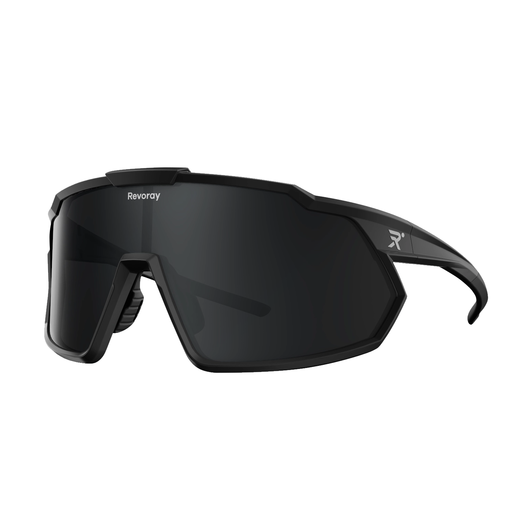
Why it suits this profile: According to the product information, this model combines TAC polarised lenses with a TR90 frame weighing around 33 grams, adjustable non-slip nose pads and several lens coatings.
The product specifications give specific values and materials, rather than relying on HD marketing claims alone. The stated ANSI Z87.1 performance test is not a substitute for industrial eye protection.
Around 33 grams, a TR90 frame, a VLT of approximately 15.2% and a water- and oil-repellent coating, according to the product page.
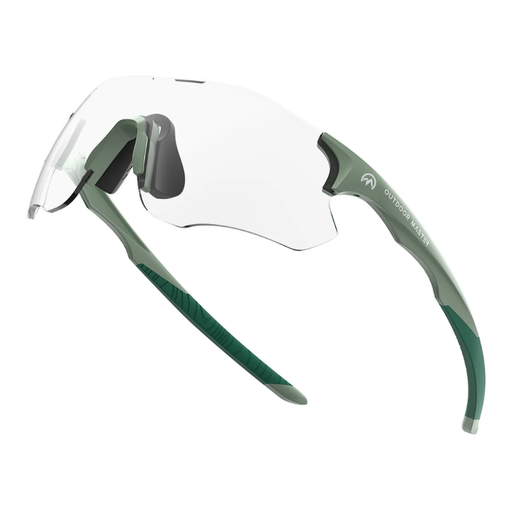
Why it suits this profile: According to the brand’s product information, the photochromic HD lenses switch between Cat.0 and Cat.3 depending on UV exposure. The TR90 frame and non-slip details are designed for cycling, running and other outdoor activities.
The stated lens categories make it clearer how the lenses work. Bear in mind the warning that photochromic lenses may react less effectively in a car.
Photochromic lenses, a UV400 claim, protective case, cleaning cloth and replaceable nose pad, according to the product page.
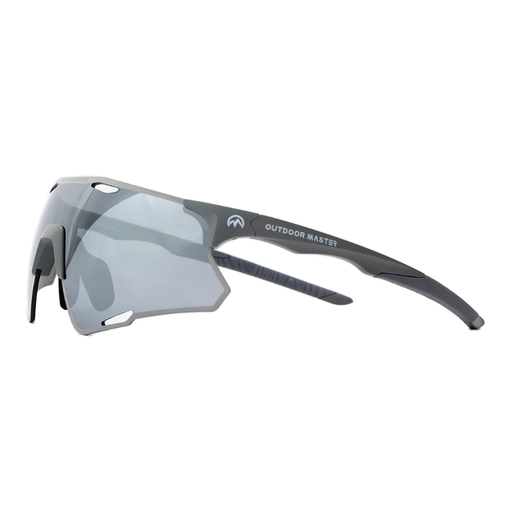
Why it suits this profile: According to the product description, this model is designed for several sports and comes with an insert frame for prescription glasses. The ventilated lens is designed to help reduce misting while you’re moving.
The adjustable nose pads and insert frame address two common problems: sunglasses slipping down and not having enough room for glasses.
We’ve put together a complete, up-to-date list of products that meet these strict selection criteria and current European safety requirements.
For cycling, choose a pair with a UV400 claim, a secure fit, good coverage and ventilation to help prevent misting. Polarised lenses can be useful on roads with reflective surfaces. Photochromic lenses may be practical in changeable light, but check their tint range and how they work behind car windscreens.
Yes. Look specifically for sunglasses to wear over glasses or a fit-over style. Check the dimensions of both frames. Fit-over sunglasses that are too narrow may press against the arms of your prescription glasses, while a pair that’s too wide may shift as you move.
Their lifespan depends on how they’re used, stored and cared for. Scratches, loose parts and damaged lenses are all reasons to replace your sunglasses. Rinse off sand and salt with clean water first, then use a soft cloth. Store them in a hard case and don’t leave them in a hot car for long periods. Damaged lenses aren’t suitable for sports, even if the frame is still in good condition.
