
Vandaag of morgen in huis

Kwaliteit gegarandeerd

Welkomstaanbiedingen ontgrendelen: GRATIS bezorging | Tot 80% korting | Gratis 30 dagen JoyPlus-proefperiode
Download de app
Sports sunglasses need to do more than look sporty. Whether you’re cycling along the dykes, running through the dunes or riding with the sun low in the sky, you need protection, clear vision and a secure fit. Yet many offers are difficult to compare. Claims such as “HD vision”, “impact-resistant” or “UV400” only mean something when it is clear which lens, standard and construction are behind them.
This practical buying guide shows you what to look for and which models suit different situations.
A dark lens is not automatically suitable for bright sunlight. Colour mainly affects how you perceive your surroundings and the level of contrast. You should also check the light transmission, often shown as VLT. A low VLT allows less light through and can be comfortable in bright conditions. A higher VLT is more useful in cloudy or changeable light.
A lens with a mirror coating may look striking, but on its own it says nothing about polarisation or UV protection.
UV400 protection and polarisation serve different purposes. UV400 refers to protection against ultraviolet light up to 400 nanometres. Polarisation is designed to reduce distracting glare from wet tarmac, water and metal surfaces, for example.
According to the product descriptions, the selected models offer UV400 protection. Check the official specifications for each product and do not use sunglasses for looking directly at the sun or for work involving extreme impact, such as grinding or welding.
Cycling glasses that feel comfortable during a relaxed walk may shift on a bumpy cycle path. Pay attention to the frame width, nose bridge and grip of the arms. A flexible TR90 frame can be lightweight and retain its shape, but the dimensions still need to suit your face.
If you wear glasses, check whether the model fits over them. Ordinary sports glasses are not automatically suitable as fit-over sunglasses.
First, look for a clear statement of UV400 protection. According to information provided by the brands concerned, the OutdoorMaster, Revoray and Beneunder models feature UV400 protection. This information comes from the product descriptions and should not be extended to include medical or health claims.
With photochromic cycling glasses, the tint changes under the influence of UV light, according to the product information. The OutdoorMaster model is described as operating from category 0 to category 3. Keep one important practical point in mind: a car windscreen blocks some UV light, so a photochromic lens may not become as dark inside a car.
Polarised sunglasses can be useful for cycling, fishing, driving and boating because they reduce reflections from water and road surfaces. However, polarisation can also affect the readability of some LCD screens. Test your cycle computer, navigation device or dashboard before setting off on a long journey.
The VLT value helps you compare models:
Lightweight sunglasses reduce pressure on your nose and ears during prolonged use. According to the product information, the Revoray models mentioned weigh approximately 33 grams. Beneunder FD421 models weigh approximately 26 grams. OutdoorMaster lists a weight of 26 to 29 grams for the Hawk LT model, depending on the lens.
TR90 is a thermoplastic material often used for flexible frames. Lens materials vary by model and may include TAC, polycarbonate or nylon. “Impact-resistant” does not mean unbreakable. Ordinary sports glasses are not suitable for high-impact work; always follow the manufacturer’s safety warnings.

Why it suits this profile: This model combines a TR90 frame with polarised TAC lenses and, according to the product description, is intended for cycling, running and driving. The included case and cleaning cloth are practical for everyday use.
The product information mentions not only a dark Revo lens, but also polarisation, UV400 protection and an impact-resistant lens construction.
TR90 frame, polarised TAC lens, UV400 according to the product listing and a protective EVA case.
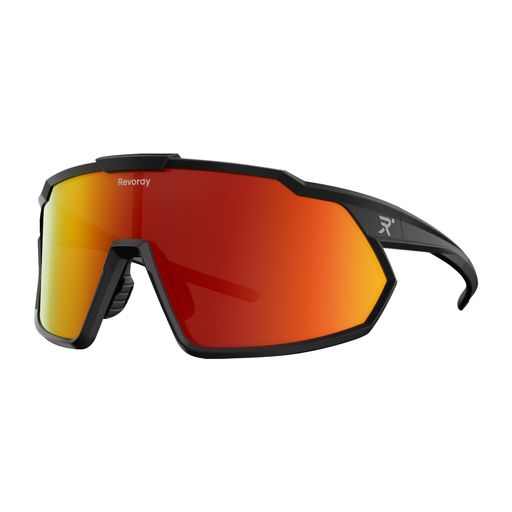
Why it suits this profile: For road cyclists and mountain bikers who want to compare technical details, the product information lists a weight of approximately 33 grams, adjustable silicone nose pads and a VLT of around 15.2%.
The combination of a stated VLT value and adjustable fit makes it easier to assess the lens choice and stability.
TAC polarised lens, TR90 frame, water- and oil-repellent coating and, according to the product information, ANSI Z87.1 performance testing.

Why it suits this profile: This model is aimed at users who encounter changing light conditions while cycling, running and driving. According to the product description, it also includes an inner frame for prescription lenses and adjustable nose pads.
The product listing distinguishes between photochromic and polarised properties. It also warns that the lens may not become as dark inside a car.
Photochromic and polarised polycarbonate lenses, TR90 frame, adjustable nose pads and an included inner frame.

Why it suits this profile: This model is designed to be worn over prescription glasses. That makes it relevant for motorists, travellers and glasses wearers who do not want to buy separate prescription lenses.
The fit-over design means you do not have to rely solely on a general universal fit. However, check the dimensions of your own glasses.
Polarised lenses, a design for use over prescription glasses and a lightweight construction according to the product description.
We’ve put together a complete, up-to-date list of products that fully meet these strict selection criteria and the applicable European safety regulations.
Yes, polarisation can reduce reflections from wet roads, water and metal surfaces. However, check that your cycle computer or navigation screen remains easy to read. Polarisation also does not replace the required UV protection, so look for a separate UV400 statement.
Their lifespan depends on use, storage and care. Scratches, loose nose pads and a distorted frame are reasons to replace the model. Clean the lenses with water and a soft microfibre cloth, do not use harsh alcohol-based products, and store the glasses in a pouch or hard case.
You can, but the tint may change only slightly because the windscreen blocks UV light. For driving, a fixed polarised lens or a model specifically designed for use behind glass is often more practical. Also check that the lens is not too dark for the traffic conditions.
For anyone who frequently switches between sunshine, cloudy weather and low-light conditions, sports glasses with interchangeable lenses can be practical. Consider how easy the lenses are to change and touch the surface as little as possible. An extra lens makes a model more versatile, but not automatically more comfortable or suitable for every face shape.
