
Vandaag of morgen in huis

Kwaliteit gegarandeerd

Welkomstaanbiedingen ontgrendelen: GRATIS bezorging | Tot 80% korting | Gratis 30 dagen JoyPlus-proefperiode
Download de app
Sports socks might seem straightforward, but you’ll soon notice a poor choice when you’re working out. A sock that slips down, gets too hot or lacks cushioning can make your training unnecessarily uncomfortable. This applies to running, fitness, basketball, skiing and everyday wear.
As Joybuy’s Product Recommendation Officer, I filter the most important product information into practical points. That way, you can see which features are verifiable and which marketing claims are best taken with a pinch of salt.
Nike sports socks, FILA sports socks and Salomon running socks can all have different functions. A well-known brand alone doesn’t tell you anything about the right length, composition or cushioning for your sport. Always compare the size, material ratio, sock height and construction.
A sports sock multipack might seem like good value, but it isn’t automatically suitable for intense training. A cotton blend can be comfortable for everyday use, whereas a runner is better off with synthetic fibres that dry more quickly.
According to product descriptions from various brands, polyester, polyamide and special weave structures help to wick away moisture. That doesn’t mean your feet will stay completely dry in all conditions. Pay attention to the exact material composition and washing instructions.
Cotton feels soft but holds onto a fair amount of moisture. Moisture-wicking socks made from polyester or polyamide are usually a better choice for longer sessions, trail running or warm gyms.
Cushioning is often placed under the heel and forefoot. This can provide extra comfort, but a thick sock also takes up more room. In a snug-fitting running shoe, a thick terry sole can actually feel too tight.
Also check that the cuff and any arch band don’t pinch. A sock should fit firmly without wrinkles or pressure points.
Use your normal EU shoe size as a starting point, but always check the product’s size guide. In the Nike size guide provided, size S roughly corresponds to EU 35–38, M to EU 39–42 and L to EU 43–46 for the 3-pack models. Other Nike packaging uses different size breakdowns.
Are you between two sizes? Then look at the fit description. With stretchy models, a larger size can give more room, but a sock that’s too loose may shift around.
Length isn’t just a style choice. For trail running, higher Salomon socks can offer more protection against dirt or contact with vegetation. For fitness and everyday wear, ankle socks or quarter socks are often sufficient.
Look at the ratio of cotton, polyester, polyamide, elastane or wool. Elastane helps with stretch and fit. Polyester and polyamide are often used in sports socks because of their lightweight, quick-drying properties. Merino wool is mainly chosen for warmth and wearing comfort during outdoor activities.
Also check where the cushioning is placed. Nike Everyday Cushion models mention extra cushioning under the heel and forefoot. Other models have targeted padding at the toes, heel or arch. Don’t automatically go for the thickest sock: the right thickness depends on your shoe and activity.
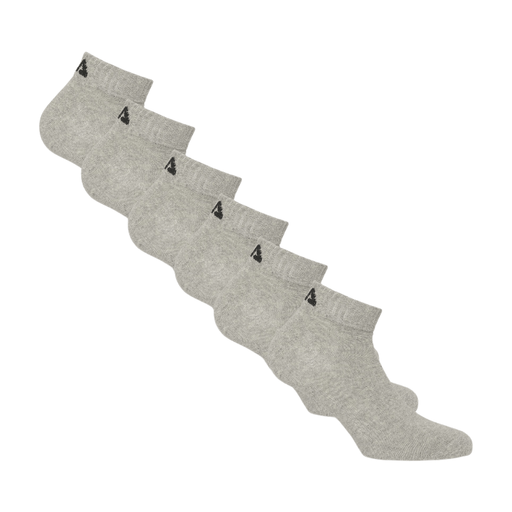
Why this fits the profile: These quarter socks come in a six-pack and are aimed at everyday use, the gym and light training. The EU size 43–46 is clearly stated.
The product information mentions the cotton blend, size and washing instructions. That means you don’t have to rely solely on the term “sporty”.
6-pack; quarter length; cotton, polyester and elastane; machine wash at 40 °C.
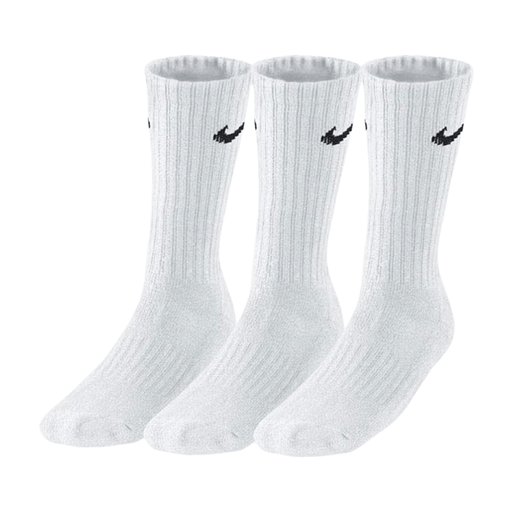
Why this fits the profile: This crew model is designed for training and running. The description mentions cushioning under the heel and forefoot, an arch band and a breathable upper.
The relevant features are described concretely: 75% cotton, 18% polyester, 6% polyamide and 1% elastane, plus extra cushioning in two zones.
3-pack; crew length; supportive arch band; size M for EU 39–42 according to the product size guide.
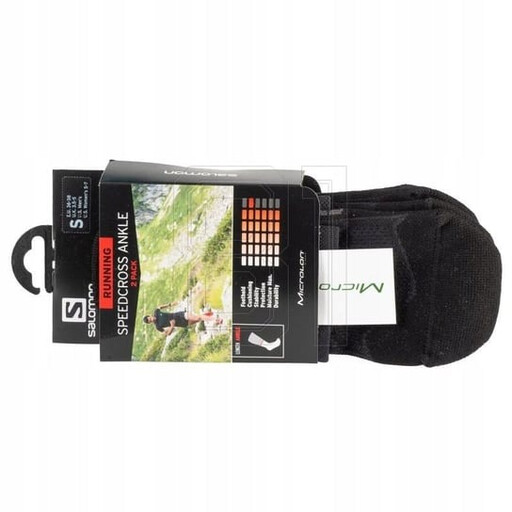
Why this fits the profile: This two-pack is designed for running and outdoor activities. The product description mentions an ankle model, synthetic materials, a cushioned sole and moisture management.
The sock isn’t just described as “sporty”: the sport type, number of pairs, size and materials are all listed separately. Do check whether your chosen shoe has room for the sole thickness.
2-pack; ankle height; polyester, nylon and elastane; cushioned sole according to the product information.
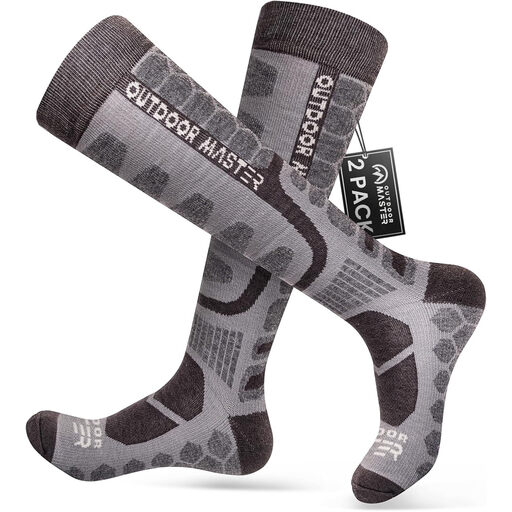
Why this fits the profile: This over-the-calf model is designed for skiing and snowboarding. The product information mentions a merino wool blend, targeted cushioning and compression zones.
The sock combines a long fit with specified cushioning zones. According to the product information, the blend contains 30% merino wool; check the size guide and the available room in your ski boot.
2 pairs; over-the-calf length; 30% merino wool blend according to the product description; designed for skiing and snowboarding.
We’ve put together a full, up-to-date list of products that fully meet these strict selection criteria and comply with current European safety regulations.
The lifespan depends on how often you use them, friction, material and the washing programme. Keep the following points in mind:
A sports sock multipack is handy when you have several training sessions a week. Compare the price per pair, but also look at the material choice and care instructions. A cheaper pair that quickly loses its shape isn’t always better value in the long run.
Choose a model that fits well, doesn’t slip down and suits the space in your running shoe. Running socks made from polyester or polyamide, with targeted cushioning and an arch band, can be practical. For trail running, a higher Salomon variant can offer extra coverage.
They can be for short or gentle sessions. Cotton feels soft but holds onto moisture longer than many synthetic fibres. For intense workouts, training socks with a polyester or polyamide content are often a better option.
Compression socks have a tighter construction and specific pressure zones according to the product description. They need to fit well and mustn’t pinch uncomfortably. Don’t use them as a substitute for medical advice. For everyday exercise, regular ankle socks, crew socks or cushioned sports socks are often sufficient when the size and fit are right.
