
Vandaag of morgen in huis

Kwaliteit gegarandeerd

Welkomstaanbiedingen ontgrendelen: GRATIS bezorging | Tot 80% korting | Gratis 30 dagen JoyPlus-proefperiode
Download de app
Buying a new pair of sports shoes and trainers seems simple, until you realise you’ve chosen a model mainly for its looks. A smooth sole may offer little grip on wet pavements in the Netherlands. Running shoes might feel comfortable on short runs but be less suitable for a basketball court. And a popular trainer isn’t automatically comfortable enough for a long day at work.
Look out for these three common pitfalls:
The outsole determines how much contact you have with the ground. A relatively flat rubber tread is often enough for tarmac and the gym. For off-road paths, shoes with good grip and an outsole with multidirectional lugs are more practical.
According to its product description, the Nike Pegasus Trail 3 has a rubber outsole with multidirectional lugs. This makes it a more appealing choice for varied terrain than a flat-soled casual trainer. Always check the latest product information and consider how you’ll use the shoes, though: grip depends on the surface, wear and weather conditions.
For indoor basketball, a stable fit and a sole designed for indoor use are important. With cycling shoes, you’ll want to focus more on a stiff sole and compatibility with your pedal system than on a soft feel underfoot.
A shoe can be technically well designed but still feel uncomfortable if its shape doesn’t suit your foot. Check:
The Adidas Ultrarun 5 is listed as having a regular fit. The Adidas Run 70s 2.0 includes sizing information in EU sizes and foot lengths. For the Pelliot models, foot lengths are given for each size, along with information about standard and narrow versions. These details are more useful than a general description such as “true to size”.
Ideally, measure your feet at the end of the day, when they’re usually a little larger. Wear the socks you’d use for exercise, too.
A mesh upper can feel airier than leather or synthetic materials. This can be useful for running and everyday wear in warmer weather. Depending on how the shoe is made, leather and synthetic overlays may offer more structure or durability.
When checking the cushioning, look at the actual materials and construction. The Adidas Ultrarun 5 lists a Bounce 2.0 midsole and an Adiwear rubber outsole. According to its product specifications, the Adidas Runfalcon 5 uses Cloudfoam and an Ortholite insole. Details like these give you a clearer idea of what the shoe offers than simply calling it “comfortable”.
Cushioning is also a matter of personal preference. A soft feel isn’t right for everyone; some people prefer more direct contact with the ground.
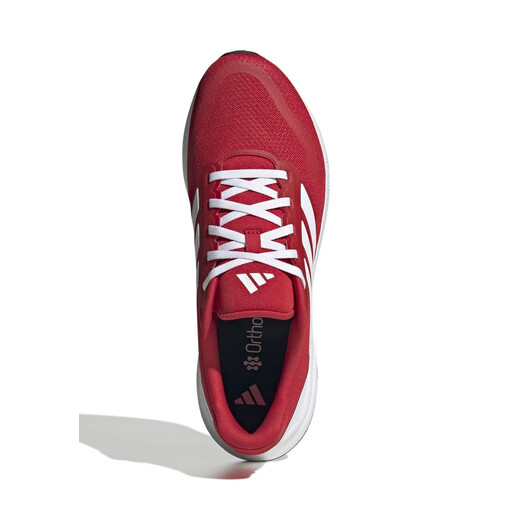
Why it suits this profile: According to the product specifications, this model is designed for everyday use and short road runs. The mesh upper and Cloudfoam midsole make it a good versatile first pair.
The product information specifies the materials, a recommended distance of 0–10 km and care instructions. That means you don’t have to rely on general marketing claims alone.
Mesh upper, Cloudfoam midsole, Ortholite insole and Adiwear outsole.
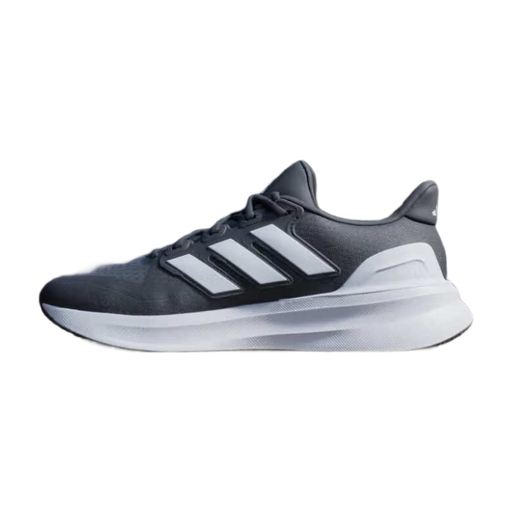
Why it suits this profile: This running shoe is designed for people who value a lightweight construction, ventilation and a responsive feel during road training.
The specifications list the Bounce 2.0 midsole, mesh and Adiwear rubber. You can compare these features with your own running routes and preferences.
Mesh upper, Bounce 2.0 midsole, Ortholite insole and a regular fit.
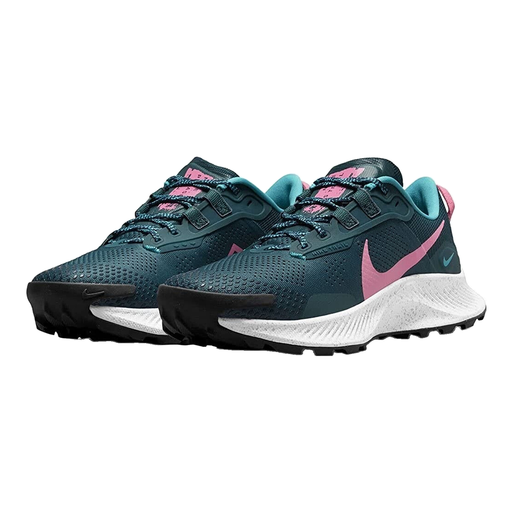
Why it suits this profile: According to the product description, this model is designed for trail running, city routes and outdoor activities. It’s a good fit for people who regularly switch between tarmac and off-road terrain.
The sole construction is described in specific terms, with multidirectional lugs. That’s more relevant for trail use than a general promise of grip.
React midsole, mesh upper, reinforced toe and heel, rubber outsole with multidirectional lugs.
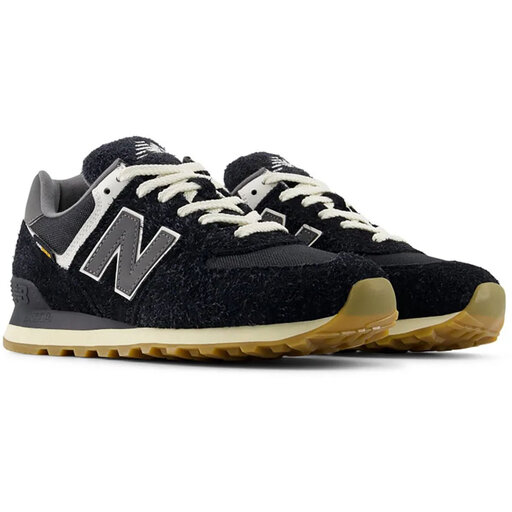
Why it suits this profile: The classic combination of suede and mesh makes this model a good choice for casual outfits, commuting and everyday wear.
The product description lists both the upper material and the rubber outsole. This makes it easier to weigh up style, care and everyday use.
Suede and breathable mesh, supportive midsole and grippy rubber outsole.
For a casual look, you could also consider women’s trainers and men’s trainers, such as the Nike Dunk Low, Adidas Samba OG, Puma Speedcat or New Balance trainers. These models are primarily designed for everyday wear and style, not necessarily for running.
If you play a particular sport, it’s worth choosing by category rather than by brand alone. The Nike SuperRep Cycle 2, for example, is designed for cycling and is listed as compatible with SPD and Delta pedal systems. According to the product description, models in the Li-Ning Way of Wade 12 range are designed for basketball and feature details such as a GCU rubber outsole and carbon plate. For football boots and other studded shoes, always check that the outsole is suitable for the surface.
We’ve put together a complete, up-to-date list of products that meet these strict selection criteria and the applicable European safety regulations.
It depends on how you use them, your body weight, the surface, how well you care for them and the materials. Check the sole for worn tread, cracks and uneven wear. With running shoes, it’s not just the number of kilometres that matters; a compressed midsole or less stable fit can also be a sign that it’s time for a new pair.
You can, but pay attention to the design. Running shoes are often lightweight and breathable, while casual trainers may put more emphasis on style and durability. Don’t automatically use a trail model for intensive road training, and avoid wearing smooth-soled lifestyle trainers on rough paths.
Measure both feet and use the longer one as your guide. Compare the measurement with the size chart for that specific model. Also check the fit, the room around your toes and the type of socks you wear. A familiar brand name alone doesn’t guarantee that every shoe will fit the same way.
