First, choose a laptop that can run your intended development environment locally. Then compare the screen space, ports and portability with your workspace. A faster laptop won’t speed up visitors’ internet connections: Chrome for Developers explains how to simulate network conditions, while MDN Web Docs explains how latency can affect the user experience. If you use Docker Desktop, also check the requirements for your version of Windows and chosen backend in Docker Docs.
Who is this laptop guide for?
Building with a local development environment
You’re working locally on a sports results website and want to use your editor, browser and any development services on the same laptop. Check the requirements of your own software: the Dutch Consumers’ Association stresses that your laptop choice depends on how you’ll use it, while Docker Docs publishes installation requirements for Docker Desktop.
Testing on slow connections
You want to check whether results and other elements remain usable when network requests are delayed. Chrome for Developers explains how to create custom network profiles in DevTools; MDN Web Docs explains why latency and requests can affect the user experience.
Working from different locations
You’re choosing between a more compact device and more built-in screen space for code, your browser and test results. Lenovo Netherlands and Apple Netherlands offer models with different screen sizes; compare the exact configuration with the ports and workspace you need.
What should you look for?
| What to consider |
What to look for |
Who should prioritise this? |
| Capacity for local development |
Compare the RAM, SSD, processor and operating system with the requirements of your editor, browser and any local services. |
If I want to use my editor, browser and local services at the same time, I’ll match the configuration to my software; around 36% of consumers give local development capacity top priority. |
| Testing on slow connections |
Check whether your browser and development environment can simulate network delays and limited speeds. Also test how the page responds to requests that fail to load. |
I want to see what happens to results when network requests are delayed; around 29% of consumers prioritise testing under these conditions. |
| Screen space and portability |
Compare the screen size and resolution with the way you work, and check that it has the ports you need for your existing peripherals. |
If you work from different locations, you’ll want the right balance between built-in workspace and portability; around 21% of consumers place the most importance on screen space or mobility. |
| Purchase and after-sales support |
Compare like-for-like RAM and storage configurations, and check the terms of any additional service separately. |
If purchase price and after-sales support are the main considerations, I want to know exactly which configuration and service I’m comparing; around 14% of consumers give costs and after-sales support top priority. |
Pitfalls to avoid
-
Assuming a faster laptop will fix slow internet for visitors
Your laptop’s speed won’t eliminate delays on a visitor’s network. The size and number of network requests can also affect loading times.
Choose a laptop for your local work, then test the site separately using simulated network conditions. Chrome for Developers explains network profiles in DevTools.
-
Assuming every configuration in a model range has the same specifications
Specifications such as memory, screen and upgrade options vary between configurations of the ASUS Vivobook 14 X1404.
Check the full model code and the specifications of the exact configuration you’re considering.
-
Looking only at the length of the commercial warranty
A commercial warranty or additional service is separate from your statutory rights with the seller. On-site service is also not automatically included with every laptop offer.
Check what a service package includes and assess it separately from your consumer rights. ACM ConsuWijzer explains that the statutory warranty period is not automatically fixed at two years.
Brands to consider
Lenovo
The ThinkPad E14 Gen 7 is an example of a 14-inch business Windows laptop. For configuration 21T9001TMH, Lenovo Netherlands lists 16 GB RAM and a 512 GB SSD.
- The stated memory and storage configuration gives you specific details to compare.
- This configuration has an English (EU) keyboard; check that the layout suits you.
HP
The ProBook 4 G1i 16, product code A23QQEA#ABH, is an example of a business Windows laptop with a larger screen. HP Netherlands lists, among other features, 16 GB RAM, a 512 GB SSD, an included charger and on-site service for this configuration.
- The screen and service features listed give you specific points to compare between configurations.
- Don’t assume these specifications or service terms apply to other ProBook configurations without checking.
Apple
The MacBook Air with M5 is a macOS option in 13- and 15-inch configurations for anyone using macOS development tools. Apple lists memory and storage options, as well as two Thunderbolt 4 ports.
- The screen sizes give you different amounts of built-in workspace.
- Check whether your peripherals need adapters, and whether the memory and storage option you choose suits your projects.
Dell
The Dell Pro 14 PC14250 is a business Windows laptop for which the configuration and support package are chosen separately.
- Dell Netherlands offers several configuration options in this range.
- The processor and service cover may vary between offers; ProSupport Plus is a separate service package.
ASUS
According to ASUS’s Dutch specifications page, the Vivobook 14 X1404 range includes Windows configurations with a variety of specifications.
- You can compare configurations on features such as memory, screen and upgrade options.
- Check the full configuration number: a feature of one variant doesn’t automatically apply to the whole range.
Joybuy laptops for local development
These Joybuy laptops are suited to local development work on a sports results website. Compare the listed configuration with your own software, and test visitors’ connections separately.
 Image unavailable
HP OmniBook 7 AeroNGAI 13-bg1051nd NL Copilot+
A compact configuration to consider if you want to develop locally and regularly work from different locations.
Listed configuration: Windows 11 Home, Ryzen AI 5, 16 GB RAM and a 512 GB SSD. The screen is 13.3 inches and the listed weight is 1.46 kg; check that it meets the system requirements of your software.
View at Joybuy
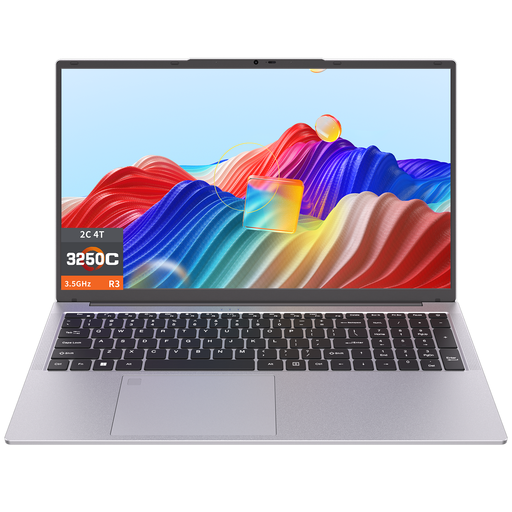 Image unavailable
Auusda T173A
The 17.3-inch screen could suit a workspace where you want to view code and your browser on a larger built-in display.
Listed configuration: AMD 3250C processor, 8 GB DDR4 and a 512 GB SSD. Check that the memory and processor suit your development environment.
View at Joybuy
 Image unavailable
Auusda T161N
Consider comparing this configuration if you want to run local programmes and are looking for a 16-inch built-in screen.
Listed configuration: Intel Core i3-1000NG4, 16 GB DDR4 and a 1 TB SSD. The screen is a 16-inch IPS display with a resolution of 1920 × 1200.
View at Joybuy
 Image unavailable
Auusda T156A
An option to compare if you want a 15.6-inch built-in screen for viewing code and your browser.
Listed configuration: AMD 3050e processor, 16 GB DDR4 and a 512 GB SSD. The screen is a 15.6-inch Full HD IPS display.
View at Joybuy
 Image unavailable
Lenovo V15 G5 IRL
This Windows configuration is worth comparing if your local development environment is compatible with Windows 11 Pro and you’re looking for a 15.6-inch screen.
Listed configuration: Intel Core i5-13420H, 16 GB DDR5, a 512 GB SSD and Wi-Fi 6. The screen is Full HD; the listed weight starts at 1.61 kg.
View at Joybuy
Frequently asked questions
Do I need a more powerful graphics card to test slow connections?
Not for connection testing alone. Chrome DevTools lets you simulate network speeds and latency, as well as CPU slowdown separately. Choose the rest of your laptop’s specification based on the development software you actually use.
How can I test whether results remain usable on a slow internet connection?
Set up a network profile in Chrome DevTools with limited download and upload speeds and higher latency. Then assess the page and delayed requests, and where relevant, test what happens if a resource fails to load. This is a development test, not a guarantee that every visitor’s connection will behave in the same way.
Is there anything extra I should check on Windows if I want to use Docker Desktop?
Yes. Docker publishes installation requirements for each version of Windows and backend; Docker says that WSL 2 is the default backend and works for many users. Before buying, check the requirements for your installation and the exact laptop configuration. If you don’t use Docker, this isn’t a general buying requirement.
What do the manufacturer’s warranty and statutory warranty mean for a laptop in the Netherlands?
For a consumer purchase, the seller is responsible if a product doesn’t meet what you could reasonably expect from it under normal use. ACM ConsuWijzer explains that the statutory warranty isn’t automatically set at two years; the manufacturer’s warranty and any paid extended warranty are separate. Different terms may apply to business purchases.


