Who is this relevant to?

Reporters conducting interviews in reverberant rooms

If you record interviews or spoken reports in a reverberant venue, speech clarity and the distance from the microphone are key. Shure explains how reflections affect a recording; Zoom lists a microphone input on the H1essential for connecting a suitable external microphone.

Reporters who also want to capture the atmosphere

If you want to combine commentary with crowd or ambient sound, consider the inputs and microphone setup you need. Zoom describes the H4essential’s X/Y microphones and inputs; Tascam lists adjustable A-B and X-Y positions on the DR-07XP.

Sports reporters who transcribe quotes

If you mainly use recordings to check quotes for a written report, simple controls and storage may matter more than separate audio channels. Philips lists internal storage on the DVT4115; even then, recording close to the speaker remains important, as Shure explains.

What should you look for when choosing?

Compact handheld recorder

Choose this option: if you can keep the recorder close to the speaker and want to record a report or interview quickly.

Bear in mind: you’ll still hear reverberation if the microphone is further away; a wide stereo image is no substitute for recording at close range.

Recorder with external microphone inputs

Choose this option: if you want to position a suitable microphone close to the speaker and capture the atmosphere as well.

Bear in mind: you may need a compatible microphone and cable, and you’ll need to spend more time setting up.

Voice recorder for playback

Choose this option: if you’ll mainly use the recording to check quotes for a written report.

Bear in mind: a voice recorder won’t automatically make a distant voice clearer, and it’s less suited to capturing separate ambient sound channels.

Consideration What to look for Who is this important for?
Keeping speech clear Check the microphone input and whether it’s compatible with the external microphone you want to use; test the recording at the intended distance. If I’m recording interviews in a reverberant room, I want the speaker to be easy to understand. Around 42% of consumers put clear speech first.
Recording quickly Check the controls, power and storage; also see whether you can play back a test recording. When I need to start a report quickly on location, a simple recording setup matters. Around 25% of consumers prioritise being ready to record straight away.
Separating speech and atmosphere Check how many tracks can be recorded at the same time and whether the connections suit the microphone and power supply you need. If I want to capture both commentary and the atmosphere of the venue, I want to know which sources I can record separately. Around 17% of consumers prioritise capturing ambience as well as speech.
Playing back quotes Check storage, file transfer and playback controls; keep the recorder close to the speaker during the conversation. For a written sports report, I want to check what people said afterwards without a complex production setup. Around 16% of consumers say checking quotes is their top priority.

Common buying mistakes

  • Assuming a higher recording format means less reverberation

    A recording format can’t separate reflections already captured by the microphone from the direct voice afterwards.

    First, try recording closer to the speaker. Only then compare recorders and a suitable microphone input.

  • Choosing a wide stereo image when you only need the voice

    The atmosphere of the venue can be valuable, but a distant voice may be harder to understand in a reverberant room.

    Decide in advance whether you need separate ambience recordings or mainly want to position a microphone close to the speaker.

  • Putting the recording setup together only once you’re on location

    The recorder and external microphone need to be compatible; storage and power requirements can also vary by model.

    Check the connections and included accessories, then make a short test recording at the venue.

    Depending on the model you choose, you may also need a suitable storage medium, batteries, microphone or cable.

Brands compared

Zoom

The H1essential is a compact option for close-range recording; the H4essential is worth considering if you want to combine external microphone inputs with built-in ambience recording.

  • Zoom lists a 3.5mm microphone input on the H1essential and two XLR/TRS inputs alongside X/Y microphones on the H4essential.
  • These model-specific connections don’t mean the built-in microphones remove reverberation; distance from the speaker still matters.

Tascam

The DR-07XP is a handheld option to compare if you’re looking for an adjustable stereo microphone setup for reporting and capturing ambience.

  • Tascam lists adjustable A-B and X-Y microphone positions, 32-bit float recording and a stereo mini-jack input for compatible external sources.
  • These recording features won’t remove reverberation from a distant voice; the manufacturer’s sound quality claims are not an independent performance test.

Philips VoiceTracer

The DVT4115 is an option to compare if you mainly want to record speech and play it back later for a written report.

  • Philips lists 8 GB of internal storage and PCM or MP3 recording on the DVT4115.
  • Storage and a speech-focused function won’t solve an unsuitable microphone distance; Philips’ recording quality claims are not independently verified.

Joybuy product selection

This Joybuy selection features a portable MP3 player whose product title mentions voice recording; check whether that function suits your sports report.
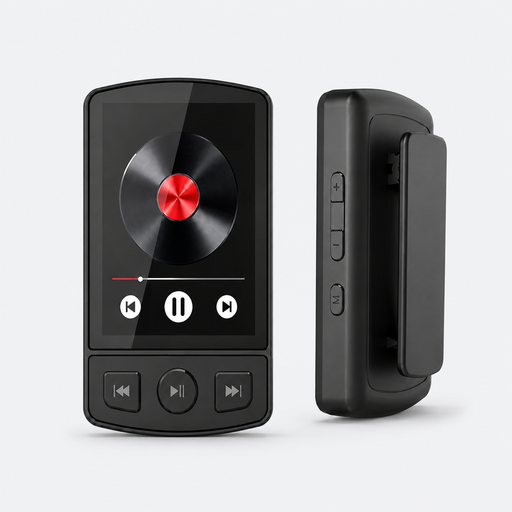
Bluetooth 5.2 MP3 player with clip, black

Bluetooth 5.2 MP3 player with clip, black

The product title mentions voice recording and a clip, which may suit mobile recording if an MP3 player meets your needs. The title doesn’t provide any information about reducing reverberation.

Bluetooth 5.2; the product title specifies a black model.

View at Joybuy

Frequently asked questions

Will recording in 32-bit float remove the reverberation in a venue?

No. 32-bit float recording won’t remove reverberation in a venue: the microphone captures direct speech and reflections together. First, move closer to the speaker, then listen to a short test recording through headphones.

What should I check before the sporting event starts?

Check the power and storage for the exact model, connect a suitable external microphone if needed, and make a short listening test at the venue. Zoom lists microSD storage for the H1essential; Philips lists internal storage for the DVT4115.

What costs or rights should I consider when buying online in the Netherlands?

Allow for any accessories you may need, such as a suitable microphone, cable or storage medium. According to the Dutch government, you have a 14-day cooling-off period for many online purchases. ACM ConsuWijzer explains that your statutory guarantee applies for as long as you can reasonably expect the product to work properly under normal use; this is not a fixed two-year guarantee period.

Can I record and publish interviews and identifiable voices?

It depends on the purpose and circumstances; there is no blanket permission for every recording and publication. The Dutch Data Protection Authority explains that processing personal data requires a legal basis and also covers journalistic use. Before recording and publishing, find out which rules apply to your situation and check the conditions set by the sports venue.
